Taking an extra dose by accident is common and, with most everyday medicines, causes little more than a stronger version of the usual side effects. With a smaller group it is serious. The critical point is that some of the most dangerous - paracetamol above all - produce no symptoms at all for a day or more while damage is already under way. If too much has been taken, get advice straight away even if the person feels completely well. Call 111, or 999 if they are drowsy, confused or breathing slowly, and have the packaging to hand.
Do this first
- Work out what and how much. Check the packet and count what is left if you can.
- Ring 111 for advice, or 999 if the person is unwell, drowsy, breathing slowly, having a seizure or unresponsive.
- Keep the packaging and take it with you. The strength and the number of tablets change the advice completely.
- Do not try to make anyone sick. This is no longer advised, does not reliably remove the drug, and can cause harm.
- Do not give food, drink or anything else unless told to.
- Stay with them.
Being told to wait and see is a legitimate outcome, and it is one you should be told rather than assume.
Why feeling fine proves nothing
With paracetamol in particular, there is typically no nausea, no pain and no visible sign for the first day. By the time symptoms appear, liver injury may already be significant, and the antidote works far better the earlier it is given.
This is the single most important thing to know about accidental double dosing, and it is the reason the advice is to ring regardless of how well someone seems. Paracetamol is also hidden inside cold remedies and prescription painkillers such as co-codamol, so exceeding the limit without realising is easy - our guide to codeine and co-codamol covers that trap.
Where an extra dose matters most
- Paracetamol, for the reasons above.
- Opioid painkillers - drowsiness and slowed breathing, particularly combined with alcohol or sedatives.
- Insulin and sulfonylureas - risk of low blood sugar, which can be delayed and prolonged. Our guide to hypos covers recognising it.
- Blood pressure medicines - a sharp drop, dizziness and fainting.
- Anticoagulants - increased bleeding risk.
- Lithium, digoxin and some epilepsy medicines - narrow margin between effective and toxic.
- Sedatives and sleeping tablets, especially with alcohol.
- Iron - particularly dangerous for children in quantities that look trivial.
Where it usually matters less
An extra dose of a statin, a proton pump inhibitor, an inhaled steroid or most antibiotics is generally not dangerous, though it may cause more of the usual side effects. That is not a reason to skip getting advice if you are unsure - it is a reason not to panic while you make the call.
Do not compensate by skipping the next dose unless you are told to. With some medicines that creates a second problem, and our guide to missed and late doses explains why doubling up in either direction is the thing to avoid.
If a child may have taken something
Call 999 or go straight to A&E, even if they seem completely well. Take the packaging. Do not wait for symptoms and do not try to make them sick.
Quantities that are harmless to an adult can be serious for a small child, and this applies to ordinary household medicines - iron tablets, paracetamol, blood pressure tablets and diabetes medicines among them. Most incidents involve medicines belonging to an adult, often a visitor, which is why our guide to where to keep your medicines is worth reading before it happens.
Keep a note of what happened
Write down the medicine, the strength, roughly how much extra was taken and at what time, before you ring. Under pressure people misremember, and the advice depends entirely on those details.
If you are told to monitor at home, note when symptoms would be expected and what to watch for, and agree at what point you would call back. Being given a threshold in advance is far more useful than deciding in the moment.
Stopping it happening again
Most accidental double doses are a system failure rather than carelessness. The usual causes are taking a dose without remembering, two people both giving a dose, taking two products containing the same drug, or confusion between similar-looking boxes.
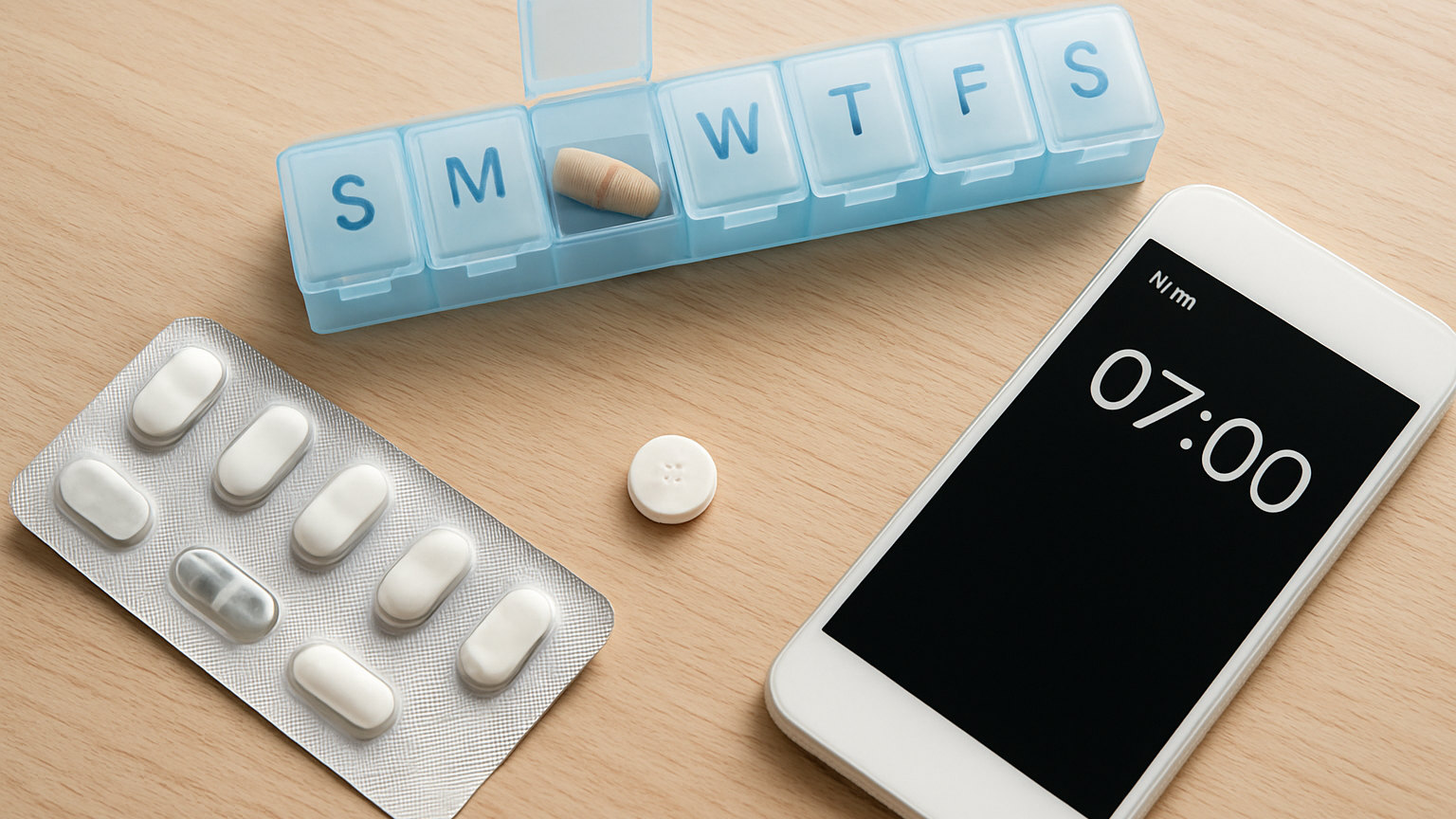
A weekly organiser or a pharmacy blister pack solves the first two, because you can see at a glance whether today's has gone. Reading ingredients panels rather than brand names solves the third. Our guide to remembering to take your medicine covers the practical options, including proxy arrangements where more than one person is involved in someone's care.
If it has happened more than once, mention it at your next review. A simpler regimen is usually available, and it is a far better answer than trying harder.
Related reading: Missed Contraceptive Pill: What to Do, with more on taking medicines day to day in Usage.