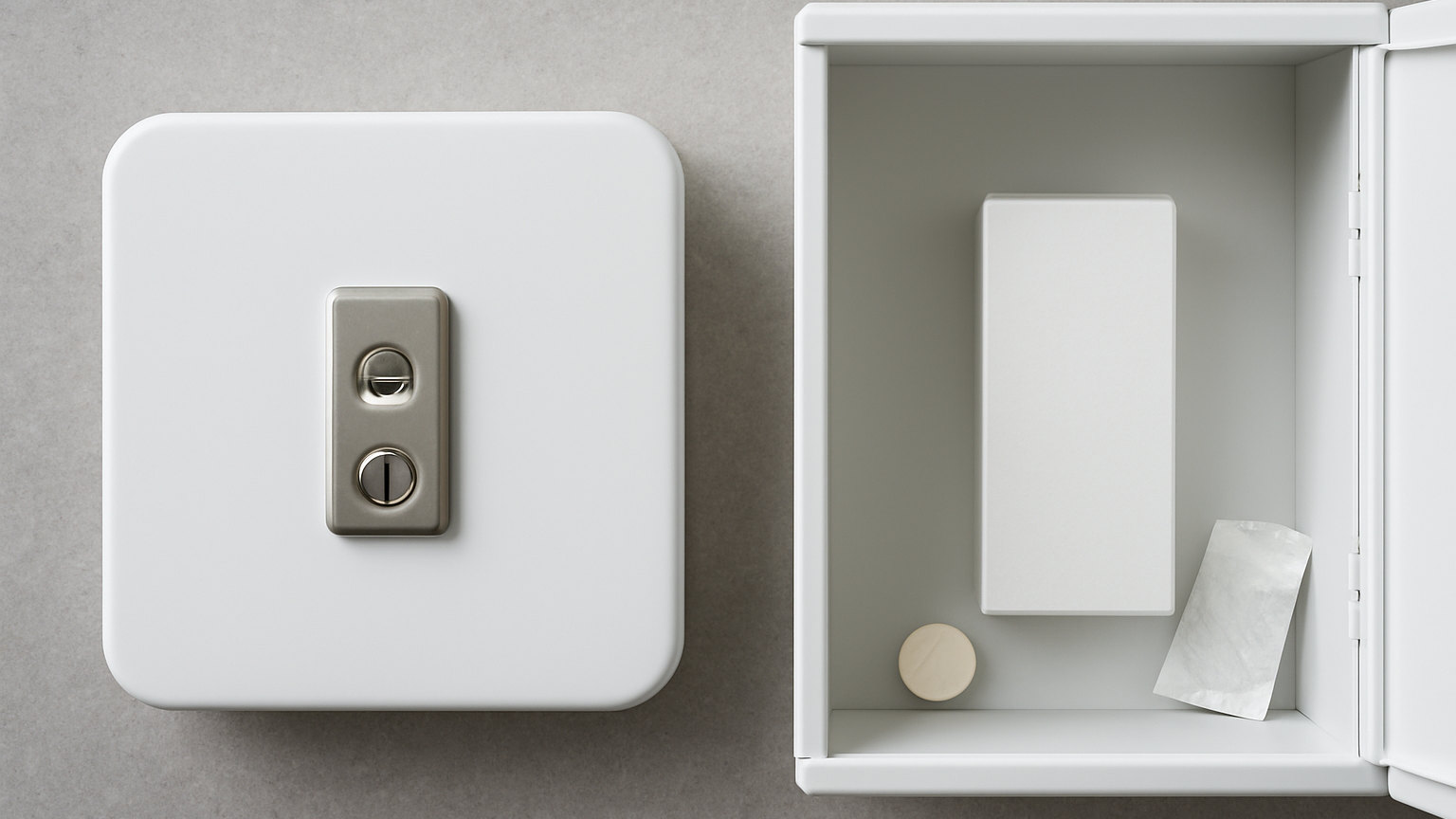
Keep medicines somewhere cool, dry, dark and out of reach of children - which rules out the two places most households use. The bathroom cabinet is the worst spot available, because showers produce exactly the heat and humidity that degrade medicines fastest. The windowsill above the kitchen sink is little better. A bedroom drawer, a high cupboard away from the cooker, or a lockable box are all substantially better.
Degradation is invisible. A tablet that has been through months of heat and damp can look perfectly normal and have lost potency, which is a problem you only discover when the medicine stops working.
What actually damages medicines
Heat. Most medicines are meant to be stored below 25°C. Sustained warmth speeds chemical breakdown of the active ingredient.
Humidity. Moisture is the main reason bathrooms are unsuitable. It causes tablets to break down and capsules to soften or stick together, and it is why some bottles contain a desiccant sachet - which should be left in and not eaten.
Light. Some medicines are degraded by ultraviolet light, which is why they come in amber bottles or foil blisters. Decanting into a clear container removes that protection.
Air. Leaving tablets out of their blister for convenience exposes them to moisture and air. Pop them out when you take them, not the night before.
The places to avoid
- Bathroom cabinets - heat and steam.
- Above or beside the cooker, kettle or radiator.
- Sunny windowsills and conservatories.
- Cars. A glovebox in summer reaches temperatures far above anything a medicine is tested for, and a car in winter can freeze things that must not freeze. This matters especially for anything carried "just in case", such as a reliever inhaler or an adrenaline auto-injector.
- Handbags and pockets for long periods, for the same reasons plus crushing.
What needs a fridge, and what must not freeze
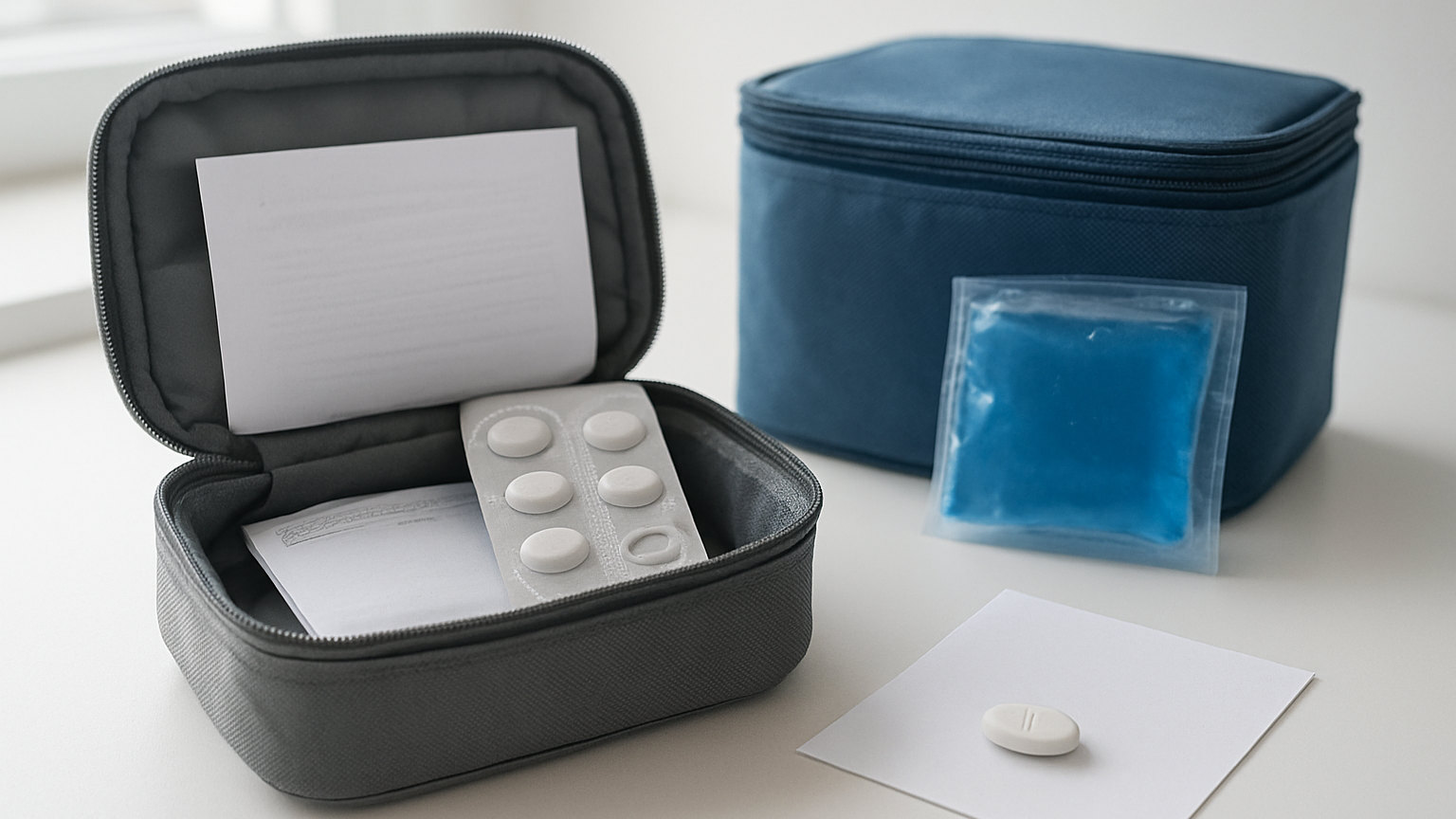
Some medicines - many insulins, some eye drops, some antibiotic liquids, some injectables - need refrigeration, usually between 2°C and 8°C. The label will say.
Keep them in the main body of the fridge, not the door where the temperature swings, and not against the back wall where things can freeze. Freezing damages many refrigerated medicines as thoroughly as overheating, and insulin that has frozen should not be used.
Ask your pharmacist how long yours can safely be out of the fridge - the answer varies, and it matters for a power cut or a journey. Once a liquid antibiotic is made up, it usually has a short shelf life stated on the label.
Children and safety
Medicines are a leading cause of accidental poisoning in young children, and most incidents happen with medicines belonging to an adult, often one visiting.
Keep everything high, out of sight, and preferably locked. Child-resistant caps slow children down rather than stopping them. Handbags left on the floor are a common route, so ask visitors to keep theirs up. Never call medicine "sweeties" to persuade a child to take it.
Iron tablets, paracetamol, blood pressure tablets and diabetes medicines are all dangerous to a small child in quantities that look trivial.
If a child may have taken something, call 999 or go to A&E immediately, even if they seem completely well. Take the packaging. Several common medicines cause no symptoms at all for many hours while damage is under way.
Expiry dates
The date on the box is the point up to which the manufacturer guarantees full potency and stability in the unopened original packaging. After it, a medicine is more likely to have lost strength - which matters most for anything you might need urgently, such as a reliever inhaler, a GTN spray or an auto-injector.
Some items have a shorter life once opened: eye drops are typically discarded within a set number of weeks after first use, and liquid medicines often carry a similar limit. Write the opening date on the box.
Check dates a couple of times a year and return anything expired to a pharmacy - see our guide to leftover medicines.
Practical habits
Keep medicines in their original labelled packaging wherever possible - the label carries your name, the strength and the instructions, and matters if you are ever taken to hospital or are travelling.
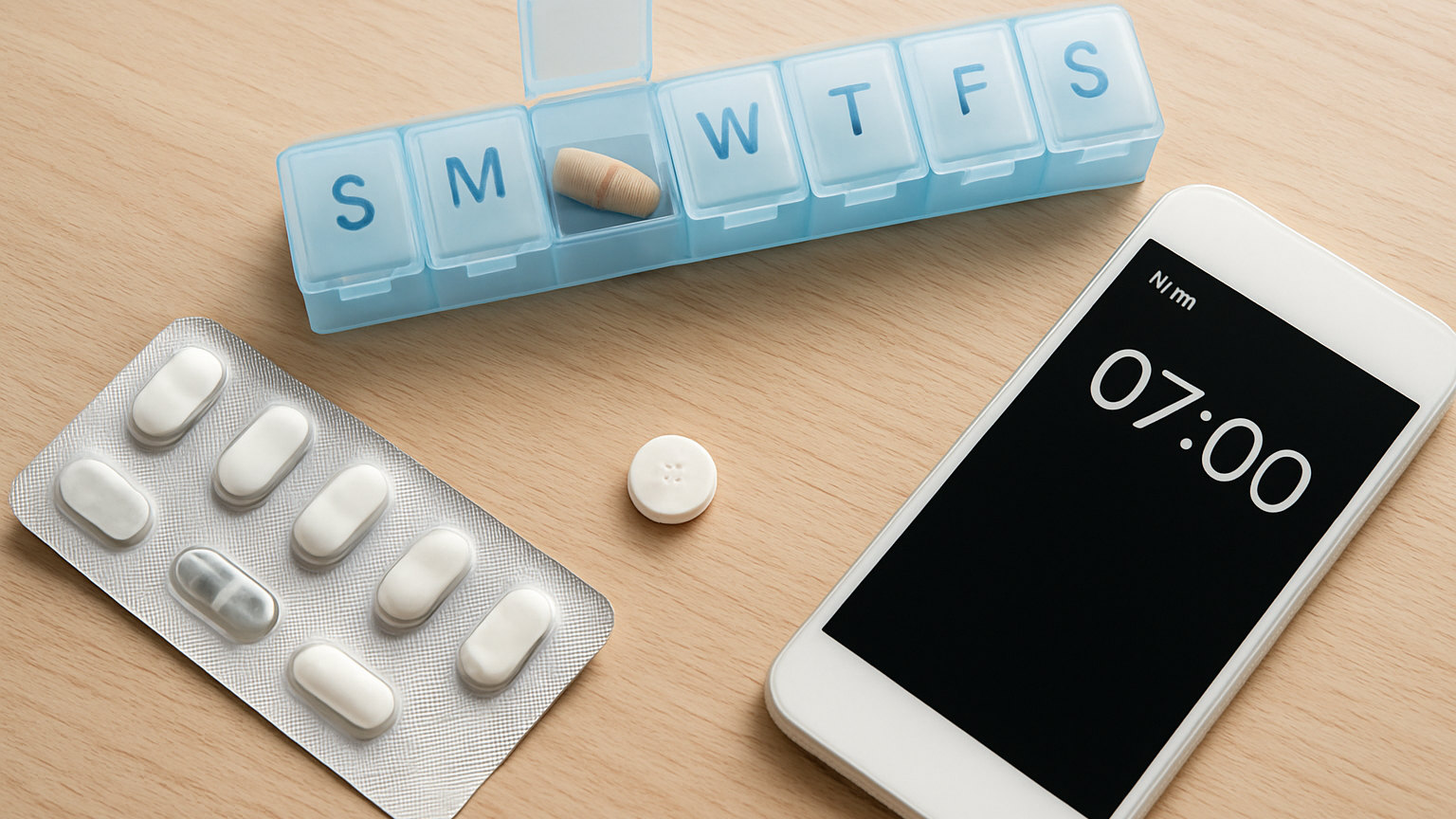
If you use a weekly organiser, ask your pharmacist first: not everything is stable outside its blister, and some tablets should not be decanted at all. Keep the original boxes so the information is still available.
Finally, keep everything in one place rather than scattered around the house. It makes it far easier to see what you actually have, which is the first step to noticing what you no longer need.
If this was useful, Medicines in Hot Weather: What to Watch is worth reading next, and Usage collects the rest.