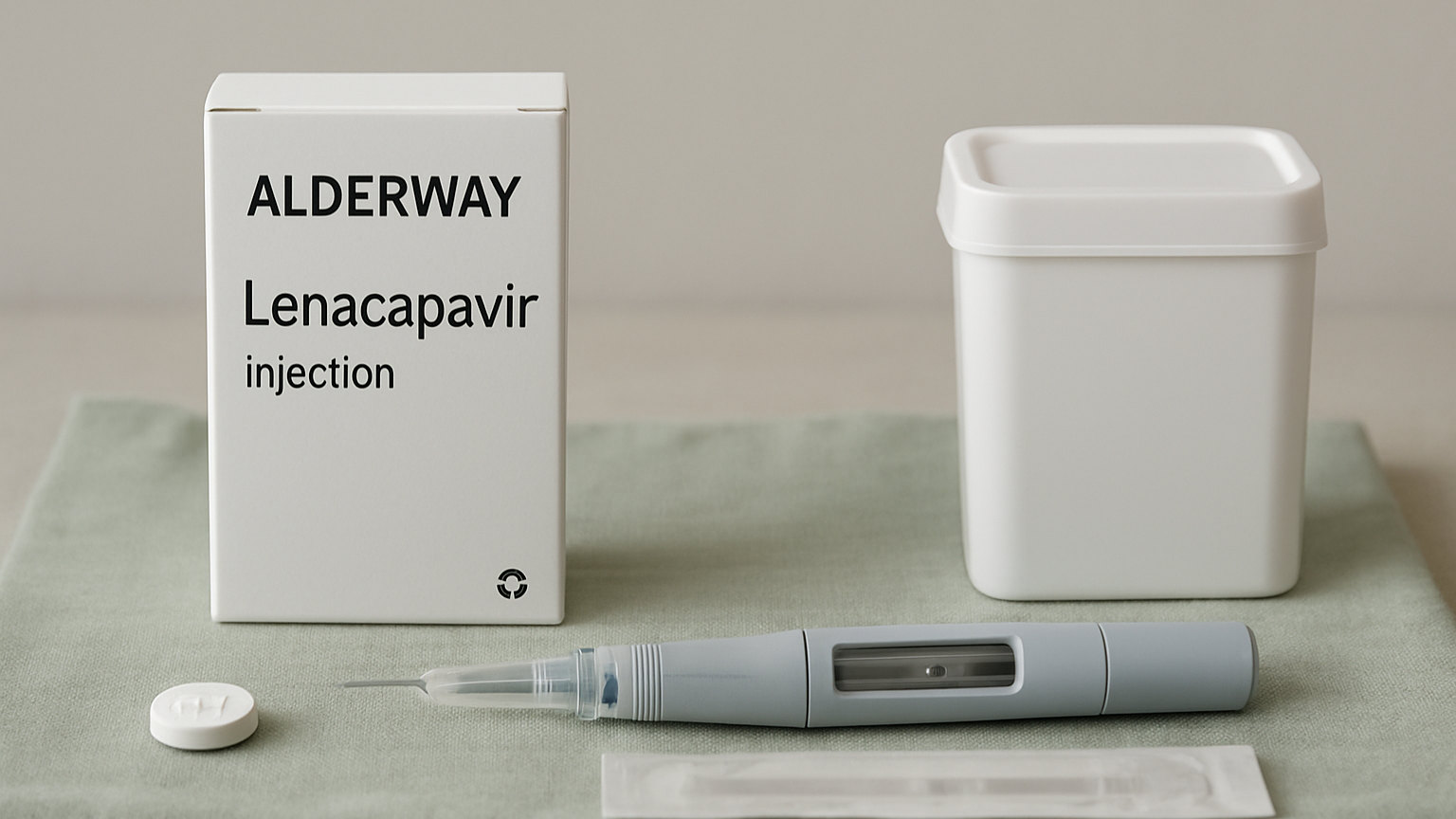
Lenacapavir is a capsid inhibitor - the first of its kind. The capsid is the cone-shaped protein shell that surrounds HIV's genetic material, and it does several jobs at different stages of the virus's life cycle. Lenacapavir interferes with all of them. Because no other antiretroviral targets the capsid, it works against virus that has become resistant to everything else, and its exceptionally long duration of action means a single injection lasts around six months.
Follow the plan your HIV team gave you. This guide contains no doses.
What it is used for
Multidrug-resistant HIV, in combination with other drugs, for people whose virus has become resistant to multiple classes and whose options had narrowed to very few. For that group it has been genuinely transformative.
HIV prevention, where twice-yearly injections have shown extremely high effectiveness in trials - with some studies recording no infections among participants receiving it.
Treatment involves an initial series of oral tablets and injections to load the drug, then injections every six months.
Our guides to oral PrEP and cabotegravir injections cover the alternatives.
Why six months changes things
Adherence is the single biggest determinant of whether HIV prevention works, and daily tablets defeat a great many people - not through carelessness but through circumstance, privacy concerns and the simple difficulty of doing anything every day for years.
Two clinic visits a year removes almost all of that. For people in situations where keeping medication at home is unsafe, it removes the problem entirely.
The long tail
The same property that makes it convenient creates the main risk. Lenacapavir remains detectable for a year or more after the last injection, at gradually falling concentrations.
Falling concentrations of a single drug are exactly the conditions that select resistant virus. So:
- If injections stop, that must be planned, with alternative cover arranged for the tail period.
- For prevention, HIV testing continues during the tail, because acquiring HIV while low levels are present risks resistance to a drug class that is otherwise fully available.
- Missing the six-monthly appointment matters. There are windows, and bridging is possible - but the clinic needs to know in advance.
If you know you will miss an appointment, ring before the date rather than after.
Injection site reactions
Given as injections under the skin of the abdomen, lenacapavir commonly causes a nodule or lump at the site that can persist for months - unsurprisingly, given the drug is being released slowly from it.
Swelling, pain, redness and itching are also common. Most settle, though the lump may remain palpable for a long time.
Report a reaction that is spreading, increasingly painful, or accompanied by fever.
Other side effects
Nausea is the commonest systemic effect. Headache and diarrhoea occur.
Because so little of the body is affected beyond the virus, the systemic side effect burden is relatively light compared with older antiretrovirals.
Interactions
Lenacapavir is cleared by CYP3A4, so strong enzyme inducers reduce its levels - rifampicin is contraindicated, along with carbamazepine, phenytoin and St John's wort.
The problem specific to a six-monthly drug is that an interacting medicine started weeks after the injection still affects levels, and stopping it does not restore them quickly. There is no equivalent of simply missing a dose to correct things.
Check any new medicine with your HIV team before starting it, including short courses and anything bought over the counter. See carbamazepine and supplements that interfere with your medicines.
Lenacapavir also mildly inhibits CYP3A4 itself, so it raises levels of some other drugs, including certain sedatives and statins.
It does not treat anything else
Lenacapavir has no activity against hepatitis B. If you have chronic hepatitis B and your previous regimen was suppressing it, changing treatment needs that covered - see lamivudine.
It is not contraception and does not prevent other sexually transmitted infections. Regular screening remains part of prevention care.
Why a new mechanism matters
Every existing antiretroviral class targets one of three enzymes - reverse transcriptase, integrase or protease - or blocks entry. Virus that has developed resistance across those classes leaves very little to work with.
Targeting the capsid means no existing resistance mutation affects lenacapavir, which is why it produced responses in people whose treatment options had effectively run out. Preserving that advantage is exactly why the resistance concerns around the tail are taken so seriously.
Access
Availability differs between treatment and prevention and continues to develop, with NHS commissioning arrangements evolving. Your sexual health clinic or HIV team will know the current position locally.
HIV treatment, PrEP and testing are free in the UK regardless of immigration status.
Zonisamide: Epilepsy Treatment and Kidney Stones covers a related point, and the Conditions section has the rest of these guides.