
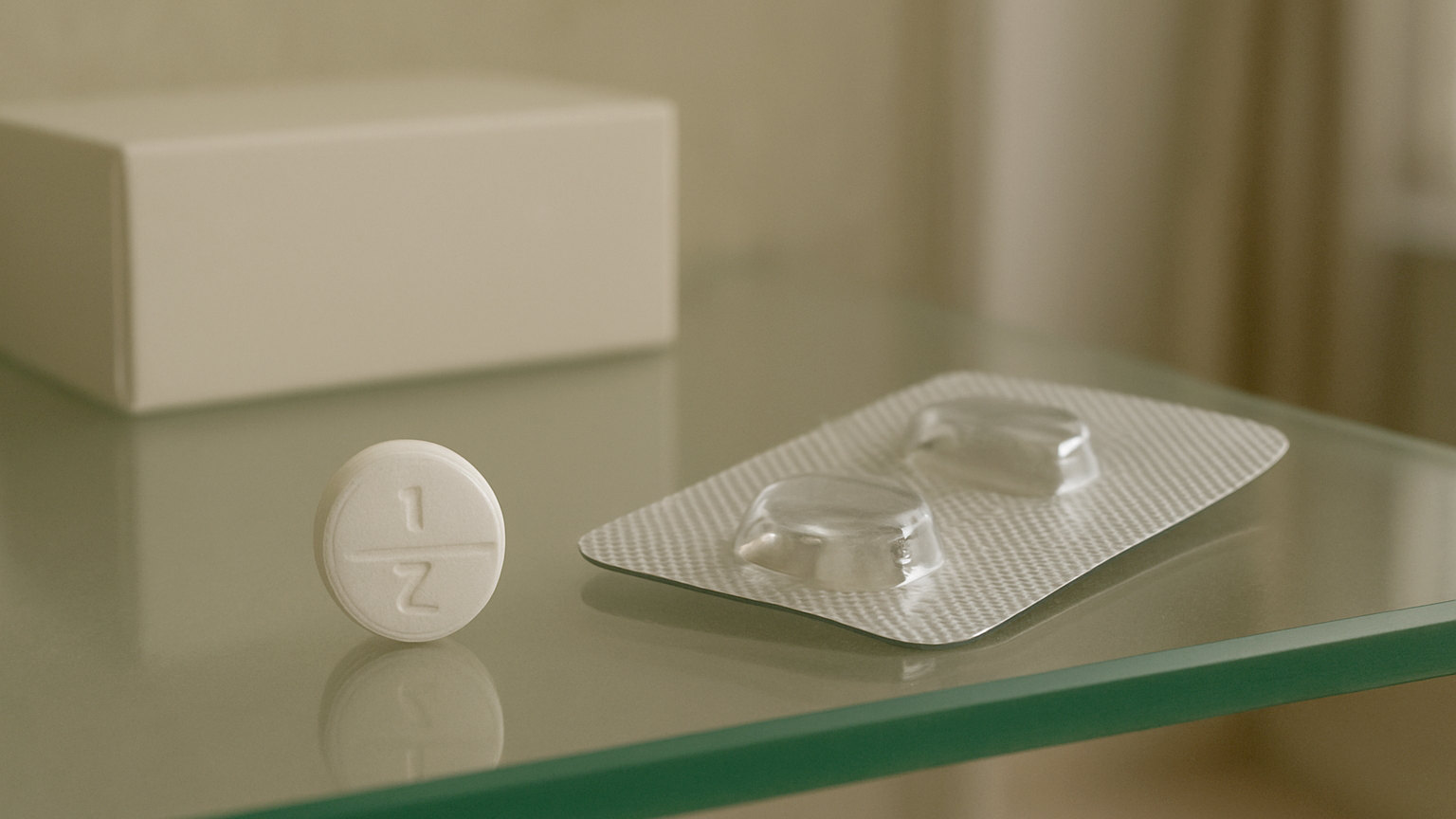
Lorazepam is a benzodiazepine - it enhances GABA, the brain's main inhibitory neurotransmitter, producing sedation, muscle relaxation, reduced anxiety and anticonvulsant activity. Compared with diazepam it is more potent, acts quickly, and wears off considerably faster. That speed is what makes it genuinely valuable in an emergency, and it is also what makes it one of the easiest benzodiazepines to become dependent on.
Follow the instructions on your label. This guide contains no doses. If you have been taking it for months or years, do not stop abruptly.
Where it is genuinely valuable
- Status epilepticus - prolonged seizures. Lorazepam is first-line in hospital, and it works within minutes.
- Acute severe anxiety or agitation, as a short-term measure while other treatment begins
- Palliative care, for anxiety, breathlessness and terminal agitation - where sublingual and subcutaneous routes are useful
- Sedation before procedures
- Alcohol withdrawal, particularly where liver function is poor, since lorazepam is metabolised differently from diazepam
That last point is worth noting: lorazepam is conjugated rather than oxidised by the liver, so it is less affected by liver disease and by age than diazepam - which is why it is often chosen in those situations.
Why dependence develops quickly
Lorazepam is potent and short-acting, so levels rise and fall sharply. Between doses, mild withdrawal can begin - producing anxiety that feels like the original problem returning and prompts another dose.
That cycle can establish within weeks, not months.
UK guidance limits benzodiazepine courses to two to four weeks for that reason. It is not excessive caution - it reflects how quickly tolerance and dependence appear.
See diazepam and medicines for anxiety.
Coming off it
Withdrawal from a short-acting benzodiazepine is harder than from a long-acting one, because levels fall between doses even while you are still taking it.
For that reason, people coming off lorazepam are frequently switched to diazepam first - its long half-life smooths the curve and makes a gradual reduction possible.
Reduction is then slow, over months rather than weeks, with smaller steps at lower doses. Holding at a level when a step is difficult is the standard approach rather than pushing through.
Stopping abruptly after prolonged use is dangerous - withdrawal can include seizures as well as severe anxiety, insomnia, tremor, sweating and perceptual disturbance.
See why you cannot just stop some medicines and deprescribing.
Expect a period of worse symptoms as part of the process rather than as evidence you still need it. That distinction is the entire difficulty.
The combination that kills people
Benzodiazepines with opioids depress breathing far more than either alone, and the combination appears in a large proportion of drug-related deaths.
Alcohol adds to it, as do gabapentin and pregabalin.
If you take both a benzodiazepine and an opioid, that should be a deliberate decision with the risk explained, and naloxone is worth having available - see naloxone and methadone.
Tablets sold as lorazepam on the street frequently contain far more potent compounds - see prescribed medicines and recreational drugs.
Driving
Lorazepam is on the list of specified drugs in the drug-driving law, with a defence for prescribed use taken as directed where driving is not impaired.
Impairment is the point. Do not drive until you know how it affects you - see medicines and driving.
Older people
Benzodiazepines substantially raise the risk of falls, fractures and confusion in older adults.
They are among the medicines most worth reviewing on an older person's repeat list - see being on too many medicines and medicines and your memory.
Sublingual use
Lorazepam tablets are sometimes placed under the tongue, which produces a faster effect and is useful in acute anxiety and in palliative care.
Whether this is meaningfully faster than swallowing is debated, but the route is useful where swallowing is difficult. Follow the specific instruction you were given rather than assuming.
In hospital and at the end of life
Lorazepam is widely used in palliative care, where the usual concerns about dependence are not the relevant consideration and relief of distress is.
It is given sublingually or by subcutaneous injection for anxiety, breathlessness and agitation in the last days of life, often alongside other medicines in a syringe driver. Families are sometimes uneasy about it; the aim is comfort, and doses are titrated to distress rather than fixed.
What works better long-term
Psychological therapy - particularly cognitive behavioural therapy - has better long-term outcomes for anxiety, and the benefit persists after treatment ends, which is not true of benzodiazepines. You can usually self-refer to NHS talking therapies.
Where medication is needed longer-term, an SSRI or SNRI is the usual choice - see escitalopram.
If you are struggling, Samaritans are free on 116 123, or you can text SHOUT to 85258.
More on what medicines are prescribed for in the Conditions section, including Lamotrigine: The Rash That Means Stop.


