
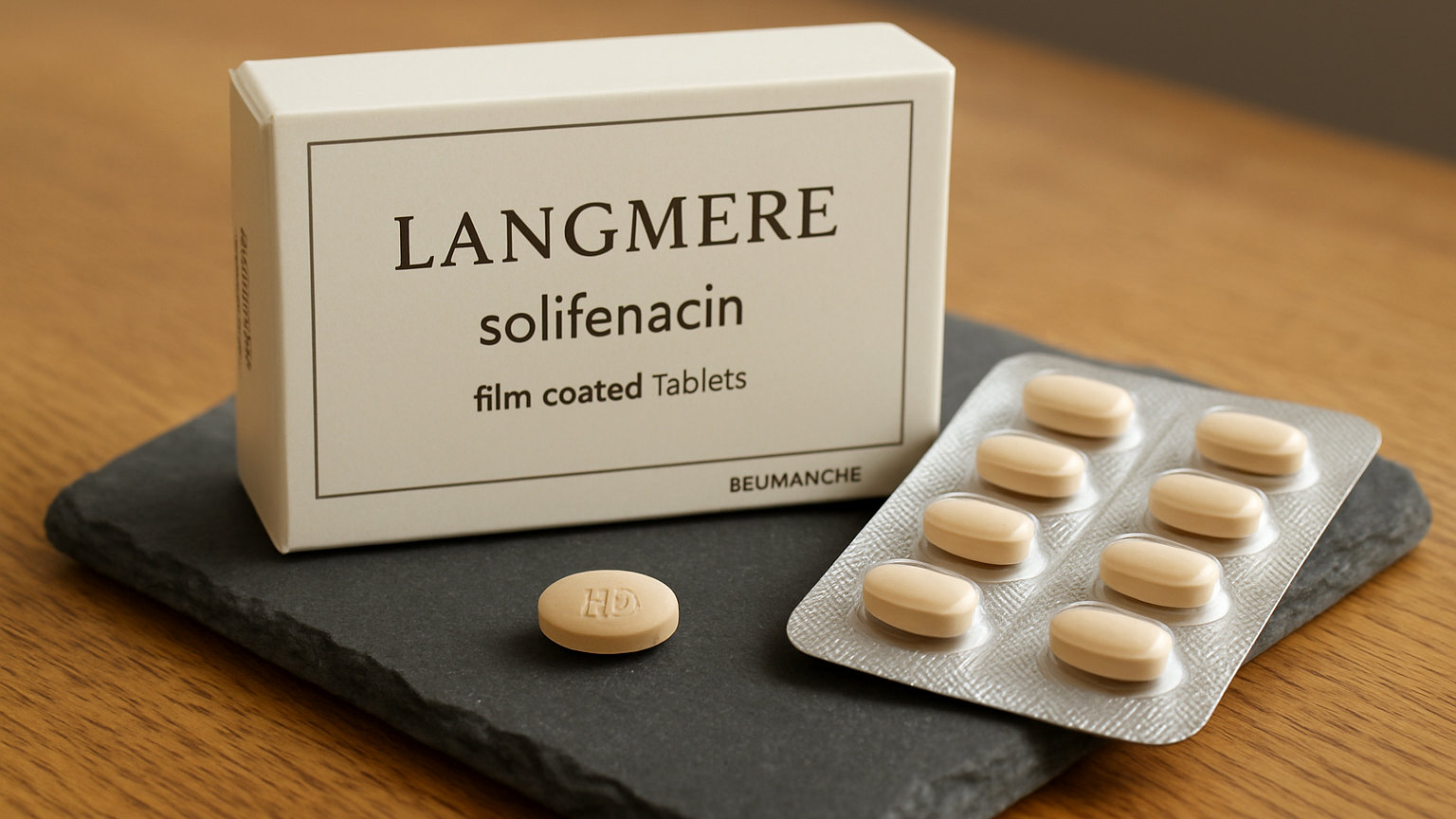
Solifenacin is an antimuscarinic for overactive bladder - urgency, frequency, nocturia and urge incontinence. It blocks the receptors that make the bladder muscle contract before it is full. Compared with oxybutynin it is more selective for the bladder and crosses into the brain less, which means less dry mouth and less confusion. It is the better-tolerated member of a class that has a real problem, and better tolerated is not the same as free of it.
Follow the instructions on your label. This guide contains no doses.
How it compares with oxybutynin
Solifenacin has greater selectivity for the M3 receptor subtype found in bladder smooth muscle, and it penetrates the brain less readily.
In practice that means:
- Less dry mouth, which is the commonest reason people abandon oxybutynin
- Less cognitive effect, though not none
- Once daily rather than several times
Effectiveness for bladder symptoms is broadly comparable. Our guide to oxybutynin covers why the older drug has fallen out of favour.
It still counts towards anticholinergic burden
This is the caveat that matters. Solifenacin is still an anticholinergic, and it still contributes to the cumulative burden associated with cognitive impairment, falls and - in observational studies - an increased risk of dementia.
Someone already taking a sedating antihistamine, a tricyclic antidepressant and a medicine for nausea is adding to a total that is already high. Our guide to medicines and your memory covers how that burden is scored and why it is worth asking about.
In an older person, or anyone with cognitive impairment, mirabegron avoids the mechanism entirely and is frequently the better choice - see mirabegron.
It also opposes dementia treatment directly - see donepezil.
Side effects
Dry mouth and constipation remain the two commonest, just less pronounced than with oxybutynin.
Dry mouth is not trivial - saliva protects teeth, and decay can progress quickly without it. Tell your dentist, and see dry mouth from medicines.
Constipation is worth anticipating rather than waiting for - see macrogol.
Blurred vision, dry eyes, indigestion, drowsiness and dizziness also occur. Reduced sweating can cause overheating in hot weather - see medicines in hot weather.
The heart rhythm point
Solifenacin can lengthen the QT interval, particularly at higher doses.
That matters most alongside other medicines that do the same, or where potassium or magnesium is low. Our guide to medicines that affect your heart rhythm covers the stacking effect.
Report fainting or new palpitations.
Who should avoid it
People with untreated narrow-angle glaucoma, significant urinary retention, severe ulcerative colitis, toxic megacolon, myasthenia gravis, or bowel obstruction.
Caution in men with an enlarged prostate, where it can precipitate retention - see tamsulosin.
Seek urgent help if you cannot pass urine at all and your bladder feels full and painful.
Doses are reduced in significant kidney or liver impairment, and alongside strong inhibitors of the CYP3A4 enzyme - some antifungals and some antibiotics among them.
Give it a fair trial
Improvement builds over weeks rather than days, and a review at around four weeks is usual. Judging it after a few days is judging it too early.
If it is not working, switching within the class sometimes helps, and mirabegron works by a different mechanism entirely. Beyond tablets there is botulinum toxin injected into the bladder, nerve stimulation and specialist urology input.
What should come first
Medicines are not the first line for overactive bladder:
- Bladder training - gradually extending the interval between visits, with good evidence behind it
- Pelvic floor exercises, taught properly rather than guessed at
- Reducing caffeine and alcohol - see caffeine and your medicines
- Adjusting fluid timing rather than restricting overall
- Treating constipation, which worsens bladder symptoms directly
How long to stay on it
Overactive bladder treatment is not automatically lifelong. Symptoms fluctuate, bladder training continues to work after it has been taught, and some people find they no longer need medication.
A review at least annually is reasonable, asking whether the medicine is still helping and whether a trial without it would be worthwhile. Given the anticholinergic burden involved, that question is worth asking more insistently as people get older - see deprescribing.
Check for another cause
Overactive bladder is a pattern of symptoms rather than a diagnosis. See your GP rather than assuming if you have blood in your urine, pain passing urine, recurrent infections, or symptoms that came on suddenly.
Poorly controlled diabetes causes frequency through high glucose. Nocturia specifically can be caused by heart failure, sleep apnoea, or simply the timing of a diuretic - see diuretics.
Related reading: Naltrexone: Uses in Alcohol and Opioid Dependence, with more on what medicines are prescribed for in Conditions.


