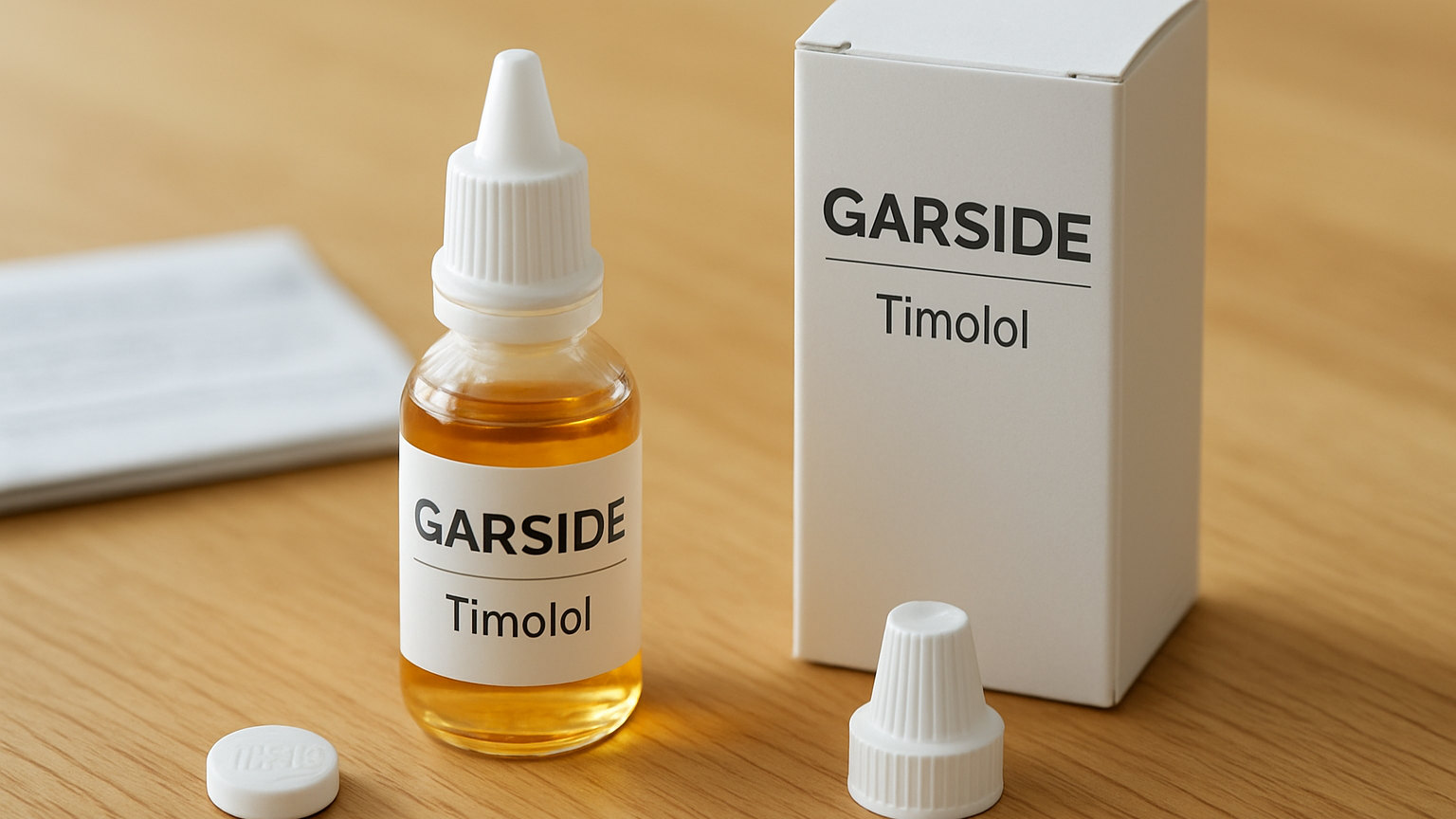
Timolol is a beta blocker given as eye drops to lower pressure inside the eye in glaucoma and ocular hypertension. It reduces the production of fluid in the eye. The thing that makes it worth a page of its own is that people do not think of eye drops as medicines that reach the rest of the body - and timolol does. Absorbed through the tear duct into the nose and throat, it enters the bloodstream directly and behaves like an oral beta blocker.
Follow the instructions on your label. This guide contains no doses.
Why drops reach the bloodstream
The eye holds only a fraction of a drop. Most of what you instil drains through the tear duct into the nose, where it is absorbed across a thin, well-supplied membrane - straight into the circulation, bypassing the liver.
That means a drop can produce blood levels comparable to a small oral dose, without the first-pass metabolism that would normally reduce it.
The asthma warning
Timolol can cause severe bronchospasm in people with asthma, and deaths have been reported.
It is contraindicated in asthma, in a history of asthma, and in severe COPD. It is also contraindicated in marked bradycardia, heart block and uncontrolled heart failure.
The problem is that this is frequently missed. Eye drops are prescribed by ophthalmology, asthma is managed elsewhere, and neither list is always in front of the other prescriber.
Tell your eye clinic about asthma, COPD, heart conditions and any beta blocker you already take. And put your eye drops on your medicines list - see over-the-counter interactions, which covers why omissions cause most missed interactions.
Press the inner corner
This single technique substantially reduces how much reaches the bloodstream.
After instilling the drop, close the eye gently and press the inner corner next to the nose for about a minute. That closes the tear duct, keeping the drop on the eye where it is needed and out of the circulation where it is not.
It also improves the effect on eye pressure. Our guide to eye drops and ear drops covers the full technique, including leaving at least five minutes between different drops.
One drop is enough. A second washes the first away.
Systemic side effects to watch for
The same effects as an oral beta blocker, and they are routinely attributed to something else:
- Slow heart rate, dizziness and fainting
- Breathlessness and wheeze
- Fatigue and reduced exercise tolerance
- Cold hands and feet
- Low mood, sleep disturbance and vivid dreams
- Masking of hypoglycaemia warning signs in people with diabetes on insulin or a sulfonylurea - see sulfonylureas
In an older person these are commonly put down to age. If they began around the time the drops started, mention it.
Our guide to beta blockers covers the class, including why they are not stopped abruptly.
Local effects
Stinging, dry eyes, blurred vision and a gritty sensation. Preservative-free single-use units are available for people who react to preservative.
Report persistent eye pain, marked redness or a change in vision.
Combination drops
Timolol is frequently combined in a single bottle with latanoprost, dorzolamide or brimonidine, which reduces the number of drops and improves adherence.
That is convenient, and it means the timolol is easy to forget about - someone who knows they use "the combination drop" may not know a beta blocker is in it.
Check the ingredients of your drops. If asthma develops, or a chest problem worsens, that is a reason to look at the bottle. See latanoprost, which is often the first-line alternative without these risks.
Glaucoma is silent
The damage glaucoma causes is gradual, painless and irreversible, starting with peripheral vision that the brain fills in. There is nothing to feel whether you use the drops or not.
Adherence is consequently poor. If you have stopped, or use them irregularly, say so at your appointment - pressure readings that reflect a drug you have not been using lead to the wrong decisions.
Children and timolol
Timolol drops are used in childhood glaucoma, and systemic absorption matters more in a small child because the dose is the same while the body is smaller.
Apnoea and bradycardia have been reported in infants. Punctal occlusion is important, and a lower concentration or an alternative class is often preferred. Any breathing change or unusual sleepiness in a child on these drops needs reporting promptly.
Alternatives
Prostaglandin analogues such as latanoprost are usually first choice now, being once daily and without systemic effects.
Laser treatment is increasingly used as a first-line option and removes the adherence problem entirely, which is worth asking about - particularly if you have a reason to avoid a beta blocker.
Carbonic anhydrase inhibitors and alpha agonists are the other drop classes, each with their own profile.
Modafinil: What It Is Licensed For covers a related point, and the Conditions section has the rest of these guides.