
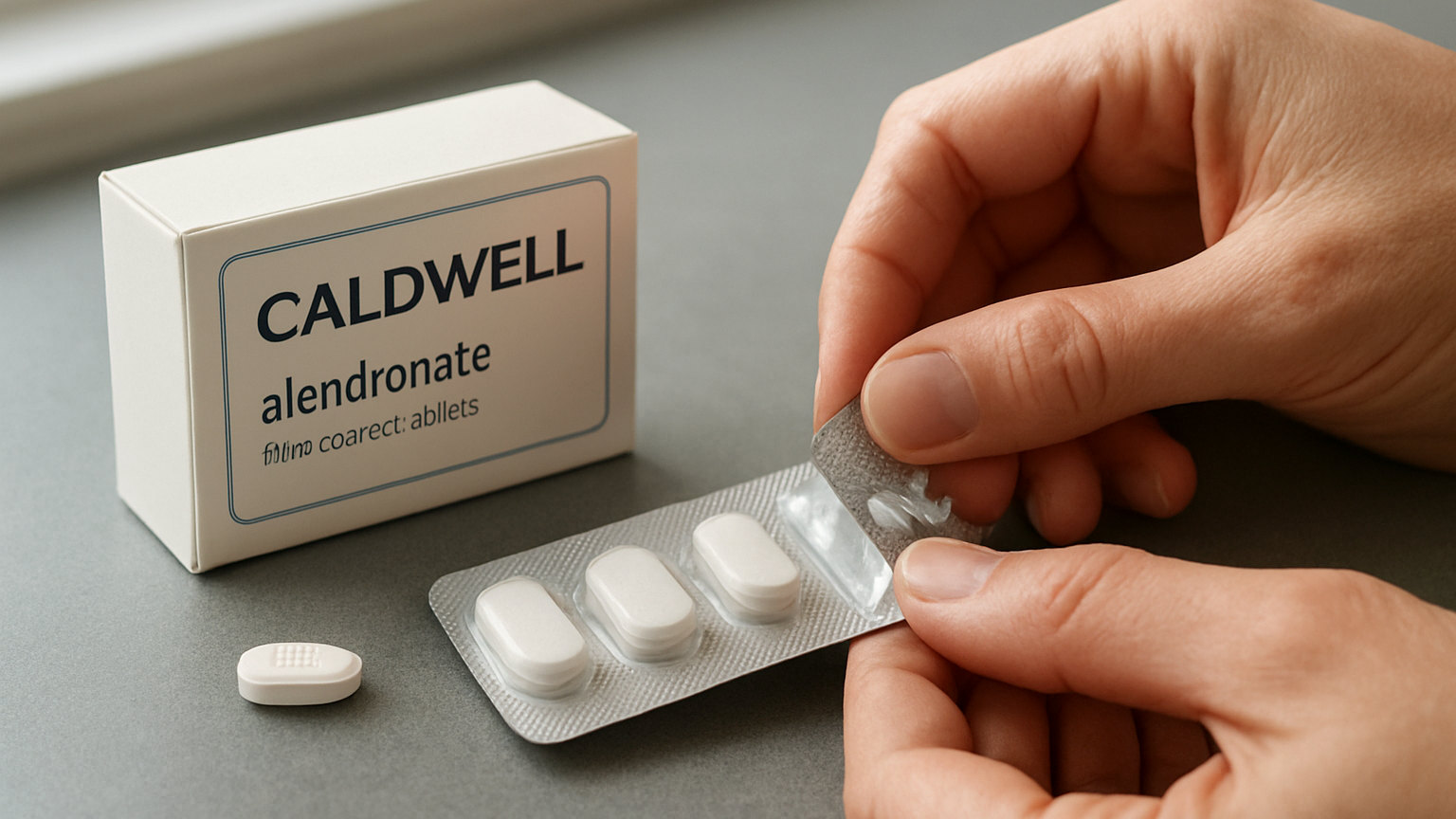
Alendronate - sold in the UK as alendronic acid - is a bisphosphonate used to treat and prevent osteoporosis. It slows the cells that break bone down, allowing bone-building to catch up, and it reduces the risk of spine and hip fractures. The instructions for taking it look excessively fussy. They are not. Very little of the drug is absorbed at the best of times, and taking it wrongly both wastes it and risks a painful injury to the gullet.
Follow the instructions on your label. This guide contains no doses.
How to take it
- First thing in the morning, before any food, drink or other medicine.
- Swallow it whole with a full glass of plain tap water - not mineral water, not tea, not coffee, not juice. Calcium in mineral water blocks absorption.
- Stay upright - sitting or standing - for at least thirty minutes afterwards. Do not go back to bed.
- Do not eat, drink anything else, or take other medicines for at least thirty minutes.
- Do not chew or suck the tablet.
Most people take it weekly rather than daily, on the same day each week. Writing that day on the calendar helps, since a weekly medicine is far easier to lose track of than a daily one.
Why the rules are so strict
Absorption. Only a tiny fraction of an oral bisphosphonate is absorbed even under ideal conditions, and food, calcium, iron, coffee and mineral water reduce it essentially to nothing. Taking it with breakfast is the same as not taking it.
The gullet. If the tablet lodges on the way down, it causes irritation and ulceration that is painful and slow to heal. That is what staying upright with plenty of water prevents.
Stop and seek advice for new pain on swallowing, pain behind the breastbone, or worsening heartburn.
It is not suitable for anyone who cannot sit or stand upright for half an hour, or who has certain problems with the oesophagus.
Calcium and vitamin D
Bisphosphonates work poorly if you are short of calcium or vitamin D, so these are usually checked and supplemented alongside.
Take them at a different time of day - calcium and alendronate together simply cancel out. Our guide to medicines, milk and dairy covers the binding.
See your dentist first
A rare complication, osteonecrosis of the jaw, is associated with bisphosphonates - much more so with the high intravenous doses used in cancer care than with oral treatment for osteoporosis, where it is very uncommon.
The sensible precaution is a dental check-up before starting, and getting any needed extractions or significant work done first. Tell your dentist you take it, and maintain good dental hygiene.
Report jaw pain, swelling, loose teeth or a non-healing socket after an extraction.
Thigh pain matters
Atypical femoral fractures - an unusual break in the thigh bone - are associated with long-term bisphosphonate use. They are rare, and they are often preceded for weeks or months by a dull ache in the thigh or groin.
Report new thigh, hip or groin pain while taking it, particularly if it is aching rather than sharp and comes on without injury. Caught at that stage it can be managed before the bone breaks.
Drug holidays
This is where alendronate differs from most long-term medicines. Bisphosphonates persist in bone after you stop, so the protective effect continues for a period - which means treatment does not have to be lifelong.
Practice is commonly to review after around five years of oral treatment and consider a break, with the decision depending on your fracture risk, your bone density and whether you have had a fracture. Higher-risk people continue.
If you have been on it for years without review, ask. Our guide to monitoring long-term medicines covers what should happen, and medicines and bone health covers the wider picture including the medicines that cause bone loss in the first place.
Other side effects
Indigestion, abdominal pain, wind and nausea are the common ones. Muscle, bone and joint aches occur, occasionally severe.
Some people get flu-like symptoms after the first doses, which settle. Eye inflammation is rare - report eye pain or blurred vision.
If you cannot manage the tablet
The instructions defeat some people, particularly those who cannot stay upright or who have reflux. That is a reason to ask about alternatives, not a reason to take it badly.
Other bisphosphonates are given by infusion once a year, and other classes of bone medicine exist including injections given at home. Say plainly that you are struggling, since a treatment you cannot take properly protects nobody.
Semaglutide: What the Evidence Actually Shows covers a related point, and the Medicines section has the rest of these guides.


