
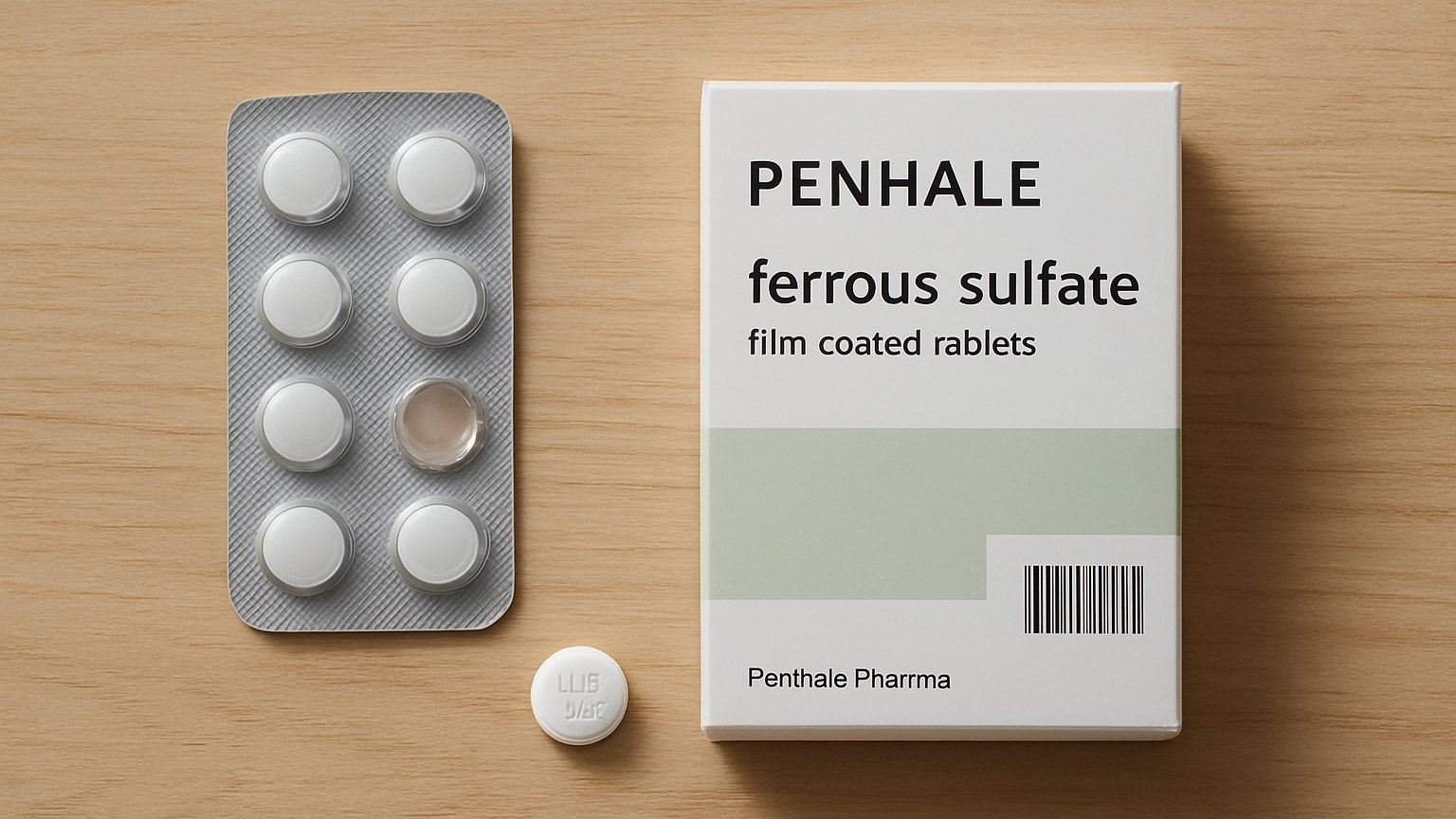
Ferrous sulfate - spelled ferrous sulphate in the UK - is the most commonly used iron supplement for treating iron deficiency anaemia. It is effective, cheap and poorly tolerated by a good many people, mostly because of what it does to the gut. Two things are worth knowing before you start: black stools are expected and harmless, and the more important question is usually not the tablet but why you were short of iron in the first place.
Follow the instructions on your label. This guide contains no doses.
Why the cause matters more than the tablet
Iron deficiency is a symptom, not a diagnosis. In women of reproductive age it is usually heavy periods or pregnancy. In everyone else - and particularly in men and in women past the menopause - it needs explaining, because blood loss from the gut is a common cause and some of those causes are serious.
Poor absorption matters too: coeliac disease is a frequent and frequently missed explanation, and acid-reducing medicines such as omeprazole reduce iron absorption - see omeprazole.
If you have been given iron without anyone investigating why, that is worth asking about rather than accepting.
How to take it
Iron is absorbed best on an empty stomach, roughly an hour before food. It is also worst tolerated that way, so many people end up taking it with a meal and accepting reduced absorption in exchange for being able to continue.
Vitamin C improves absorption considerably - a glass of orange juice, or taking it with food containing vitamin C.
Keep it away from tea and coffee, which contain tannins that bind iron, milk and dairy, calcium supplements, indigestion remedies, and levothyroxine and some antibiotics, all of which iron interferes with in turn. Separate them by a couple of hours - see levothyroxine and doxycycline.
Alternate days may work better
This surprises people. Taking iron raises a hormone called hepcidin, which then blocks absorption for the following day or so - meaning a second dose taken the next morning is largely wasted.
Studies have found that alternate-day dosing, and single rather than divided daily doses, can produce similar or better absorption with fewer side effects. Practice is moving in that direction.
If you are struggling with daily tablets, it is worth asking whether alternate days would suit you. Do not change the regimen yourself without checking.
Side effects
Black stools - expected, harmless, and not a sign of bleeding. Worth knowing so it does not alarm you.
Constipation is the commonest complaint and the commonest reason people stop. Fluid, fibre and activity help; a gentle laxative is reasonable if needed - see why medicines cause constipation.
Nausea, stomach pain and diarrhoea also occur. Taking it with food reduces all of them.
Teeth staining with liquid preparations - use a straw and rinse afterwards.
If ferrous sulfate is intolerable, other salts such as ferrous fumarate or gluconate suit some people better. Ask rather than giving up.
Keep it well away from children
This is the most important safety point on the page. Iron overdose is one of the leading causes of poisoning deaths in young children, and the tablets look like sweets.
Store them out of sight and reach in a locked or high cupboard. If a child may have taken any, call 999 or go to A and E immediately, even if they seem completely well - iron poisoning has a deceptive quiet phase before serious illness. Take the packaging.
See our guide to keeping medicines away from children.
How long it takes
Blood counts usually begin improving within a few weeks, and energy follows. But the haemoglobin recovering is not the end - iron stores take considerably longer to refill, which is why treatment normally continues for around three months after the count has normalised.
Stopping as soon as you feel better is the commonest reason deficiency returns. Expect blood tests along the way to check progress.
Iron in pregnancy
Iron requirements rise substantially in pregnancy, and deficiency is common. It is worth treating rather than accepting, because it is associated with poorer outcomes and because the tiredness is genuinely debilitating on top of everything else.
The same practical points apply - vitamin C helps, tea and calcium hinder, constipation is likely and worth anticipating given that pregnancy causes it anyway. Your midwife will advise on what you need, and the tests are part of routine antenatal care.
When tablets are not enough
Where oral iron is not tolerated, not absorbed, or not keeping up with ongoing losses, an iron infusion given in hospital is an option and corrects deficiency far more quickly.
It is worth asking about if you have been struggling on tablets for months without your levels improving.
More on how the main families of medicine work in the Medicines section, including Salbutamol: What Your Blue Inhaler Does.


