Medicines are a leading cause of accidental poisoning in young children, and the medicine involved almost always belongs to an adult rather than to the child. A handbag left on the floor, a bedside table, a weekly pill organiser on a kitchen worktop - these are the common routes, and a visiting relative's bag is one of the most frequent of all. If a child may have taken something, call 999 or go straight to A&E even if they seem completely well, and take the packaging with you.
If it has just happened
- Call 999, or go to A&E. Do not wait to see whether symptoms appear.
- Take the packaging, and anything left, so the amount can be worked out.
- Do not try to make them sick. This is not advised, does not reliably remove anything, and can cause harm.
- Do not give food, milk or drink unless you are told to.
- Stay calm and stay with them. Note the time as accurately as you can.
Several common medicines cause no symptoms at all for many hours while damage is under way - paracetamol and iron in particular. A child who seems fine is not evidence that nothing has happened, and treatment works far better started early. Our guide to accidental double doses covers the same principle in adults.
What is most dangerous in small quantities
The amounts that matter are far smaller than people expect, because dose relates to body weight.
- Iron tablets - a very small number can be serious, and they look like sweets.
- Paracetamol, including liquid formulations, where the delay before symptoms is the danger.
- Blood pressure tablets, particularly calcium channel blockers and beta blockers.
- Diabetes medicines, which can cause prolonged low blood sugar.
- Opioid painkillers, including patches - used patches still contain active drug.
- Antidepressants, particularly the older tricyclics.
- Sleeping tablets and sedatives.
Nicotine replacement products, e-liquid and button batteries also deserve a mention here, since they are frequently stored alongside medicines and a swallowed button battery is a genuine emergency requiring immediate hospital assessment.
Where to keep things
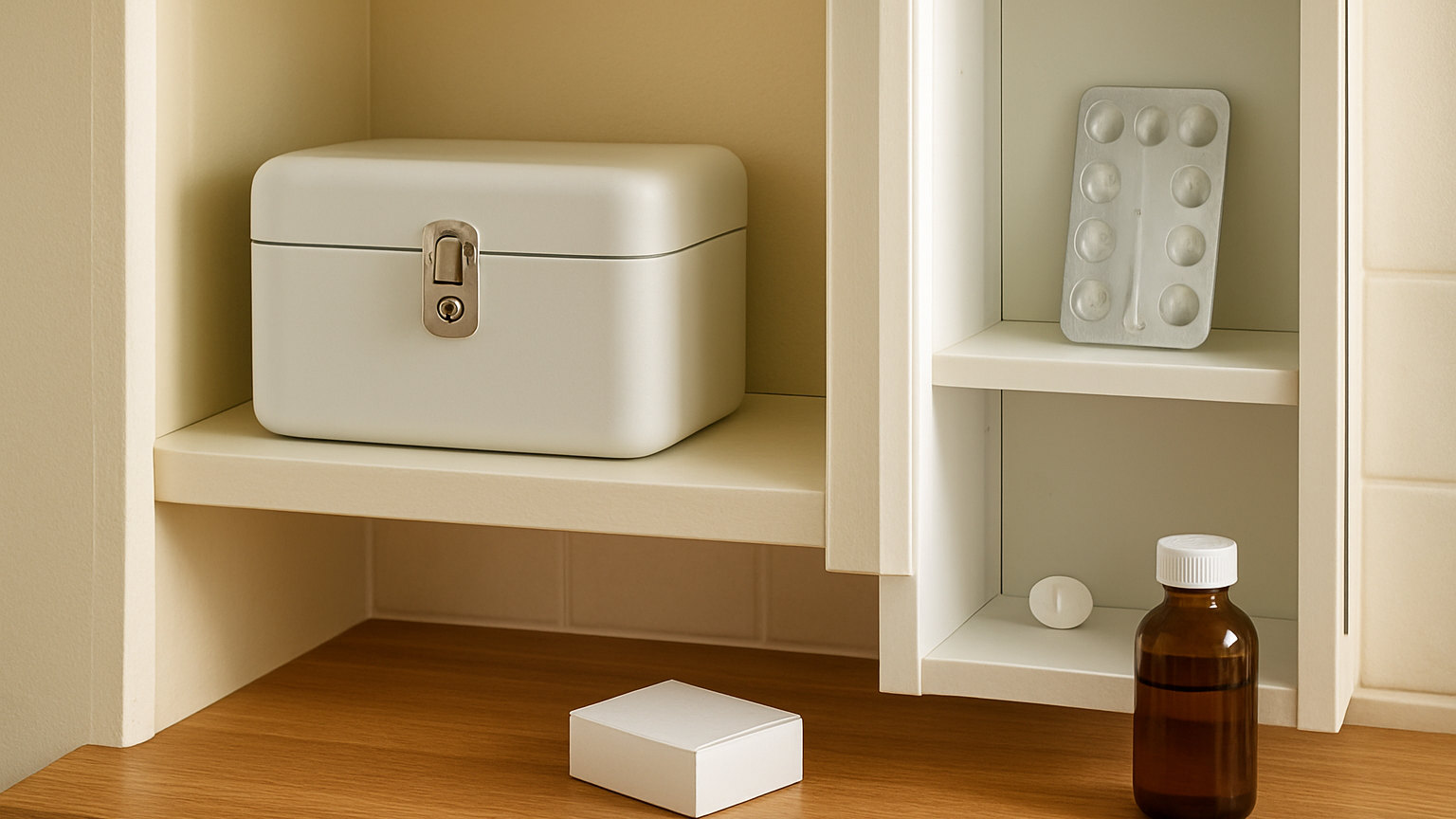
High, out of sight, and preferably locked. Out of sight matters as much as out of reach, because children who have not seen something rarely go looking for it.
Avoid the bathroom cabinet, which is both accessible and the worst place for the medicines themselves - see our guide to where to keep your medicines. A lockable box or a high cupboard away from the kitchen is better.
Keep everything in one place rather than scattered, so you know what is in the house.
Child-resistant is not child-proof
Child-resistant closures are tested to slow children down, not to defeat them. A determined toddler will open one given time, and older children usually manage easily.
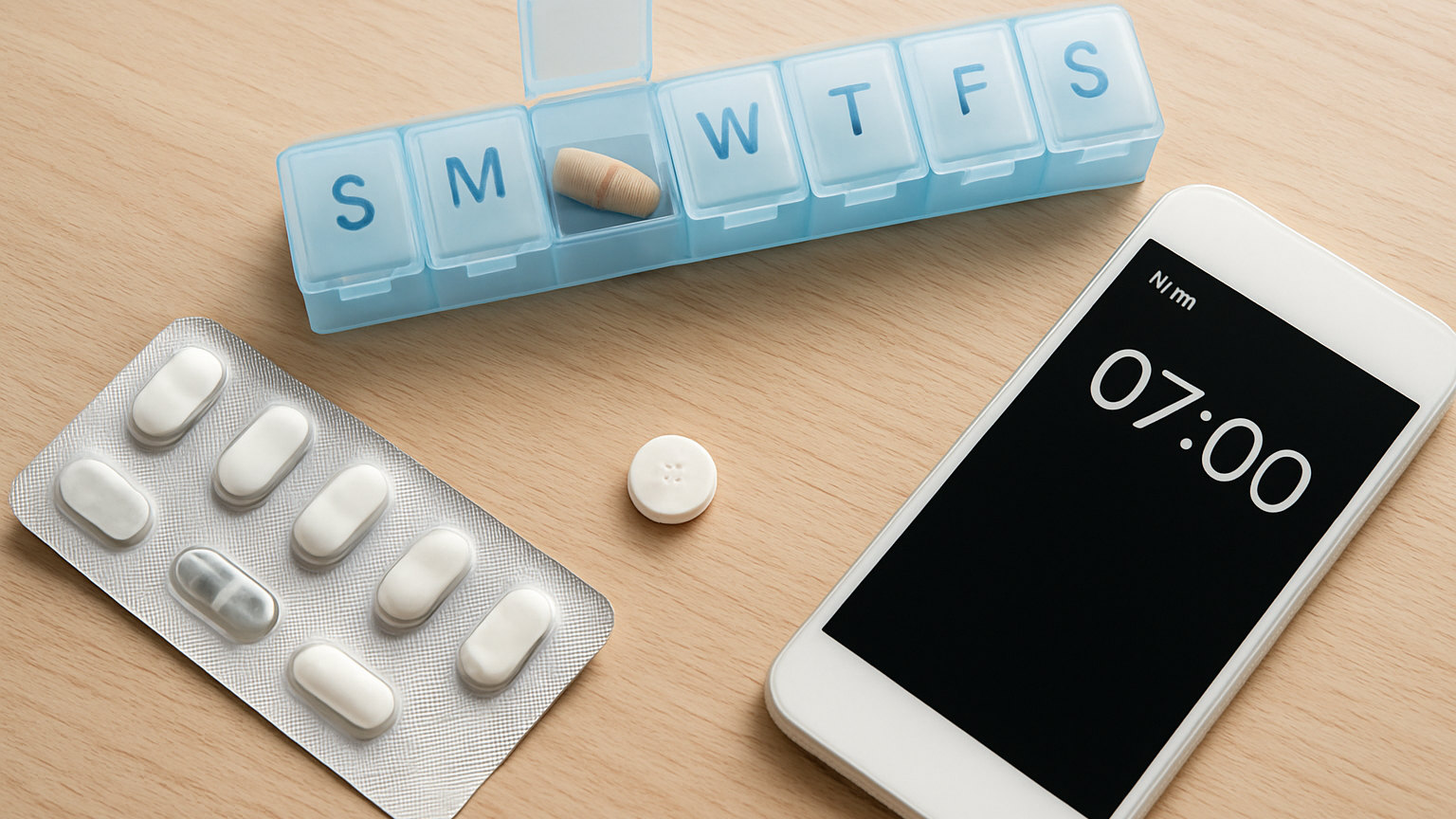
Two related points. Blister packs are not child-resistant in any meaningful sense. And weekly pill organisers have no child-resistant feature at all - they are among the most hazardous items in the house precisely because they contain many tablets, sit somewhere convenient, and open easily. If there are children around, an organiser needs the same secure storage as everything else.
If you have requested non-child-resistant caps because of arthritis or grip problems, which pharmacies will supply, storage becomes more important rather than less.
Visitors, and other people's houses
This is where most incidents happen and where least attention is paid.
Ask visitors to keep handbags and overnight bags off the floor and out of reach. Grandparents' houses are a recognised risk - medicines are more likely to be out on surfaces, in daily organisers, and in bags. If your child stays elsewhere regularly, it is worth a conversation rather than an assumption.
The same applies in reverse when you visit others with a child.
Liquid medicines and dosing devices
Children's liquid medicines carry their own risk, because they taste pleasant and come in larger volumes. Keep them as securely as tablets, and never leave a syringe or spoon loaded ready for later.
Use only the measuring device supplied with the product. Kitchen spoons vary enormously, and a household teaspoon can deliver considerably more or less than intended - which matters most for the medicines where the margin is narrowest.
Habits that help
- Never call medicine "sweeties" to persuade a child to take it. It works once and teaches exactly the wrong lesson.
- Do not take your own medicines in front of small children where you can avoid it - they copy.
- Put things away immediately rather than leaving them out for later.
- Return unwanted medicines to a pharmacy rather than leaving them in a drawer - see leftover medicines.
- Check dates and clear out once a year, which also reduces how much is in the house.
If a child has managed to reach something once, treat that as information about the storage rather than about the child. The next attempt will be quicker.
Do Medicines Really Expire? covers a related point, and the Usage section has the rest of these guides.