
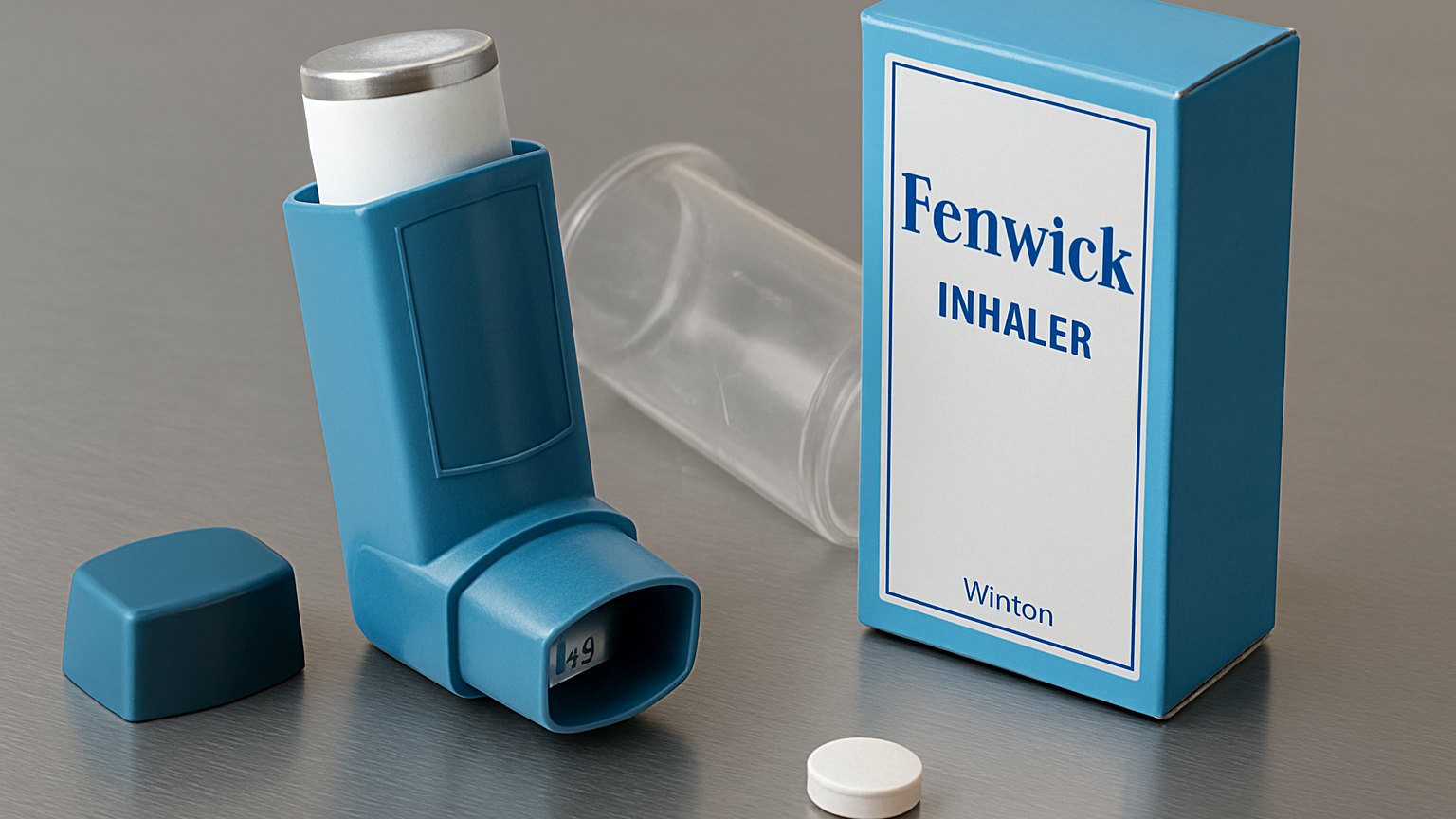
Salbutamol - the blue inhaler, called albuterol in the United States - relaxes the muscle around the airways, opening them within minutes. It is a reliever, and it treats a symptom rather than a cause: it does nothing about the inflammation that made the airways twitchy in the first place. That combination of fast relief and no underlying effect is exactly why people come to depend on it, and why how often you need it is the most important number in asthma care.
Follow the instructions on your label and your asthma action plan. This guide contains no doses.
How it works
Salbutamol stimulates beta-2 receptors on the smooth muscle wrapped around your airways, causing that muscle to relax. The airway widens and air moves more freely.
It starts working within about five minutes and lasts roughly four to six hours. It has no effect on the swelling and mucus that underlie asthma, which is what a preventer inhaler treats - our guide to preventers and relievers covers the distinction, which is the one most worth understanding.
The number that matters
Needing your blue inhaler three or more times a week is a sign your asthma is not controlled. So is waking at night with cough or wheeze, or being limited during exercise.
Getting through more than one reliever inhaler a month is a recognised marker of increased risk of a serious attack. It is not a sign you are managing well - it is a sign something needs reviewing.
The instinct when a reliever is needed more often is to use it more. The correct response is to have the preventer treatment reviewed. Our guide to what to do when asthma gets worse covers the warning signs that appear days before anything dramatic.
Use a spacer
A pressurised inhaler used with a spacer delivers substantially more drug to the lungs and removes the coordination problem entirely. Trials in acute asthma find it at least as effective as a nebuliser.
One puff at a time into the spacer, then breathe in and out normally through it several times. Firing several puffs in at once wastes most of them on the walls. Wash the spacer monthly in warm soapy water and let it air dry rather than rubbing, which builds static.
Our guides to using your inhaler properly and nebulisers cover technique and why a home nebuliser can mask deterioration.
Side effects
Shakiness, particularly of the hands, and a fast or thumping heartbeat are the common ones. They are expected rather than dangerous, they are dose-related, and they settle as the drug wears off.
Headache, muscle cramps and feeling wired also occur. Higher doses can lower potassium, which is one reason people given large amounts in hospital are monitored.
If the shaking bothers you, mention it - technique and spacer use affect how much reaches the rest of your body, and there are alternatives.
When to call for help
Call 999 if your reliever is not helping or is not lasting four hours, you are too breathless to speak in full sentences, your lips or fingers look blue or grey, or you feel your symptoms are getting worse quickly.
While waiting, sit upright, stay calm, and use your reliever through a spacer as your action plan directs. Do not delay calling because you think you should try the inhaler a few more times first - that delay is the most common factor in asthma deaths.
Carrying it
Keep one with you rather than in a drawer at home. Check the expiry date and the counter if yours has one - a reliever that turns out to be empty during an attack is a familiar and preventable emergency.
Schools in England may hold an emergency inhaler, but that does not replace your child having their own with a spacer - see asthma in children.
Heat damages pressurised inhalers, so do not leave one in a car in summer - see medicines in hot weather.
Salbutamol in COPD
It is used as a reliever in COPD too, though longer-acting bronchodilators do most of the day-to-day work there. Our guide to COPD and what your inhalers are doing covers how the regimens differ.
Before exercise
Salbutamol taken before exercise prevents exercise-induced symptoms for many people, and that is a legitimate use rather than overuse.
But needing it before every session, or being unable to keep up, suggests the underlying control is not good enough. Taking part fully in sport is the goal, and being unable to is a reason for review rather than a reason to opt out.
Recycling the empties
Pressurised inhalers contain propellants that are potent greenhouse gases, and returning empties to a pharmacy for proper disposal makes a measurable difference - see why returned medicines cannot be reused.
More on how the main families of medicine work in the Medicines section, including Prednisolone: Steroid Tablets and the Rules.


