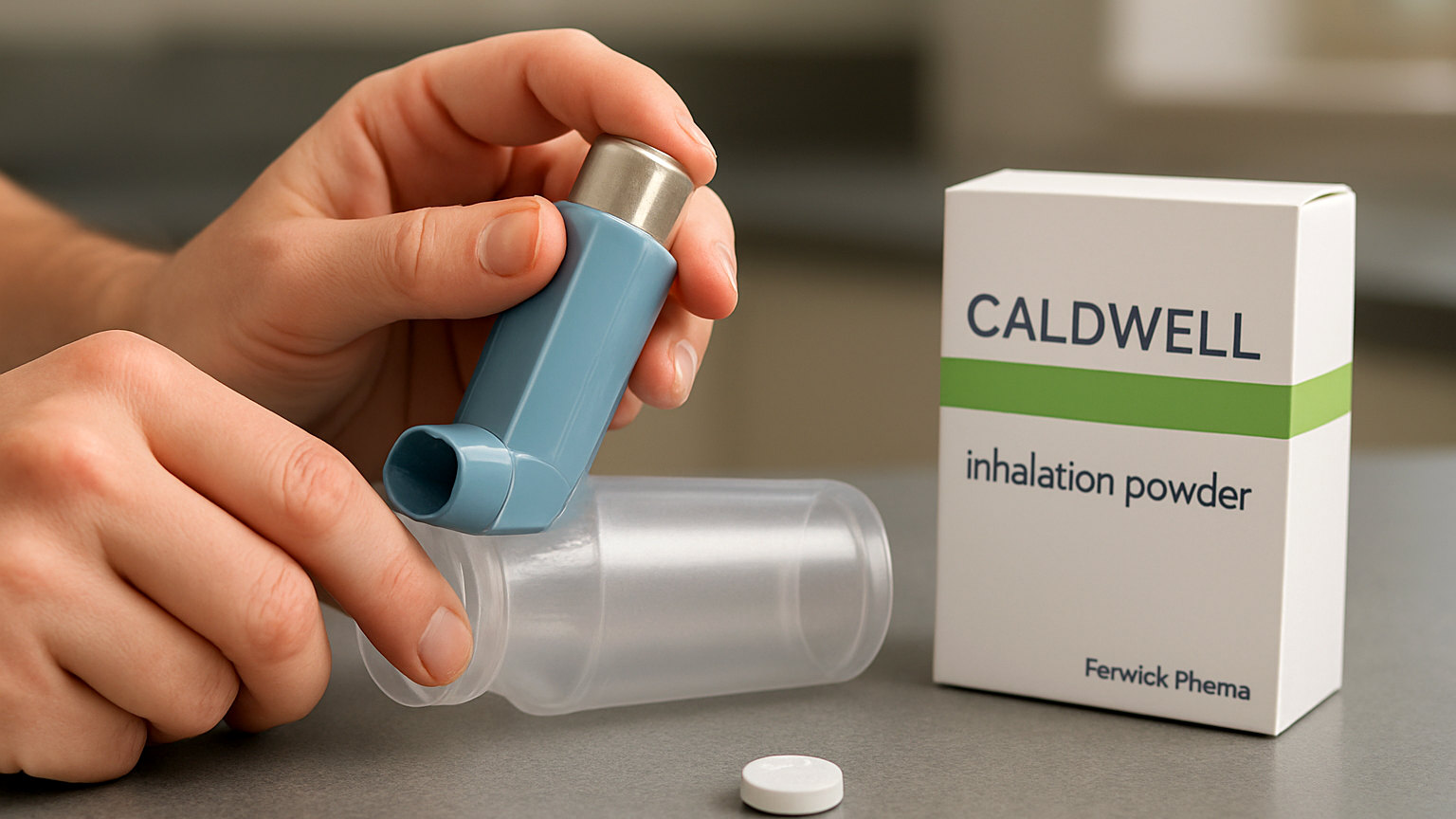
Studies of inhaler technique consistently find that a large proportion of people use theirs incorrectly and get only a fraction of the intended dose into their lungs. It is the single most common reason inhaled treatment appears to be failing, and it leads directly to doses being increased for a problem that was never about the drug. The technique also differs by device type - the method that works for a pressurised inhaler is wrong for a dry powder one.
The most useful five minutes available to anyone with asthma or COPD is asking a pharmacist to watch you use yours. No appointment needed, and they will do it happily.
Pressurised inhalers, with a spacer
A spacer is the single biggest improvement most people can make. It removes the need to coordinate pressing and breathing, catches the drug that would otherwise hit the back of your throat, and gets substantially more into your airways. Spacers are not just for children, and using one is not a sign things have got worse.
- Shake the inhaler and fit it into the spacer.
- Breathe out gently, away from the spacer.
- Seal your lips around the mouthpiece.
- Press once, then breathe in slowly and deeply, and hold for about ten seconds - or, if that is difficult, breathe in and out normally through the spacer several times.
- Wait about thirty seconds before a second puff, and shake again.
One puff at a time into the spacer. Firing several in at once means most of it settles on the walls rather than reaching you.
Pressurised inhalers, without a spacer
Harder, because the timing has to be right. Shake it, breathe out gently, seal your lips around the mouthpiece, then start to breathe in slowly and press the canister just after you begin - not before, and not after you have finished. Keep breathing in slowly and fully, then hold your breath for about ten seconds.
Common errors: pressing before starting to inhale, breathing in too fast, stopping the breath as soon as you feel the spray, and not holding the breath afterwards.
Dry powder inhalers
These work the opposite way round. The powder is drawn out by the force of your breath, so you need a quick, deep, forceful inhalation rather than a slow one.
Load the dose as the device requires, breathe out gently away from the mouthpiece, seal your lips, breathe in hard and deep, then hold for about ten seconds. Never breathe out into a dry powder inhaler - the moisture clumps the powder.
If you use both types, be clear which is which. Applying dry powder technique to a pressurised inhaler, or vice versa, is a frequent and invisible cause of poor control.
If you use more than one inhaler
Where a reliever and a preventer are both due at the same time, the usual advice is to take the reliever first and wait a few minutes, so the airways are more open when the preventer follows. Check what applies to yours, since combination inhalers and newer regimes work differently.
Keep track of which device is which. People frequently confuse a preventer with a reliever, and reaching for the wrong one during a deterioration wastes time that matters. Colour is not a reliable guide across brands - learn the names.
Afterwards
Rinse your mouth and spit after any inhaler containing a steroid. This reduces oral thrush and hoarseness, the two common local side effects - see our guide to steroid inhaler safety.
Wash your spacer about monthly in warm soapy water and leave it to air dry rather than rubbing it, since rubbing builds static that attracts the drug to the walls. Replace it roughly annually.
Knowing when it is running out
Many inhalers now have a dose counter - check it regularly. Older pressurised inhalers may not, and the old trick of floating the canister in water is unreliable and can block the valve.
Do not run down to the last dose before reordering, particularly with a preventer. Our guide to repeat prescriptions covers keeping supply steady.
Keep track of how fast you get through relievers. Needing one more than about three times a week suggests your asthma is not controlled, which our guide to preventers and relievers explains.
Get your technique checked
Have it watched at least yearly, and any time you are given a new device - different inhalers work differently, and being competent with one does not transfer.
Take all your inhalers to your annual review. If arthritis, weak grip or coordination makes a device difficult, say so: breath-actuated inhalers fire automatically when you inhale, and there are alternatives designed for exactly this.
Do not assume you are doing it right because you have done it for years. Most people who are shown to be using theirs incorrectly are long-term users who were taught once and never rechecked.
Finally, return old inhalers to a pharmacy rather than binning them - the propellants are potent greenhouse gases, as our guide to leftover medicines explains.
Related reading: Steroid Nasal Sprays: How to Use Them, with more on how the main families of medicine work in Medicines.