
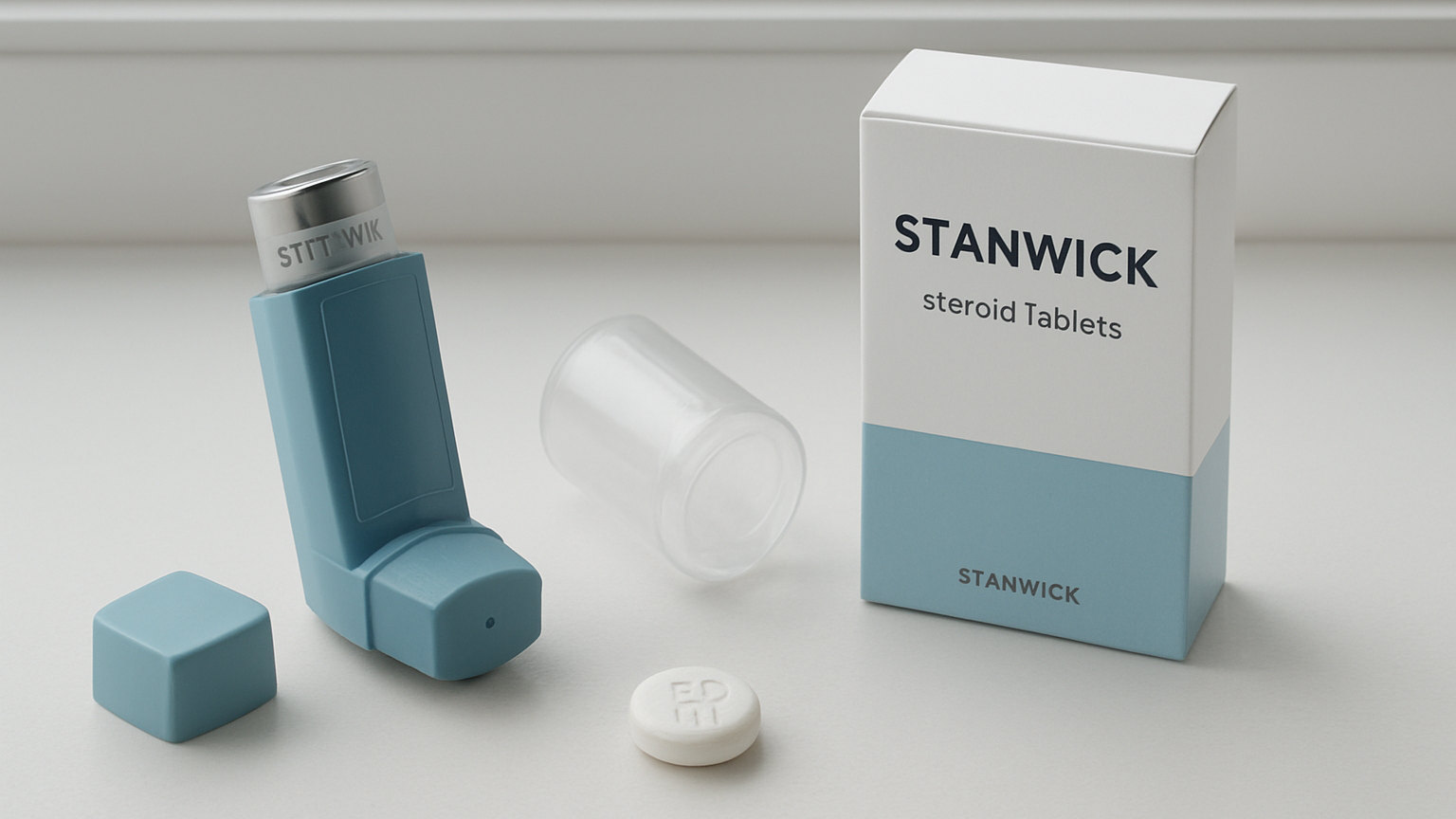
Inhaled steroids deliver a small amount of medicine directly to the airways, so the quantity reaching the rest of the body is far lower than with steroid tablets. At the doses most people use, the recognised effects are local - oral thrush and hoarseness - and both are largely preventable. There are genuine considerations at high doses and over many years, but for the great majority of people the risk of undertreated asthma is substantially greater than the risk of the preventer.
Do not reduce or stop a preventer on your own. If you want to be on less, that is a conversation at a review, and there is usually more room for it than people expect.
Why the dose is so much lower than tablets
A steroid tablet is absorbed into the bloodstream and reaches every tissue. An inhaler puts the drug where the inflammation is, so a small quantity achieves the same local effect. Some is swallowed and some absorbed from the lungs, but modern inhaled steroids are largely broken down by the liver before reaching general circulation.
That is the whole design, and it is why inhaled steroids are considered suitable for years of continuous use where tablets are not.
The local effects, and how to avoid them
Oral thrush - white patches, soreness, altered taste - and hoarseness are the two common ones, caused by drug settling in the mouth and throat rather than reaching the lungs.
Both are substantially reduced by two habits: rinse your mouth and spit after each dose, and use a spacer with a pressurised inhaler. A spacer also gets considerably more of the drug into your airways, so it improves the treatment at the same time as reducing the side effect. Spacers are not only for children, and needing one is not a sign of deterioration.
Thrush is easily treated - a pharmacist can usually help without an appointment. Our guide to thrush covers what it looks like and when it is something else.
The longer-term questions
Bone density. High doses over long periods have been associated with reduced bone density. This is a consideration at the upper end of dosing, not at the low doses most people use, and is one reason treatment is reviewed to keep you on the lowest dose that controls your symptoms.
Growth in children. Inhaled steroids have been associated with a small reduction in growth rate, mainly in the first year of treatment, with studies suggesting a modest effect on final adult height. Children on inhaled steroids should have their height monitored. Set against that, poorly controlled asthma itself affects growth, sleep, schooling and, occasionally, life.
Adrenal suppression. At high doses the body's own cortisol production can be suppressed. Anyone on a high dose should carry a steroid card and mention it during illness, injury or surgery. Ask whether this applies to you - most people it does not.
Chest infection risk in COPD. Inhaled steroids in COPD are associated with a raised risk of pneumonia, which is why they are used more selectively there than in asthma, as our guide to preventers and relievers explains.
The comparison that actually matters
Weighing an inhaled steroid against nothing is the wrong comparison. The alternative to a preventer is not "no medicine" but "untreated airway inflammation", and reviews of asthma deaths in the UK have repeatedly found under-use of preventers and over-reliance on relievers among the contributing factors.
Untreated inflammation also causes long-term structural change in the airways, some of it irreversible. Preventers are aimed at that as much as at how you feel this week - which is precisely why they must be taken daily, including when you feel completely well.
Being on the lowest effective dose
The aim is not the highest dose that works but the lowest that keeps you well. Once control has been good for a sustained period, prescribers will often consider stepping down - gradually, with review, and never abruptly.
What makes stepping down possible is good control in the first place, and the single largest factor there is technique. A large proportion of people use their inhaler incorrectly and get a fraction of the intended dose, which leads to doses being increased for a problem that was never about the drug. Ask your pharmacist to watch you use yours - they will do it without an appointment.
Questions worth asking at your review
- What dose am I on, and is it low, medium or high?
- Could I use a spacer, and would it let me use less?
- Should I carry a steroid card?
- Is my technique right - can you watch me?
- Am I due to step down, or up?
Take all your inhalers to the appointment. And do not run down to the last dose before reordering - our guide to repeat prescriptions covers keeping supply steady, which matters more with a preventer than with almost anything else.
Old inhalers should go back to a pharmacy rather than in the bin. The propellants in some are potent greenhouse gases, and pharmacies dispose of them properly - see what to do with leftover medicines.
Related reading: How to Use Your Inhaler Properly, with more on how the main families of medicine work in Medicines.


