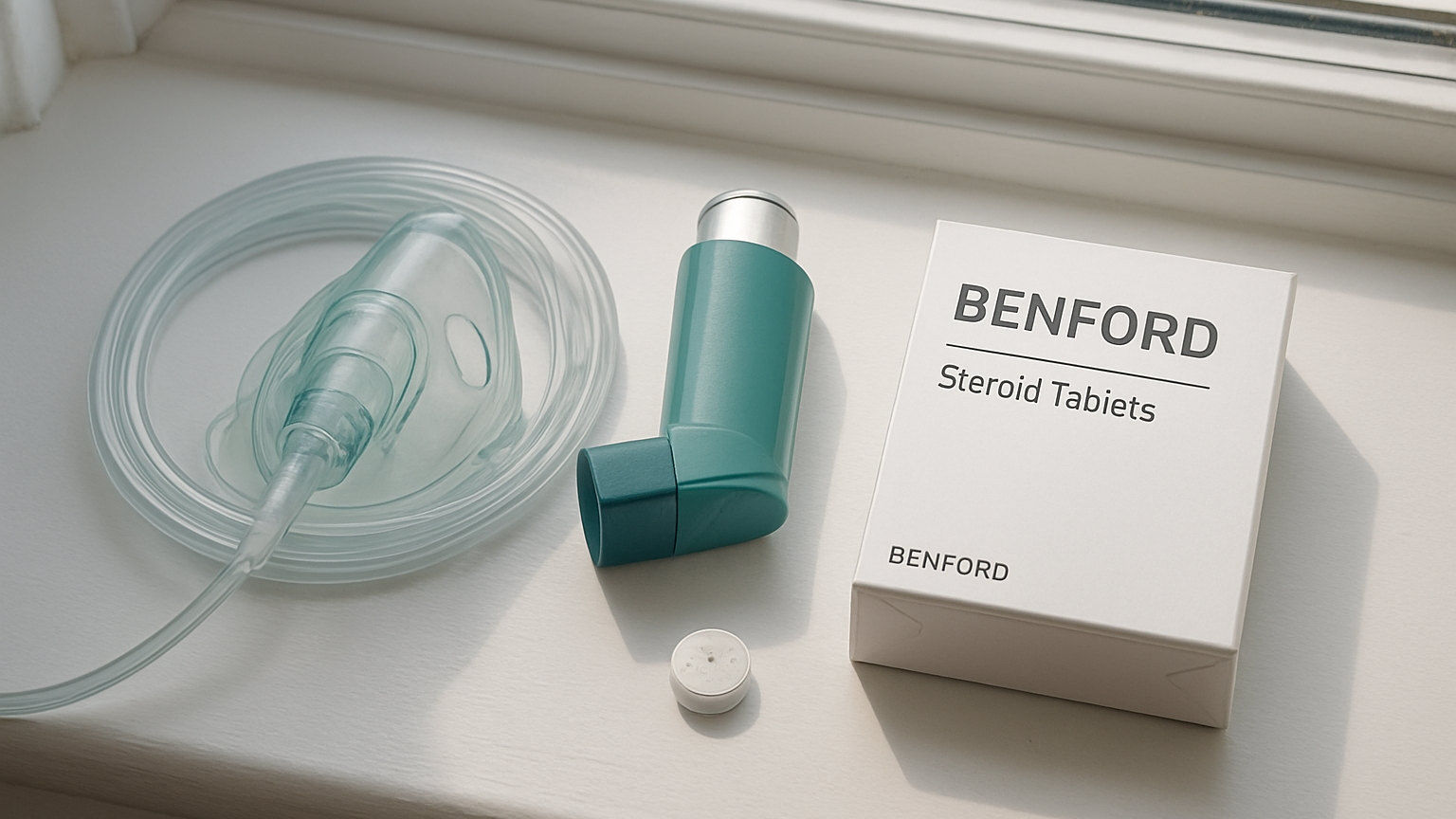
A nebuliser turns liquid medicine into a fine mist that you breathe in over several minutes through a mask or mouthpiece. It requires no coordination and no technique, which is why it is used in hospital and in ambulances. What surprises people is that for most acute asthma attacks, a pressurised inhaler used with a spacer delivers the drug just as effectively - and the real danger of a home nebuliser is that it can mask deterioration and delay someone calling for help.
If you are having an asthma attack and your reliever is not working, call 999. Do not reach for a nebuliser instead.
How they compare with inhalers
Trials in acute asthma have repeatedly found that a pressurised inhaler with a spacer is at least as effective as a nebuliser for delivering reliever medication, with fewer side effects and less time taken.
Spacers are also cheap, portable, need no power, and cannot fail mid-attack. Our guide to using your inhaler properly covers the technique, including one puff at a time and tidal breathing through the spacer.
The nebuliser's advantage is that it works for someone too breathless or too unwell to use anything requiring effort, and it delivers larger quantities over a longer period. That is why it belongs in acute care rather than in a cupboard at home.
Where they are genuinely used
- In hospital and ambulances, during severe asthma attacks and COPD exacerbations.
- Severe COPD, where some people are prescribed a home nebuliser after specialist assessment.
- Cystic fibrosis and bronchiectasis, for antibiotics and mucus-thinning treatments delivered directly to the airways.
- Some other lung conditions needing specific inhaled medicines with no inhaler equivalent.
- People physically unable to use an inhaler and spacer, which is a smaller group than assumed.
Home nebulisers should be set up after assessment, with a clear plan for when to use one and - crucially - when to stop using it and get help.
The danger of using one at home
The pattern that causes harm is someone repeatedly nebulising through a deteriorating attack, feeling briefly better each time, and arriving at hospital far later and far sicker than they would have done otherwise.
Reliever medication opens the airways temporarily; it does nothing about the underlying inflammation driving the attack. Needing repeated doses means the attack is not under control.
If your plan includes a home nebuliser, it should specify how many times you may use it and at what point you must call for help. If nobody has given you that limit, ask - our guide to what to do when asthma gets worse covers the 999 criteria.
Cleaning and maintenance
A poorly cleaned nebuliser delivers bacteria directly into the lungs, which matters enormously for people with bronchiectasis or cystic fibrosis.
Follow the manufacturer's instructions, but the general principles are: wash the chamber and mask or mouthpiece after each use in warm soapy water, rinse, and air dry completely - never leave it damp. Disinfect at the interval specified. Replace tubing, masks and chambers at the recommended intervals rather than when they look worn.
Do not share a nebuliser or its parts between people.
Side effects
Nebulised reliever medication delivers a larger dose than an inhaler, so shakiness, palpitations and a racing heart are common and expected. It can also lower potassium, which is one reason people are monitored in hospital.
Nebulised steroids and antibiotics have their own effects, and a mask can cause skin irritation or, with steroids, thrush around the mouth - a mouthpiece avoids much of this, and rinsing afterwards helps.
Anyone with glaucoma should keep nebulised ipratropium away from the eyes, since a poorly fitting mask can worsen it.
Getting the medicines
Nebuliser solutions are prescribed as separate items, and the device itself may be supplied by a specialist service, bought privately, or occasionally loaned. Servicing and filter changes are usually the user's responsibility.
Do not run short - our guide to ordering repeats covers timing, and this is one of the categories where running out matters.
The question worth asking
If you have a home nebuliser, ask at your next review whether you still need it, and whether an inhaler with a spacer would do the same job. For a number of people the answer is yes, and the spacer is more portable, needs no power, and does not carry the risk of masking a deterioration.
If you are keeping one because it feels reassuring, that is understandable but worth examining - our guide to preventers and relievers makes the point that reliever use is a measure of control rather than a solution to poor control.
If this was useful, Are Steroid Inhalers Safe to Use Long Term? is worth reading next, and Medicines collects the rest.