Lidocaine blocks sodium channels in nerve endings, preventing them from firing and so preventing pain signals from being sent. Used as an injection it is the workhorse local anaesthetic of dentistry and minor surgery. Used on the skin as a patch, gel or spray it numbs a defined area. Its main practical risk is straightforward: applied over a large area, to broken skin, or for too long, enough is absorbed that it stops being local at all.
Follow the instructions on your label. This guide contains no doses.
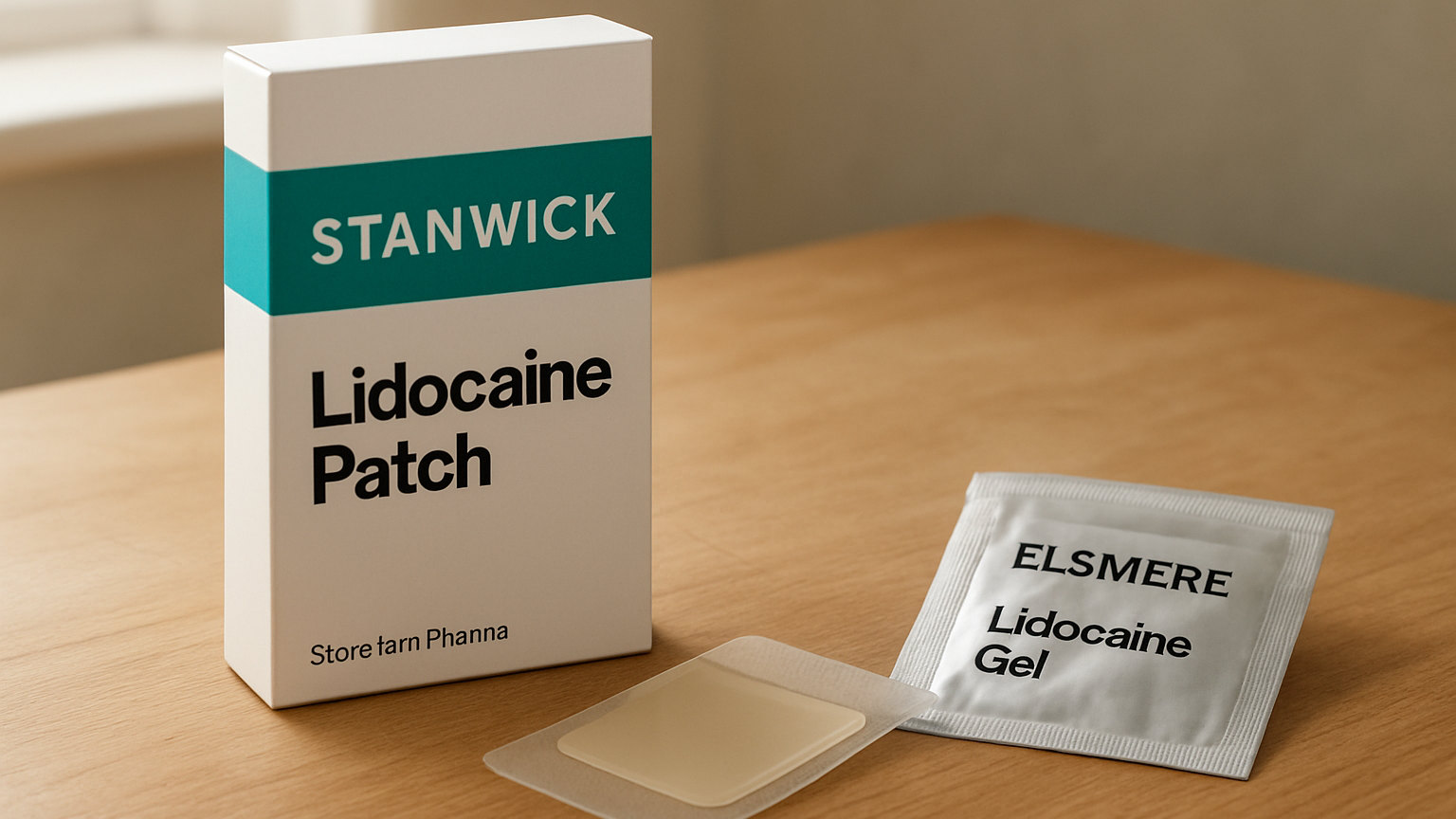
Lidocaine plasters
Medicated plasters are used mainly for post-herpetic neuralgia - the persistent nerve pain that can follow shingles. They are applied to intact skin over the painful area for part of the day and then removed for a period.
They suit a clearly bounded area of pain rather than a general ache, and they are appealing because almost nothing is absorbed systemically - making them a reasonable option for older people who cannot tolerate the tablets usually used for nerve pain.
Our guides to shingles and nerve pain medicines cover the condition and the alternatives.
They are not for ordinary musculoskeletal aches - a topical anti-inflammatory is the right choice there, as our guide to painkilling gels and patches explains.
Remove the old plaster before applying a new one, and follow the on-and-off schedule rather than wearing them continuously - see how to use and rotate patches.
Gels, creams and sprays
Used for catheterisation, minor procedures, haemorrhoids, mouth ulcers and sore throats, and as a numbing cream before blood tests or cannulation - which is genuinely valuable for children and for anyone needle-phobic.
Numbing creams need time to work - commonly half an hour to an hour under a dressing - so they have to be applied before you arrive, not on arrival.
The risk with gels is quantity. Applied thickly, over a large area, or to broken or inflamed skin, absorption rises sharply. Follow the stated amount and area rather than using more because it is not working.
Teething gels
Worth a specific mention. Lidocaine teething gels are subject to restrictions in the UK, and products containing benzocaine carry a separate risk of methaemoglobinaemia in infants.
Current advice for teething favours non-medicinal measures first - a chilled teething ring, gentle gum massage - with paracetamol or ibuprofen suitable for the age if needed. Ask a pharmacist rather than assuming a gel on the shelf is appropriate for a baby.
Toxicity
Too much lidocaine in the bloodstream affects the nervous system and then the heart.
Early signs are numbness or tingling around the mouth, a metallic taste, ringing in the ears, dizziness, blurred vision, drowsiness and confusion. Later come muscle twitching, seizures, slow heart rate and collapse.
Seek urgent medical help for any of these after using lidocaine. They matter most after injection, after use over large areas, and in people with liver disease, heart failure or reduced kidney function, in whom clearance is reduced.
The risk rises when several lidocaine-containing products are used at once - a gel plus a spray plus a plaster - which is easily done without realising.
At the dentist
The injected form is combined with adrenaline in most dental cartridges, which narrows local blood vessels, keeping the anaesthetic where it is needed and prolonging it.
That is why your heart may race briefly after a dental injection - it is the adrenaline, it is expected, and it passes.
Numbness lasting several hours afterwards is normal. Avoid hot drinks and take care not to bite your lip or cheek while numb, which is the commonest injury following dental treatment, particularly in children.
Tell your dentist about heart conditions, and about a true allergy to local anaesthetic if you have one - genuine allergy is rare, and what people usually report is the adrenaline effect or a faint.
Lidocaine as a heart medicine
Given intravenously, lidocaine is also used to treat certain ventricular arrhythmias in hospital. That is a different setting entirely and not something encountered at home.
It does mean that lidocaine interacts with other medicines affecting heart rhythm - see medicines that affect your heart rhythm.
Practical points
Do not apply to broken, infected or inflamed skin unless specifically directed. Keep gels away from the eyes.
Numbed skin cannot feel heat or pressure, so avoid hot water, heat pads and tight dressings over a treated area - burns under numbed skin happen and are not noticed until afterwards.
Used plasters still contain lidocaine and should be folded sticky sides together and disposed of safely, away from children and pets - see keeping medicines away from children.
More on how the main families of medicine work in the Medicines section, including Promethazine: Uses, Sedation and Age Limits.