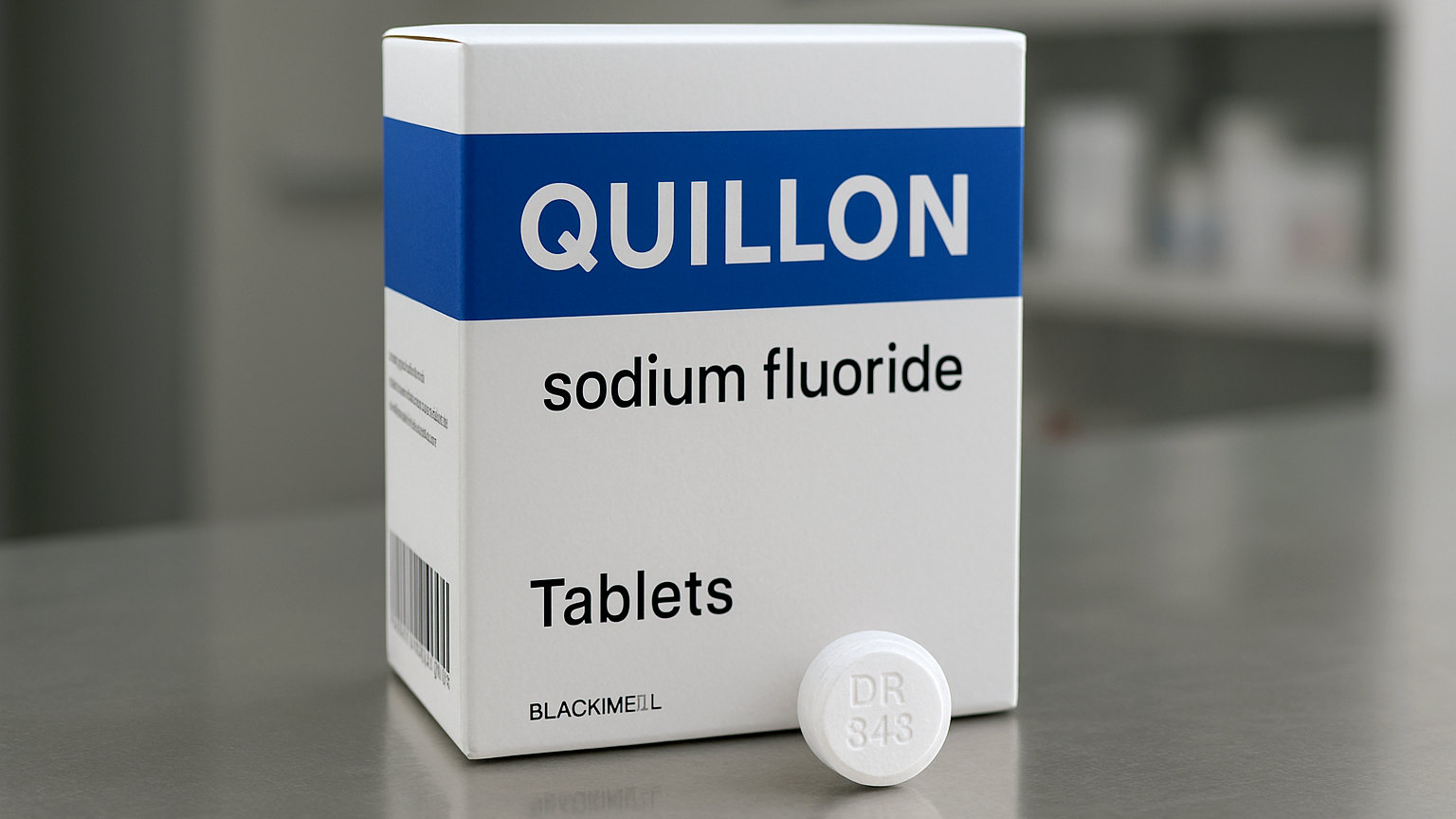
Sodium fluoride strengthens tooth enamel by incorporating into its crystal structure, making it more resistant to acid, and it also reduces the ability of decay-causing bacteria to produce acid. High-fluoride toothpaste - considerably stronger than anything on a supermarket shelf - is available on prescription for people at high risk of decay. It sounds like a minor intervention. For anyone whose saliva has stopped protecting their teeth, it is the main defence they have.
Follow the instructions on your label. This guide contains no doses.
Who it is prescribed for
- Dry mouth from medicines, which removes the protection saliva normally provides - see dry mouth from medicines
- Dry mouth from Sjogren's syndrome or head and neck radiotherapy
- A high rate of decay, or multiple fillings in a short period
- Exposed root surfaces, which decay far faster than enamel
- Orthodontic appliances, where cleaning is difficult
- Physical or learning disability affecting toothbrushing
Dry mouth is by far the commonest reason, and the medicines responsible are ordinary ones - antidepressants, bladder medicines, sedating antihistamines, diuretics and opioids among them. See solifenacin.
Spit, do not rinse
This single instruction matters more than the strength of the paste.
Rinsing with water after brushing washes the fluoride away before it can act. Spit out the excess and leave the rest on your teeth. Do not use mouthwash immediately afterwards for the same reason.
Brush twice daily, and ideally make the last brush of the day the one before bed, with nothing to eat or drink afterwards - saliva flow drops overnight, so anything left on the teeth stays there.
Most people have never been told this, and it is the cheapest improvement available to anyone's dental health.
What else protects teeth in a dry mouth
Frequency of sugar matters more than quantity - sipping a sweet drink through an afternoon does more damage than eating something sweet at once.
Acidic drinks, including fizzy water and citrus, erode enamel that saliva is no longer neutralising.
Sugar-free chewing gum stimulates whatever saliva production remains, and gum containing xylitol has the added benefit of not feeding decay-causing bacteria. Saliva substitutes help comfort but do not protect teeth in the way fluoride does.
Fluoride varnish
Applied in the dental surgery, varnish delivers a high concentration directly to the tooth surface and is typically repeated a few times a year for people at high risk.
It is standard for children in many areas and is worth asking about for adults with dry mouth. It complements the toothpaste rather than replacing it.
Children and swallowing
High-fluoride toothpaste is generally used from a specified age and is not suitable for young children, who swallow toothpaste rather than spitting.
Excess fluoride during tooth development causes fluorosis - white flecks or, at higher exposure, mottling of the permanent teeth. Ordinary children's toothpaste in the correct amount, supervised, is what avoids this.
Keep it out of reach. A child swallowing a quantity of high-fluoride toothpaste needs urgent advice - contact 111 or A and E, and take the tube. See keeping medicines away from children.
Does it interact with anything?
Very little is absorbed when used as directed. Calcium and magnesium bind fluoride in the gut, so fluoride tablets or drops, where used, are separated from dairy and from calcium supplements - but this is not a practical concern with toothpaste.
See calcium supplements for the same binding mechanism that affects several other medicines.
Tell your dentist what you take
This is the useful thing to do. A dentist who knows you are on medicines causing dry mouth will see you more often, apply varnish, prescribe the toothpaste and watch the root surfaces - all of which turns a predictable problem into a managed one.
Decay in a dry mouth progresses faster than people expect, and it often appears in places that do not usually decay. Someone with no fillings for thirty years can need several within a couple of years of starting a drying medicine.
Getting the medicine reviewed too
Fluoride treats the consequence. It is also worth asking whether the medicine causing the dry mouth can be changed, particularly if you are on several with anticholinergic effects.
See medicines and your memory, which covers the same group of drugs from a different angle, and deprescribing.
NHS dental charges
Prescribed toothpaste carries the standard prescription charge in England, or nothing if you are exempt. Dental treatment itself is charged separately under the dental banding system.
Our guide to help with health costs covers the certificates that cover both, which many people qualify for without realising.
See also Potassium Chloride: Why It Is Taken Carefully, and the Medicines section for more on how the main families of medicine work.