
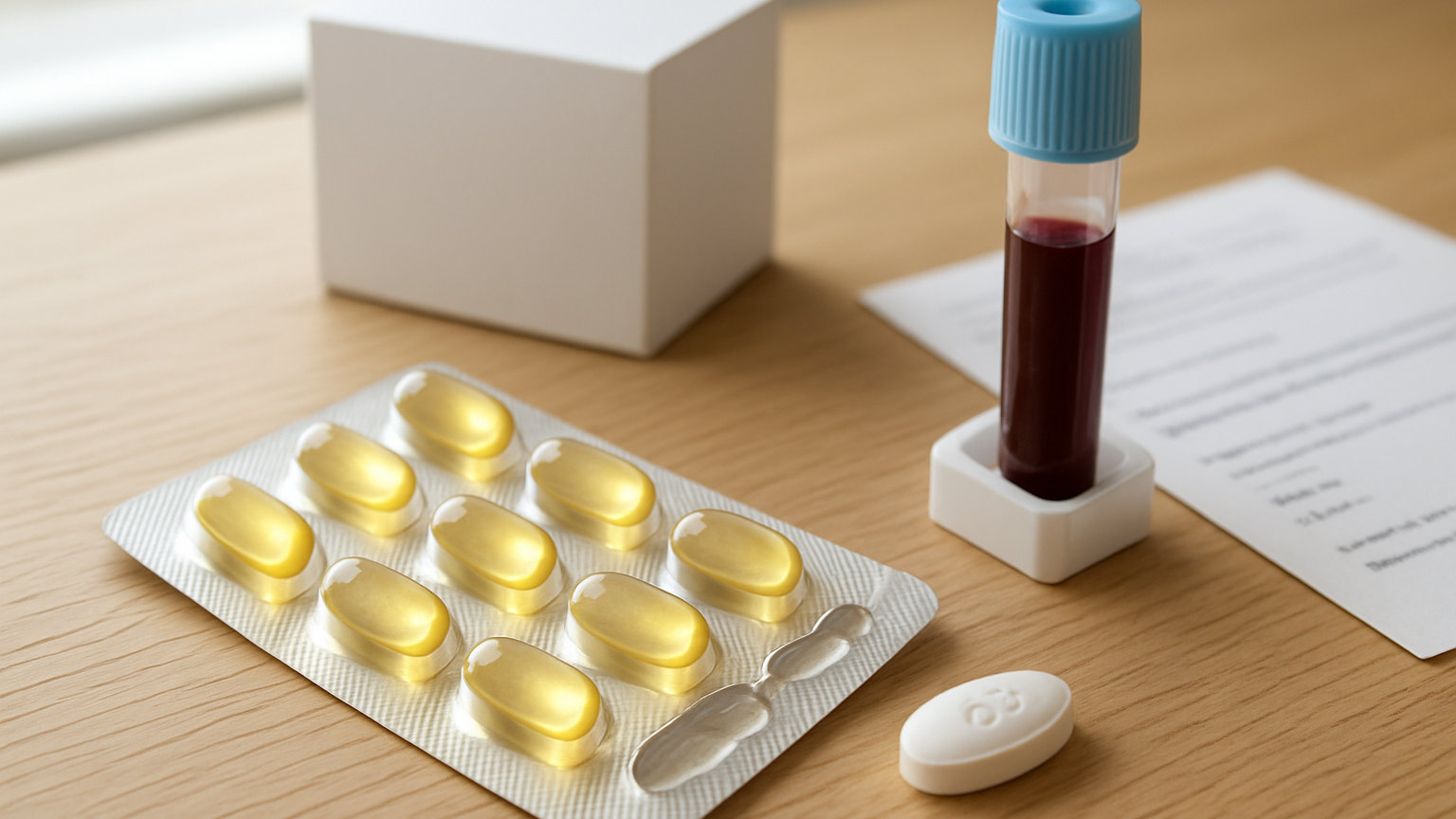
Omega-3 fatty acids - EPA and DHA - are found in oily fish and sold in almost every pharmacy and supermarket. They are also available on prescription at doses many times higher, for a specific purpose. The confusion between the two is the main thing worth clearing up: a supermarket capsule and a prescription preparation are not the same intervention, and the difference is largely arithmetic.
Follow the instructions on your label. This guide contains no doses.
The dose gap
Typical over-the-counter fish oil capsules contain a few hundred milligrams of combined EPA and DHA. The prescription preparations used to lower triglycerides deliver several grams a day.
Reaching a therapeutic amount from shelf capsules would mean taking a great many of them, and the quality and concentration vary between products.
So a supplement taken for general health and a prescribed preparation taken to lower triglycerides are doing different things at different scales.
What it is prescribed for
High-dose omega-3 lowers triglycerides - not LDL cholesterol, which is what statins address.
The main indication is severe hypertriglyceridaemia, where the aim is preventing acute pancreatitis rather than preventing heart attacks.
See fenofibrate, which is the other treatment for the same problem, and cholesterol numbers.
The cardiovascular evidence
This has been genuinely contested and is worth summarising honestly.
Trials of mixed EPA and DHA supplements for preventing cardiovascular events have been largely negative. Guidance does not recommend them for that purpose.
A trial of high-dose purified EPA - icosapent ethyl - in people with raised triglycerides already on a statin found a substantial reduction in cardiovascular events. That result was striking, and it has been debated, partly because the comparator used mineral oil which may itself have had effects.
Icosapent ethyl is available in the UK within defined criteria for people with raised triglycerides, established cardiovascular disease and statin treatment.
The distinction matters: the positive evidence is for a specific purified preparation at a specific dose in a specific population, not for fish oil generally.
The atrial fibrillation signal
Several trials and pooled analyses have found an increased incidence of atrial fibrillation with high-dose omega-3, and the risk appears dose-related.
It is a real consideration when weighing high-dose treatment, particularly in someone with other risk factors for AF.
Report palpitations, an irregular pulse, breathlessness or reduced exercise tolerance - see atrial fibrillation.
Bleeding
Omega-3 has mild antiplatelet effects, and at high doses that adds to the bleeding risk from aspirin, clopidogrel and anticoagulants.
It is rarely decisive on its own, but it is worth mentioning if you take any of those - see aspirin and rivaroxaban.
Tell a surgeon or dentist that you take high-dose omega-3.
Side effects
Fishy taste, fishy burps, nausea and loose stools are the common complaints.
Taking capsules with food, or keeping them in the freezer, reduces the burping considerably - a practical fix that is rarely mentioned.
Raised liver enzymes occur occasionally. High-dose EPA and DHA preparations can modestly raise LDL, which is an odd effect for a lipid treatment and is monitored.
Eating fish instead
UK advice is to eat at least two portions of fish a week, one of them oily - salmon, mackerel, sardines, herring, trout.
For someone without a specific lipid problem, that does more than a capsule and has better evidence behind it.
Pregnant and breastfeeding women are advised to limit oily fish to a specified number of portions weekly because of pollutants, and to avoid shark, swordfish and marlin.
Cod liver oil is a different product again - it contains vitamin A, which accumulates and is teratogenic in excess, so it is avoided in pregnancy and should not be taken alongside other vitamin A supplements.
What actually lowers triglycerides
More than any capsule does, in most people:
- Reducing alcohol - frequently the single largest contributor
- Reducing refined carbohydrate and sugary drinks, which affect triglycerides more than dietary fat
- Treating diabetes and thyroid disease - both raise triglycerides and are checked before treating the lipids
- Losing excess weight
Some medicines raise triglycerides too, including some steroids, some antipsychotics and oestrogen - see olanzapine.
Taking it
Prescription omega-3 preparations are usually taken with food, which improves absorption and reduces the fishy aftertaste. Capsules should be swallowed whole rather than bitten.
Effect on triglycerides appears within weeks, and a repeat lipid profile is usually arranged a couple of months in. Ask what your result was and what the target was - see monitoring long-term medicines.
If you take a supplement
Tell your GP, particularly if you are on an anticoagulant or antiplatelet, or if you are about to have surgery.
Supplements are not inert simply because they are sold freely - see supplements that interfere with your medicines.
Understanding Your Cholesterol Numbers covers a related point, and the Medicines section has the rest of these guides.


