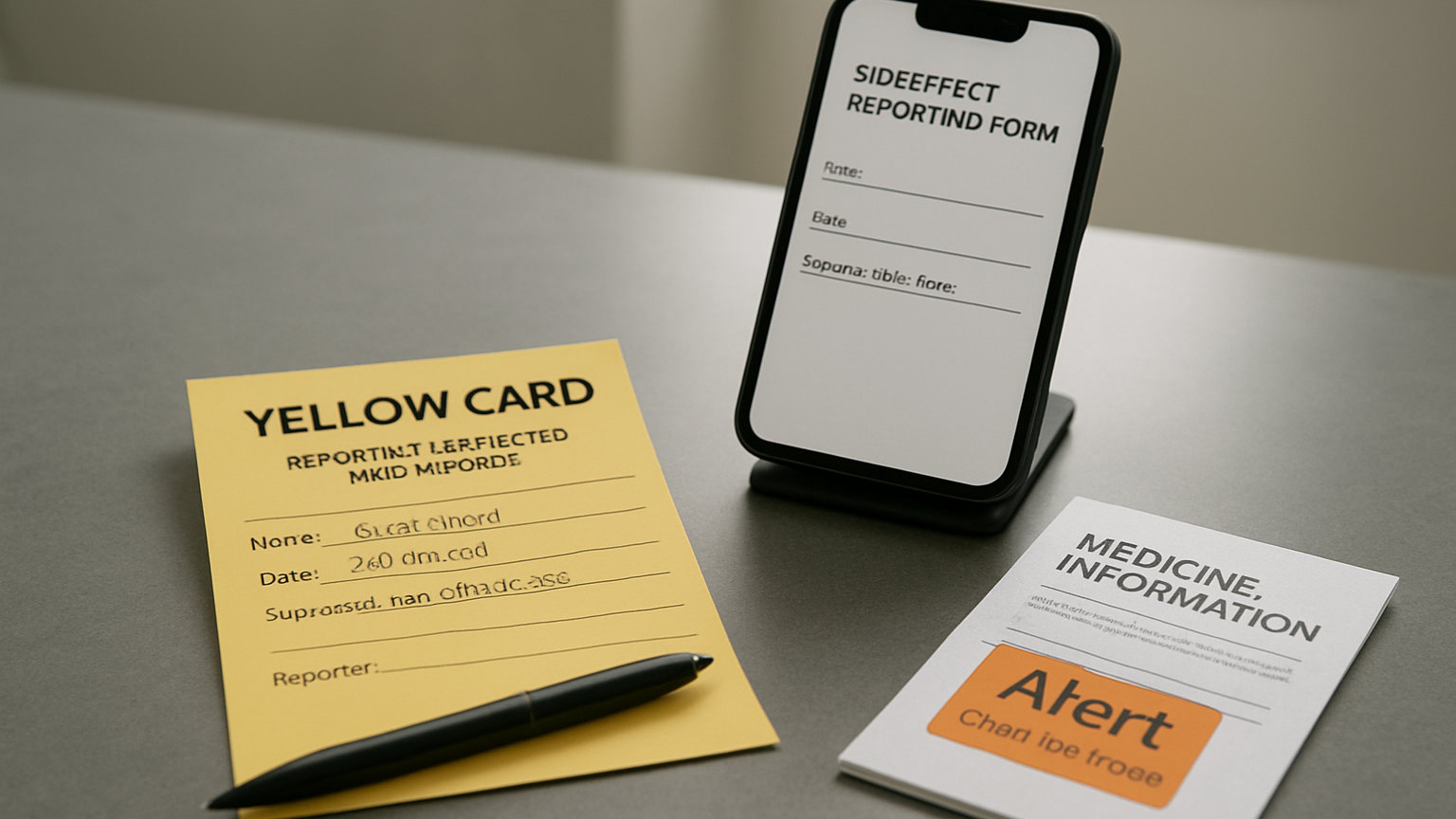
The Yellow Card scheme is the UK's system for reporting suspected side effects of medicines, vaccines, medical devices and other products. Anyone can report - patients, carers and parents, not only healthcare professionals - and you do not need to be certain the product caused what happened. Suspicion is the threshold. Reports go to the Medicines and Healthcare products Regulatory Agency, and they are the main way rare side effects are detected once a medicine is in widespread use.
Why the scheme exists
Clinical trials establish that a medicine works and identify common side effects, but they are limited. They typically involve a few thousand people over months, and they exclude many of the people who will eventually take the drug - older people, those with several conditions, those on many other medicines, and often pregnant women.
A side effect affecting one in ten thousand people simply will not appear in a trial of two thousand. Nor will one that takes years to develop, or one that only occurs in combination with another drug. Once a medicine is licensed and millions of people take it, those effects begin to appear - and the only way to see them is for people to report them.
The scheme was created after the thalidomide tragedy, when there was no systematic way to connect individual reports into a pattern. Almost everything now known about rare drug side effects came from this kind of reporting.
What to report
Report anything you suspect might be a side effect, including:
- anything unexpected, however minor it seems
- anything serious, whether or not it is already listed in the leaflet
- side effects in children and older people
- anything you suspect from a combination of medicines
- side effects in pregnancy or while breastfeeding
- problems with a medical device
- suspected falsified or defective products
Report even if it is already in the leaflet. Frequency data comes from accumulated reports, so confirming a known effect still contributes.
The black triangle. An inverted black triangle on a leaflet or packaging means the product is under additional monitoring - usually newly licensed or newly used in a different way. Reporting is especially valuable for these.
How to report
Reports are made through the MHRA's Yellow Card website or app, or on a paper form available from pharmacies and GP surgeries. It takes a few minutes.
You will be asked for the name of the medicine, ideally the brand and batch number from the pack, what happened and when, how long you had been taking it, whether it settled after stopping, your other medicines, and basic details about you. Give what you can - an incomplete report is far better than none.
Keep the packaging until you have reported, since the batch number is on it and can matter for manufacturing problems.
What happens next
Reports go into a database and are assessed alongside every other report about that product. Analysts look for signals - patterns suggesting a genuine association rather than coincidence. One report rarely proves anything; a cluster of similar reports prompts investigation.
Where a signal is confirmed, outcomes include updated leaflets and warnings, restrictions on who should use the medicine, new monitoring requirements, dose changes, or in rare cases withdrawal. Several important safety changes have originated wholly or partly in patient reports.
You will not usually receive individual feedback, and reporting is not a complaint or a claim - it is a contribution to surveillance. Anonymised data is published, so the reports made about a medicine can be looked at.
Reporting is not medical care
This is the important limit. The MHRA cannot advise you or treat you, and a Yellow Card report does nothing about your immediate problem.
If you are having a reaction now, deal with that first: call 999 for swelling of the lips, tongue or throat, difficulty breathing, or collapse, and contact your GP or 111 for anything else concerning. Our guide to warning signs sets out what needs urgent attention.
Also tell your GP and pharmacist, so it goes on your record. That is separate from a Yellow Card and matters for your future prescribing - particularly the distinction between an allergy and a side effect, which our guide to allergy or side effect covers.
Why bother
Side effects are substantially under-reported everywhere, and the usual reasons are assuming somebody else will do it, assuming a mild effect does not matter, or not being certain the medicine was responsible.
None of those holds up. Certainty is not required, mild effects contribute to frequency data, and most people never report - so the assumption that a doctor already has is usually wrong. A few minutes contributes to what everyone else prescribing and taking that medicine knows about it.
More on side effects and safety in the Side Effects section, including If You Think a Medicine Has Harmed You.