If you believe a medicine has harmed you, there are four separate routes and they do different jobs. Clinical care comes first - get the immediate problem treated. Then a Yellow Card report to the MHRA contributes to national safety monitoring. Your GP and pharmacy records need updating so it does not happen again. And if the harm involved a mistake rather than an unavoidable side effect, the NHS complaints process is a different mechanism again. People frequently use the route that cannot help them and conclude nothing can be done.
First: deal with the harm
Call 999 for swelling of the lips, tongue or throat, difficulty breathing, or collapse. Go to A&E for a widespread rash with blistering or peeling, vomiting blood, or black tarry stools. Contact your GP or 111 the same day for yellowing of the skin or eyes, severe muscle pain with dark urine, or a fever while on a medicine affecting your immune system.
Our guide to warning signs you should not ignore covers this properly. Do not delay treatment in order to work out who to report it to.
Keep the packaging, including the batch number, and keep any remaining medicine. It matters for both reporting and investigation.
Was it a side effect or a mistake?
The distinction determines which route applies.
A side effect is a known or previously unknown consequence of a medicine given correctly. Nobody did anything wrong. The relevant route is Yellow Card, plus your record.
A medication error is a mistake: the wrong drug dispensed, the wrong strength, a known allergy overlooked, an interaction missed, a monitoring test not done, or the wrong instructions on the label. These should also be reported, but the complaints and incident-reporting routes are the ones that produce a local investigation.
You do not have to work out which it was before reporting - describe what happened and let the people who receive it categorise it.
Yellow Card
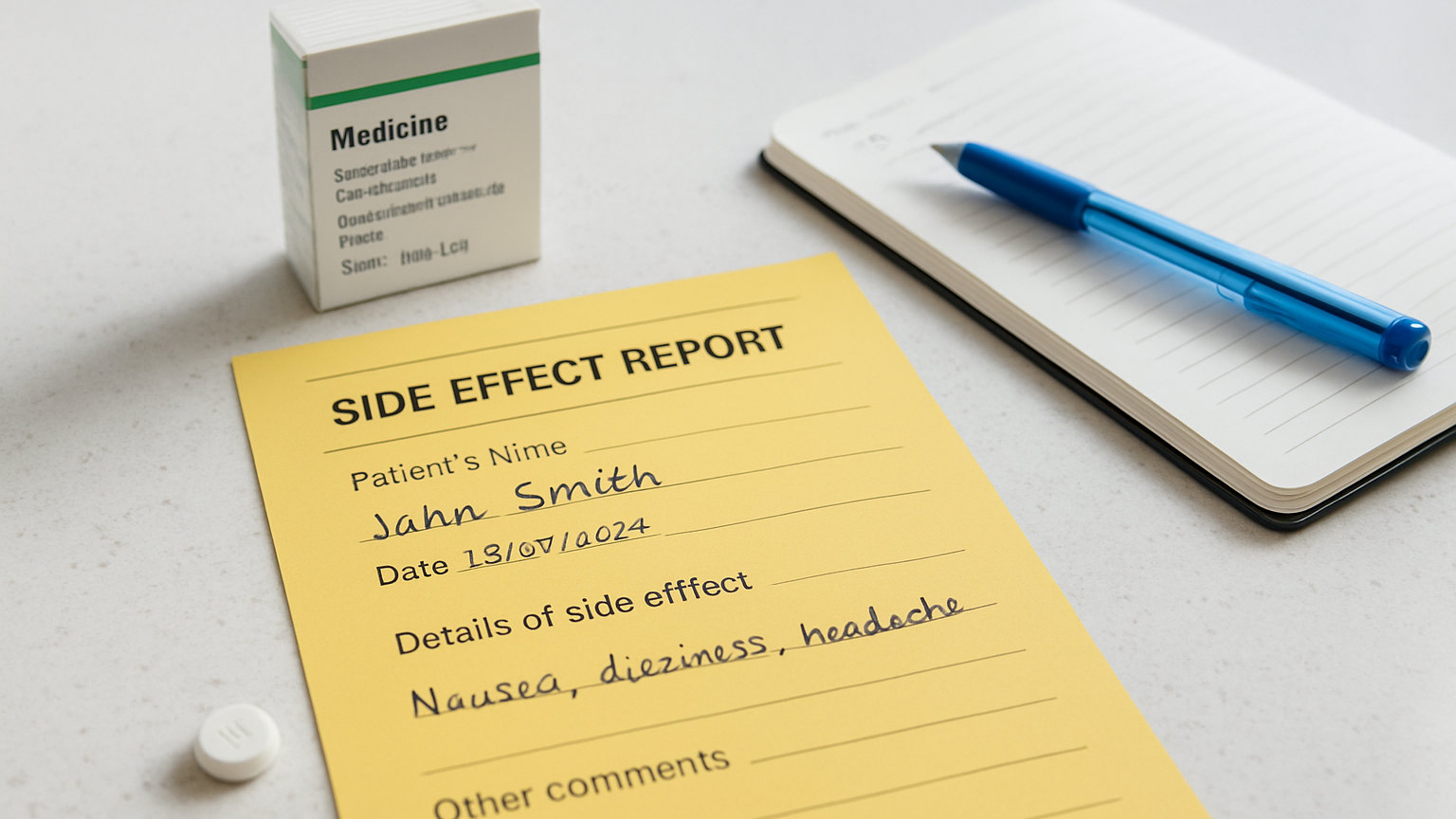
Report any suspected side effect through the MHRA Yellow Card scheme. You do not need to be certain the medicine caused it, and patients and carers report directly. This is how rare effects are detected once a medicine is in widespread use, and several important safety changes originated in patient reports.
Our guide to how the Yellow Card scheme works covers what to include and what happens next.
Note its limits. It is national surveillance, not a complaint, not a claim, and it will not get you an individual response or resolve your situation.
Getting your record right
This is the step that protects you in future, and it is the one most often skipped.
Ask your GP practice to record what happened, and check it is recorded as an allergy or as an intolerance correctly - the difference changes what you can be prescribed for the rest of your life, as our guide to allergy or side effect explains. Ask your pharmacy to record it too; these are separate systems.
You have the right to see your records and to ask for factual inaccuracies to be corrected. If a request to amend is refused, you can ask for your disagreement to be noted on the record itself.
If it was a dispensing or prescribing error
Raise it with the pharmacy or practice directly first. Most take this seriously, investigate internally, and errors are recorded as patient safety incidents so patterns can be identified. A calm phone call often resolves it faster than anything formal.
If you want it dealt with formally, the NHS complaints procedure applies. You can complain to the provider directly, or to the commissioner. There are time limits, so do not sit on it.
PALS - the Patient Advice and Liaison Service - can help you navigate this and is worth contacting early. Independent NHS complaints advocacy is also available free in every area, and it exists precisely because the process is hard to manage while you are unwell.
If a complaint is not resolved, it can go to the Parliamentary and Health Service Ombudsman.
Professional regulators
Where you believe a specific professional acted unsafely, the relevant regulator can consider it - the General Pharmaceutical Council for pharmacists, the General Medical Council for doctors, the Nursing and Midwifery Council for nurses.
Regulators deal with fitness to practise, not with compensation or with your individual treatment. They are the right route for serious concerns about conduct, and the wrong one for most ordinary complaints.
Compensation
This is a separate legal question and outside what this site can advise on. If you are considering it, seek independent legal advice - we are not lawyers and cannot help with that.
What is worth knowing is that reporting through Yellow Card, correcting your record and making a complaint are all independent of any legal question, and none of them prevents the others.
Falsified or defective medicines
If you suspect a medicine was counterfeit, or a pack was defective, report it to the MHRA, which investigates illegal supply and manufacturing problems. Keep everything, including packaging and any remaining product.
If it came from an online seller, our guide to checking an online pharmacy is legitimate covers how to verify a supplier - and tell your GP or pharmacist what you took, honestly and in full. Nobody will judge you, and they need to know in order to help.
If this was useful, Black Triangle Medicines: What It Means is worth reading next, and Side Effects collects the rest.