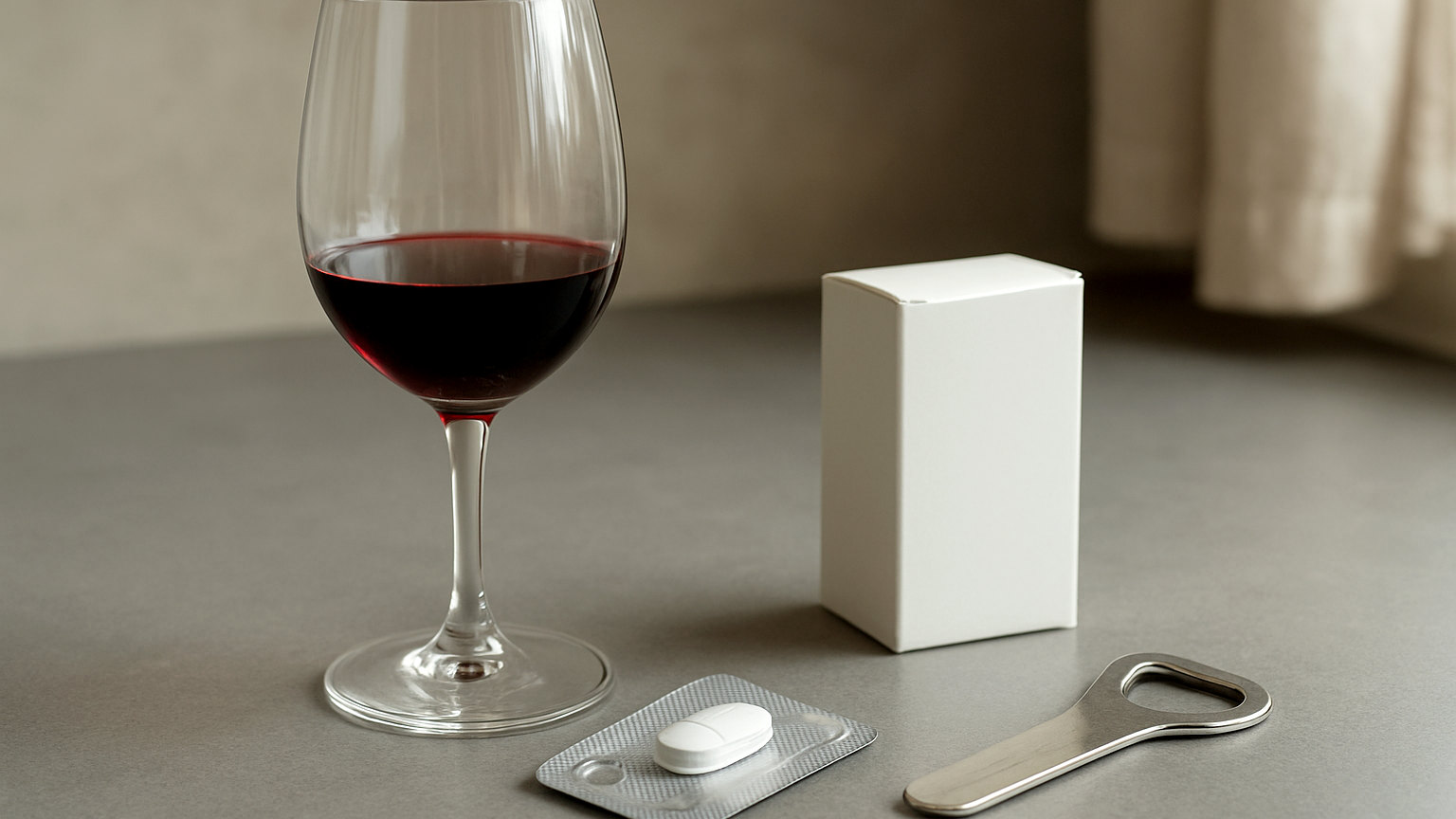
Alcohol and sedative medicines act on overlapping systems in the brain, and taking them together does not simply add one effect to the other. The combined effect on breathing, balance and memory is greater than the sum of the parts, and it is unpredictable from one occasion to the next. This is the interaction behind a large share of accidental deaths involving prescribed medicines.
Why it is not additive
Alcohol and benzodiazepines both act on the same receptor system, and both suppress the drive to breathe.
Opioids suppress breathing by a different mechanism, so combining an opioid with alcohol attacks the same function from two directions.
The result is that a quantity of each that would be tolerated alone can, together, reduce breathing to the point of harm - and the threshold varies with tiredness, illness, an empty stomach and age.
Post-mortem studies of accidental overdose repeatedly find a combination rather than a single drug.
The medicines involved
Benzodiazepines - diazepam, lorazepam, temazepam, clonazepam.
Z-drugs - zopiclone and zolpidem, which are not meaningfully safer in this respect.
Opioids - morphine, oxycodone, codeine, tramadol, methadone, buprenorphine. Tramadol also lowers the seizure threshold, which alcohol withdrawal does too.
Gabapentin and pregabalin, which are involved in a large and rising share of drug-related deaths, nearly always alongside something else.
Sedating antihistamines - including those hidden inside over-the-counter sleep aids and night-time cold remedies, which people do not think of as sedatives at all.
Mirtazapine, trazodone and antipsychotics.
Muscle relaxants such as baclofen and tizanidine.
See temazepam and diphenhydramine.
Warning signs
Call 999 if someone cannot be roused, is breathing slowly, shallowly or noisily, is snoring in a way that is not normal for them, is cold, blue-tinged or grey, or has had a seizure.
Put them in the recovery position and stay with them. Do not leave someone to sleep it off.
Never assume someone is simply drunk. Sedative overdose, alcohol poisoning, low blood sugar and a head injury all look similar, and the difference matters.
If opioids may be involved, naloxone reverses their effect and is increasingly available to households - it does nothing for alcohol or benzodiazepines, but it buys time.
See naloxone.
The effects short of an emergency
Falls. The combination impairs balance and reaction time considerably, and in older people a fall is frequently the event that changes everything.
Memory blackouts. Both alcohol and benzodiazepines impair the formation of new memories, and together they do so at levels where the person appears to be functioning normally. People make decisions they have no recollection of.
Driving. Impairment is substantial and the person feels capable. Drug-driving law applies to prescribed medicines as well as alcohol, and the combination is what the offence is designed around.
Disinhibition and low mood, which matters in anyone struggling.
See medicines that cause dizziness and falls and medicines and driving.
Practical position
The honest advice is to avoid alcohol entirely while taking a sedative, an opioid or a gabapentinoid.
Where that is unrealistic, the harm-reduction points are worth stating plainly: do not take the medicine and drink on the same evening; never take an extra dose because the first has not worked while you have been drinking; do not drink alone if you take these; and tell someone.
Do not stop drinking abruptly if you are dependent - withdrawal can cause seizures, and benzodiazepines are sometimes used to manage it under supervision.
Sleep is usually the underlying issue
Many people end up combining these because they are using both to sleep.
Alcohol shortens the time to fall asleep and then fragments the second half of the night, so it makes sleep worse while feeling like it helps. Sleeping tablets work for a couple of weeks before tolerance develops, and stopping causes rebound insomnia worse than the original problem.
Cognitive behavioural therapy for insomnia is the recommended first-line treatment, with better long-term results than any medication.
See medicines that affect your sleep.
Cannabis and other drugs
The same arithmetic applies beyond alcohol.
Cannabis adds to sedation and impairs coordination, and combining it with opioids or benzodiazepines compounds the effect on breathing. Anything bought rather than prescribed carries the added problem that the contents are not what the label says - tablets sold as benzodiazepines have contained synthetic opioids far more potent than heroin. See prescribed medicines and recreational drugs.
Say what you actually drink
Prescribers assume people understate, so understating produces worse advice rather than neutral advice.
An accurate figure changes whether a sedative is prescribed at all, at what dose, and what else is offered instead.
Local alcohol services accept self-referral, are free and confidential, and do not require you to have decided to stop.
See also Alcohol and Antibiotics, and the Usage section for more on taking medicines day to day.