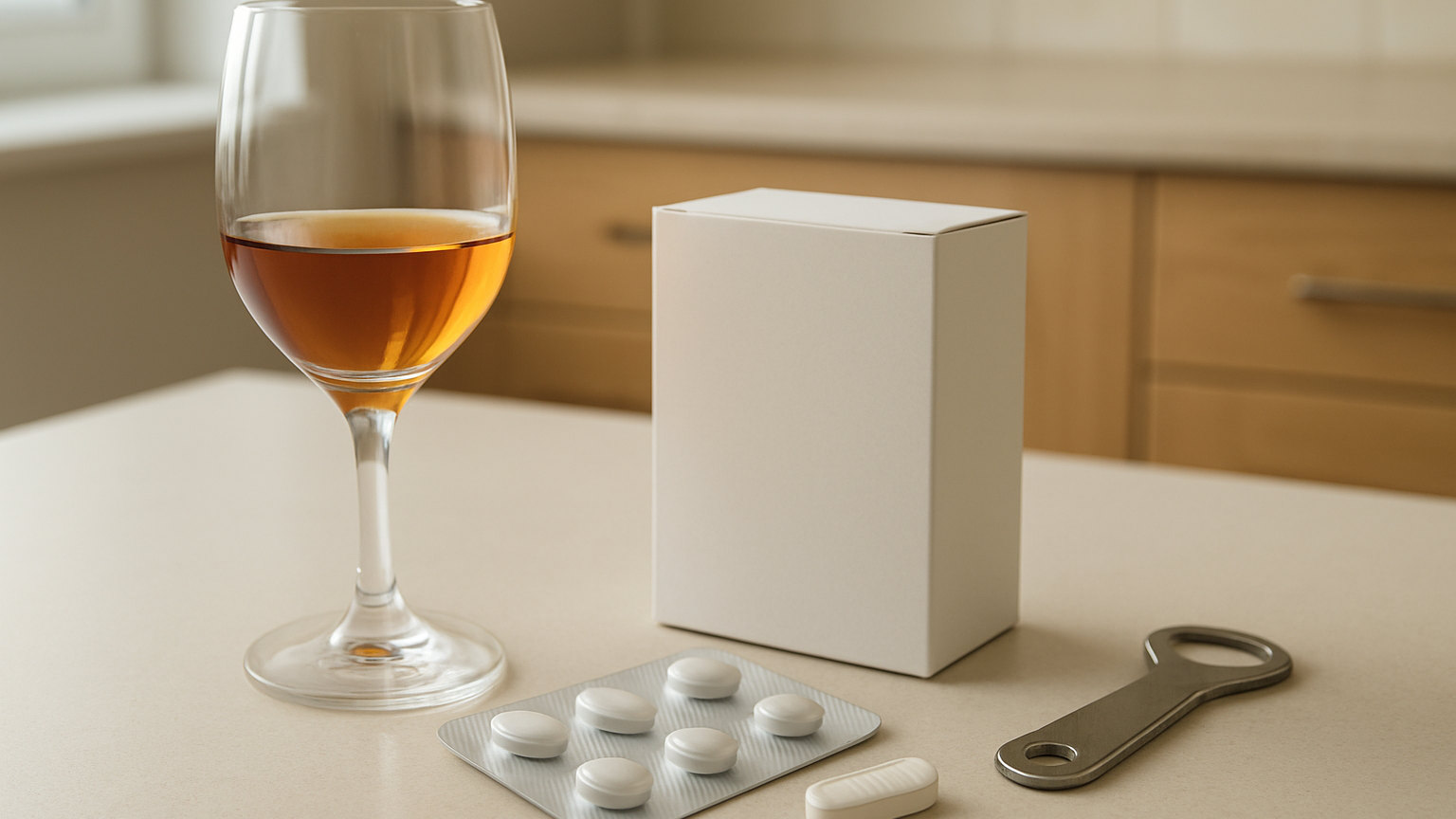
Almost everyone has been told not to drink while taking antibiotics, and for most antibiotics that advice is not based on a real interaction. There are genuine exceptions, they are few, and knowing which ones they are is more useful than a blanket rule that people ignore anyway. There are also good reasons to drink less while unwell that have nothing to do with an interaction.
The genuine exceptions
Metronidazole is the important one. Alcohol can cause a disulfiram-like reaction - flushing, throbbing headache, nausea, vomiting, a racing heart and a drop in blood pressure. It is unpleasant and occasionally alarming.
Avoid alcohol during the course and for a period after finishing it - the advice is usually a couple of days, and the leaflet will say.
The same applies to tinidazole.
Worth remembering that alcohol hides in places people do not check: some liquid medicines, mouthwashes and cough preparations contain it.
Linezolid is the other one, for a different reason. It is a weak monoamine oxidase inhibitor, so large quantities of tyramine - in draught and unpasteurised beers, red wine, mature cheese, cured meats and yeast extract - can cause a sharp rise in blood pressure.
Cefoperazone and a few less commonly used agents can also produce a disulfiram-like reaction, though these are rarely encountered in general practice.
See metronidazole and hidden alcohol in medicines.
Where the blanket advice came from
The honest answer is that nobody is certain, and the explanations offered are mostly retrospective.
One long-standing account is that it discouraged people being treated for sexually transmitted infections from drinking and having sex during treatment. Another is that penicillin was scarce enough in the 1940s to be recovered from patients' urine, and alcohol increased urine volume.
Both are plausible and neither is proven. What is clear is that for the great majority of antibiotics - penicillins, cephalosporins, macrolides, tetracyclines, trimethoprim, nitrofurantoin - a moderate amount of alcohol does not stop the antibiotic working and does not cause a reaction.
Reasons to drink less anyway
Not interactions, but real.
You are ill. Rest, fluids and sleep all help recovery, and alcohol works against all three - it fragments sleep even when it shortens the time to fall asleep.
Dehydration. Alcohol is a diuretic, and several antibiotics are cleared by the kidneys. Being dry during an infection is not helpful, and matters more if you take an ACE inhibitor, an ARB or a diuretic.
Shared side effects. Nausea, dizziness, headache and stomach upset are common with antibiotics, and alcohol adds to every one of them - so people conclude the antibiotic disagrees with them when the combination is responsible.
Missed doses. Courses need finishing at the intervals prescribed, and a night out is a reliable way to lose one.
See medicines and staying hydrated.
Other interactions worth knowing
These matter more than the alcohol question and are less often mentioned.
Dairy, antacids, iron and calcium bind tetracyclines and fluoroquinolones in the gut and substantially reduce absorption - separate them by a couple of hours.
Clarithromycin and erythromycin inhibit liver enzymes and raise the levels of a long list of other medicines, including statins and some anticoagulants.
Several antibiotics interact with warfarin, raising the INR.
Enzyme-inducing antibiotics such as rifampicin reduce the effectiveness of hormonal contraception.
See clarithromycin and medicines, milk and dairy.
Does alcohol cause resistance?
No. Resistance is driven by how antibiotics are used - unnecessary courses, courses not completed as prescribed, and leftover antibiotics taken later for something else.
Drinking does not make bacteria resistant. Taking half a course and saving the rest does.
See antibiotic resistance and finishing a course.
If you have had the reaction
A disulfiram-like reaction after metronidazole is unpleasant rather than usually dangerous, and it settles.
Stop drinking, sip fluids, and sit or lie down since blood pressure can drop. Seek urgent help if there is chest pain, severe breathlessness, fainting or vomiting you cannot stop. Report it, and make sure the reaction is recorded so the warning is given more emphatically next time.
What about the rest of the course
Finish it. An interaction with alcohol is a reason to avoid alcohol, not a reason to abandon the antibiotic - and a part-completed course is the thing that drives resistance.
See how the Yellow Card scheme works.
Check, rather than assume either way
Read the leaflet, or ask the pharmacist when you collect - it takes thirty seconds and gives you the answer for the specific antibiotic rather than a general rule.
If you drink heavily and regularly, say so. It affects liver function, how several antibiotics are handled, and what is safe to prescribe alongside them.
See alcohol and medicines that affect your liver.
Alcohol and Sedatives covers a related point, and the Usage section has the rest of these guides.