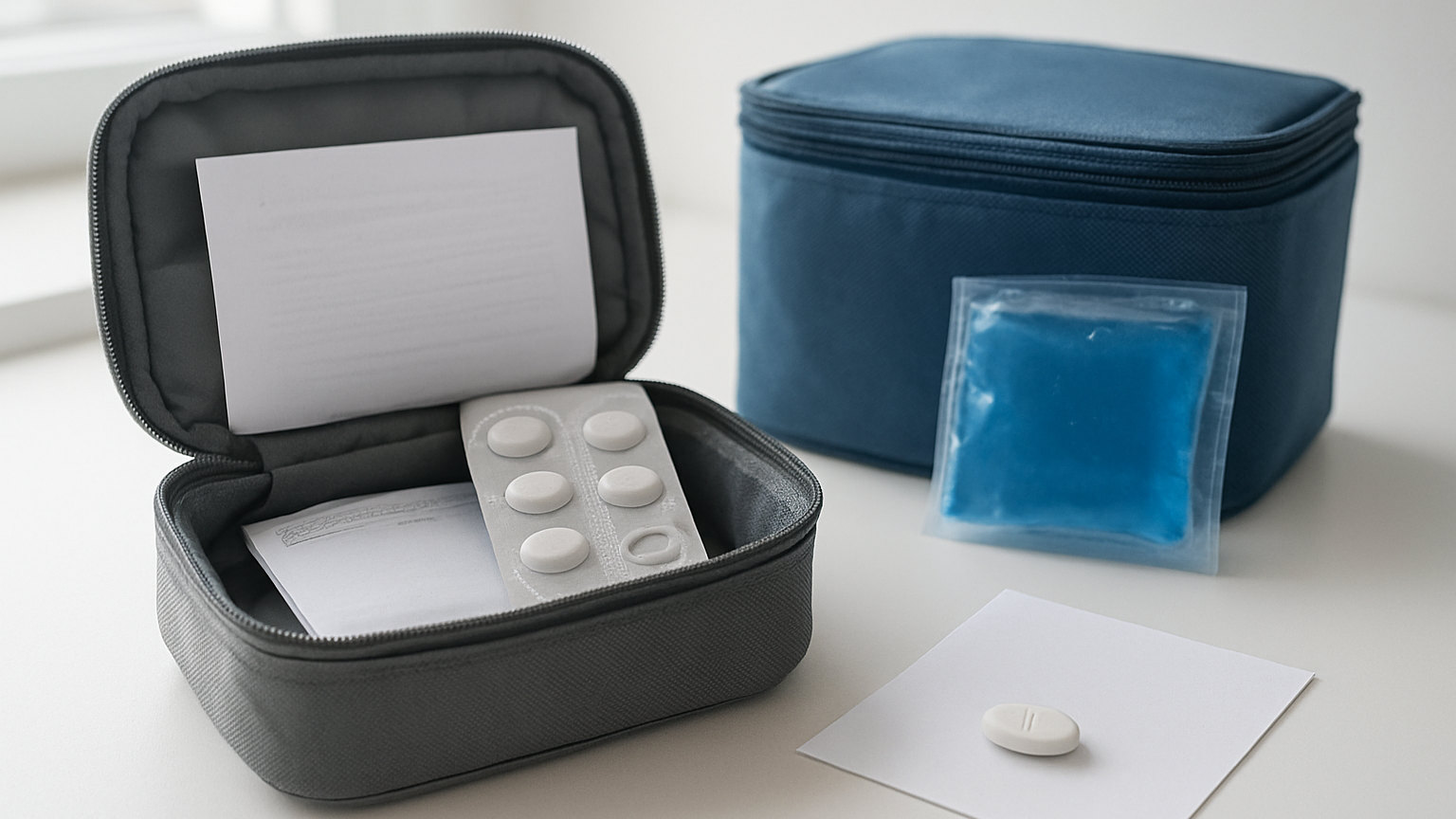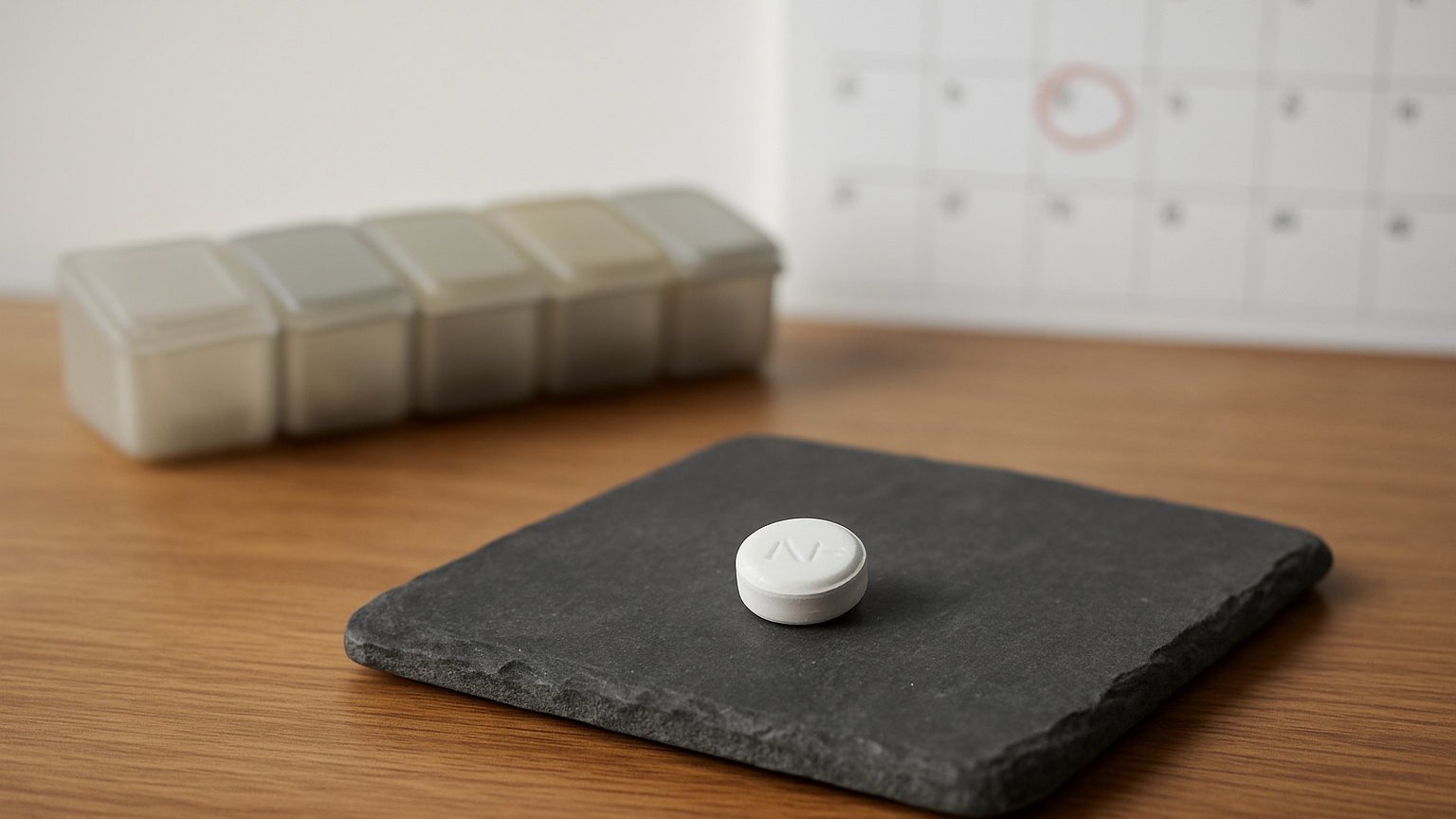
Medicines taken once a week or once a month are, paradoxically, the ones most often missed. A daily tablet attaches itself to a daily routine; a weekly one has no anchor. And because the doses are larger, the instinct to make up a missed one is far more dangerous here than with anything daily. With methotrexate in particular, that instinct has killed people.
Methotrexate: the critical one
Methotrexate is taken once a week, on the same day each week. It is never taken two days running.
Deaths have occurred from daily dosing errors - a weekly dose taken every day produces severe bone marrow suppression and can be fatal.
If you miss your weekly dose: it can usually be taken within a couple of days of the usual day. Beyond that, skip it and take the next one as scheduled - and never take two doses in the same week to catch up.
If you are unsure, ring the prescribing team or a pharmacist. Do not decide alone.
The folic acid taken alongside is given on different days from the methotrexate, which is a separate thing people get confused about.
Seek urgent advice for sore throat, mouth ulcers, fever, unusual bruising or bleeding, or breathlessness.
See methotrexate and when a medicine affects your blood counts.
Weekly bisphosphonates
Alendronate and risedronate are commonly weekly, with strict instructions attached - first thing, on an empty stomach, with a full glass of plain water, and staying upright afterwards.
If a dose is missed, the usual advice is to take it the following morning and then return to the original day. Do not take two in one day.
Missing a dose occasionally has little consequence for a treatment working over years - but repeated missed doses mean the treatment is not working, and are worth mentioning rather than concealing.
The instructions exist to prevent oesophageal irritation, so following them matters more than catching up.
See alendronate.
Biologic injections
Given weekly, fortnightly, monthly or less often.
Advice varies considerably by product - some are taken as soon as remembered and the schedule restarted from that point; others need contact with the specialist team.
Two things worth knowing: a substantial gap may require a loading dose or a screening check before restarting, particularly after an infection; and a lapse can allow the condition to flare, which is harder to regain control of than to prevent.
Contact the specialist nurse rather than guessing - homecare services and biologic teams deal with this routinely.
See planned breaks and drug holidays.
Depot injections
Long-acting injections given every few weeks, used in mental health treatment and for contraception.
An overdue depot means falling drug levels and a real risk of relapse, and the consequences build quietly over weeks.
For contraceptive injections, being late means contraceptive cover may lapse - additional precautions are needed and the specific window matters.
Contact the service as soon as you realise, rather than waiting for the next scheduled appointment.
See depot injections.
Denosumab is different
Worth separating, because the consequence of a delay is more serious than most people expect.
Its effect stops when the injections stop, and bone loss follows rapidly - with a recognised risk of multiple spinal fractures within months of a lapse.
A delayed or forgotten dose is not something to leave until the next review. Chase it.
Others on infrequent schedules
Vitamin B12 injections, typically every few months.
Vitamin D loading doses, weekly or monthly.
Some antibiotics and antifungals given weekly.
Hydroxocobalamin, iron infusions and immunoglobulin, all on long cycles.
For most of these a delay of days is unimportant, and the useful step is to find out which of yours is which.
How not to miss them
Infrequent doses need a system, because memory will not do it.
Pick a fixed day and keep it - the same day every week, or the same date every month.
Set a recurring alarm on your phone, weekly or monthly, that repeats until dismissed.
Anchor it to something that already happens on that day.
Keep a written record - tick the date on a calendar as you take it. This is the single most effective measure, because it answers "did I take it?" which memory cannot.
Keep weekly medicines separate from daily ones, so they are not swept into a daily organiser by mistake.
Tell whoever helps you which day it is.
See remembering to take your medicine and catching up after several missed days.
Ask in advance
The time to find out what to do about a missed weekly dose is before you miss one.
Ask when the medicine is started, and write the answer down with the medicine.
If this was useful, I Missed a Dose of My Medicine: What Now? is worth reading next, and Usage collects the rest.