
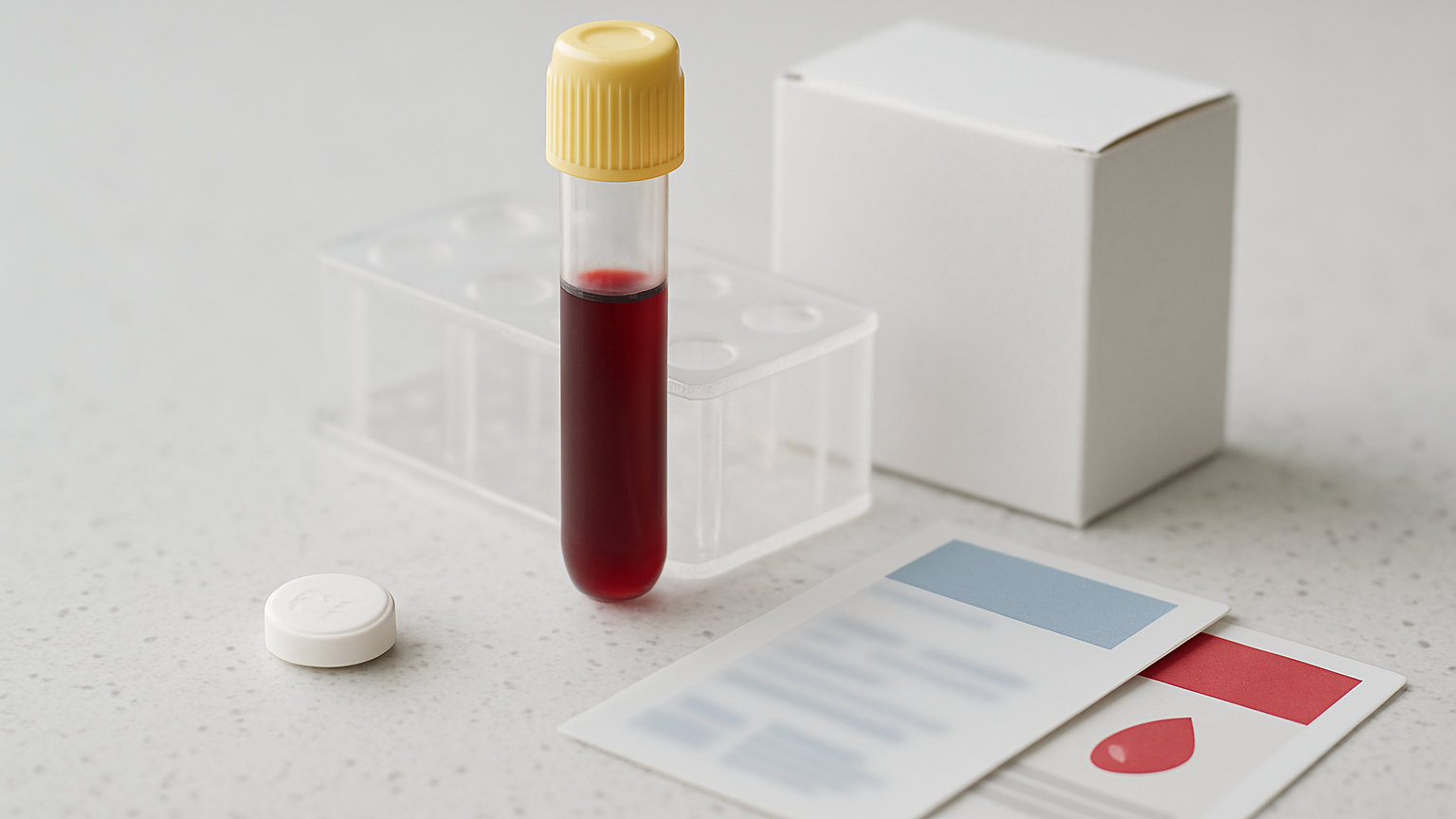
A small number of medicines suppress the bone marrow, and the consequences depend on which cell line is affected. The most dangerous is a collapse in white cells, because the only outward sign may be an infection that looks entirely ordinary. That is why certain medicines come with an instruction that sounds disproportionate - report a sore throat urgently - and why that instruction should be taken literally.
The warning signs
Seek urgent medical advice, the same day, if you are taking any of the medicines below and develop:
- Sore throat, mouth ulcers or fever
- Flu-like symptoms, chills or feeling suddenly unwell
- An infection that is not settling
- Unusual bruising, bleeding gums, nosebleeds, or tiny red spots under the skin
- Unusual tiredness, breathlessness or pallor
Say which medicine you take. It changes what is tested immediately - a full blood count rather than reassurance and a delayed appointment.
Do not wait to see whether it settles. Neutropenic sepsis develops quickly and is a medical emergency.
The three cell lines
White cells. A severe fall - agranulocytosis - leaves you defenceless against infection. The infection is the presentation; the low count is the cause.
Platelets. Thrombocytopenia causes bruising, bleeding gums, nosebleeds and a pinpoint rash that does not fade under pressure.
Red cells. Anaemia causes fatigue, breathlessness and pallor, developing more slowly.
Aplastic anaemia affects all three at once and is rare but serious.
Medicines with mandatory monitoring
Clozapine is the clearest case. Blood monitoring is compulsory and linked to supply - you cannot obtain clozapine without a satisfactory result. Testing is weekly at first, then fortnightly, then monthly, for as long as you take it. The system works: deaths from agranulocytosis fell dramatically once it became compulsory. See clozapine.
Carbimazole and propylthiouracil, used for an overactive thyroid, carry a recognised risk of agranulocytosis, typically in the first months. Anyone starting one should be told explicitly to report a sore throat or fever urgently - and this is frequently the article's single most useful sentence, because the drugs are common and the warning is easily forgotten.
Methotrexate, with regular full blood counts as part of treatment. Its risk rises sharply alongside trimethoprim or co-trimoxazole, a combination that has caused deaths. See methotrexate.
Azathioprine, where the allopurinol combination causes fatal marrow suppression unless the dose is drastically reduced. TPMT testing before starting identifies people at particular risk. See allopurinol.
Carbamazepine, sulfasalazine, penicillamine and JAK inhibitors all require monitoring.
See upadacitinib.
Other causes worth knowing
Co-trimoxazole and trimethoprim, through folate antagonism - particularly with prolonged treatment, in older people, and where folate is already low. See co-trimoxazole.
Chloramphenicol taken by mouth, historically associated with aplastic anaemia - eye drops are a different proposition.
Linezolid, which suppresses platelets with courses beyond about two weeks.
Heparin, which causes a distinctive immune reaction lowering platelets while paradoxically increasing clotting.
Chemotherapy, where it is expected and planned for rather than unexpected.
Anti-inflammatories and several antibiotics, uncommonly.
Anaemia from slow blood loss
A different mechanism and a commoner one.
Anti-inflammatories, aspirin, anticoagulants and SSRIs all increase gastrointestinal bleeding, and slow loss over months causes iron deficiency anaemia without any obvious bleeding.
The presentation is fatigue and breathlessness attributed to age.
Report unexplained tiredness if you take these, and mention black tarry stools urgently.
See medicines that make you bleed more easily.
What the test actually shows
A full blood count reports each cell line separately, which is why the same test answers several different questions.
The number that matters for infection risk is the neutrophil count rather than the total white cell count - a total that looks acceptable can conceal a neutrophil count that is dangerously low. If you are told your bloods are "fine", it is reasonable to ask specifically about neutrophils when you are on a medicine known to suppress them.
Monitoring is not optional
Where blood tests are specified, they are the treatment rather than an administrative extra - they are the only way to detect a problem before it presents as sepsis or bleeding.
Know when your next test is due, and chase it if nobody arranges it.
Missing a test on clozapine means missing your medicine, which has its own consequences.
See monitoring long-term medicines.
What happens if a count falls
The medicine is usually stopped immediately, and counts are monitored until they recover - which for white cells typically takes one to three weeks.
Antibiotics are given if there is any sign of infection, frequently in hospital.
Growth factors may be used to speed white cell recovery.
The medicine is generally not restarted, and the reaction should be recorded prominently and reported through the Yellow Card scheme.
See how the Yellow Card scheme works and infection risk on immune-suppressing medicines.
Related reading: Medicines and Suicidal Thoughts, with more on side effects and safety in Side Effects.


