A power cut or a failed fridge produces immediate anxiety for anyone whose insulin or biologic injections live in it. The reassuring part is that refrigerated medicines tolerate short interruptions considerably better than people assume, and the single most useful action is also the simplest: keep the door closed. The genuinely destructive outcome is freezing, not warming.
Keep the door shut
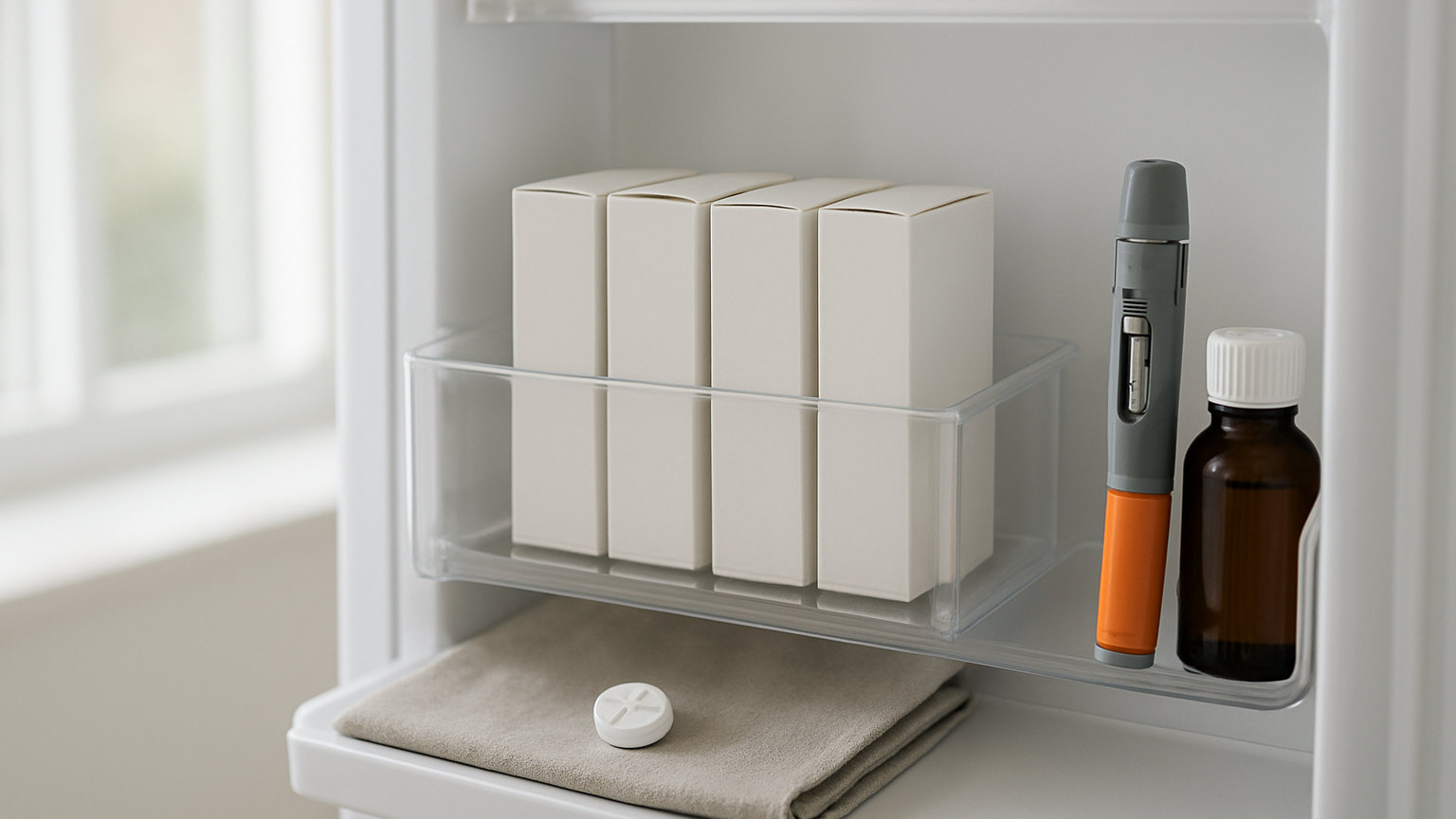
A closed domestic fridge holds a safe temperature for several hours without power, and a full one holds it longer than an empty one.
Every time the door opens, that reserve is spent.
So during an outage, do not keep checking. Leave it closed and check the temperature once power returns or once you need a dose.
A cheap fridge thermometer, ideally one recording minimum and maximum, turns guesswork into a fact - worth having if you store medicines routinely.
Freezing is the real danger
Warming is frequently survivable. Freezing generally is not.
Insulin that has frozen must be discarded, even if it looks normal after thawing - the protein structure is damaged and potency is lost unpredictably.
The same applies to most biologics and vaccines.
That is why the back wall of a fridge, the coldest shelf and a hotel minibar are all risky places, and why a medicine should never touch a frozen gel pack directly.
Signs in insulin: clumps, frosting on the cartridge wall, clear insulin turned cloudy, or cloudy insulin that will not mix evenly.
See how to tell if a medicine has gone off.
What is actually at risk
Less than people fear, because in-use supplies are already out of the fridge.
Insulin in use is kept at room temperature for a set number of weeks anyway. The pen in your bag has been doing this all along.
It is unopened spare stock that needs refrigeration - and even that tolerates limited time out.
Biologic pens frequently permit a defined number of days out of the fridge once, after which they cannot go back in. That detail matters and varies by product.
Check your product's leaflet now and note the permitted period, rather than looking it up by torchlight.
See medicines that need the fridge.
During an outage
Keep the fridge and freezer closed.
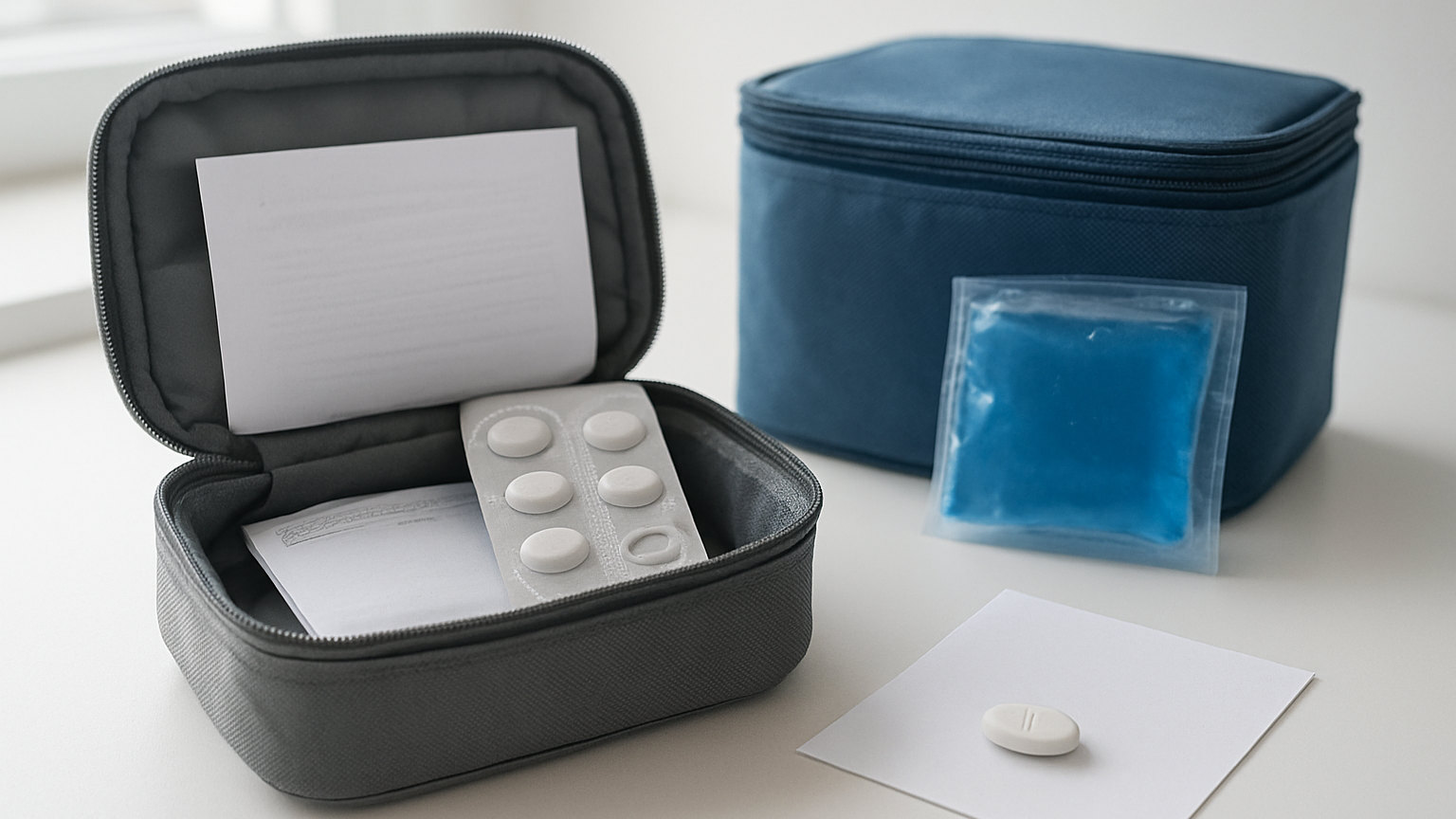
If the outage will be long, move medicines into a cool bag with gel packs - wrapped, not in direct contact - or into an evaporative cooling wallet, which needs only water.
Do not put medicines in the freezer to keep them cold.
Note roughly how long they were out and at what temperature, so a pharmacist can advise afterwards.
See travelling with medicines that need a fridge.
Afterwards
Ring your pharmacy rather than deciding alone. They can check the manufacturer's stability information for your specific product and the duration involved.
Manufacturers also operate advice lines and will usually replace medicine spoiled through a documented supply failure.
If in doubt and the medicine is critical, use it while obtaining a replacement rather than going without - reduced potency is better than no insulin at all, and a doubtful supply should be replaced as soon as possible.
For a genuinely critical situation out of hours, NHS 111 can arrange an urgent supply.
See emergency supply from a pharmacy.
The Priority Services Register
Worth knowing about and widely unused.
Energy suppliers and network operators maintain a Priority Services Register for people who depend on electricity for medical reasons - refrigerated medicines, oxygen concentrators, feed pumps, stairlifts, dialysis.
Registering is free. It means advance notice of planned outages, priority updates during unplanned ones, and in some cases practical support.
Water companies run an equivalent scheme.
Contact your supplier or network operator to register - it takes minutes and is worth doing before you need it.
Equipment that needs power
The same planning applies beyond the fridge.
Oxygen concentrators, nebuliser compressors, feed pumps and pressure-relieving mattresses all stop without electricity.
Ask your supplier what the backup arrangement is - many provide cylinders or battery units for exactly this, and there is usually an emergency contact number.
Keep that number written down somewhere that does not need charging.
See using a nebuliser at home.
Sensible preparation
Keep a small margin of supply rather than running to the last dose.
Know your product's out-of-fridge allowance.
Have a cool bag and gel packs in the house, since they are useful for travel anyway.
Keep a torch and a written contact list where you can find them in the dark.
And do not stockpile - a large reserve in a failed fridge is a larger loss, and it makes shortages worse. See stockpiling makes shortages worse.
See also Storing Medicines in a Shared Home, and the Usage section for more on taking medicines day to day.