Most advice about storing medicines assumes a household of one or two adults who all know what is in the cupboard. A great many people do not live like that - house shares, multi-generational homes, visiting grandchildren, lodgers, carers coming and going. The risks change, and so does the right answer. A cupboard that is perfectly safe when you live alone stops being safe when someone else has a key.
The basic requirements do not change
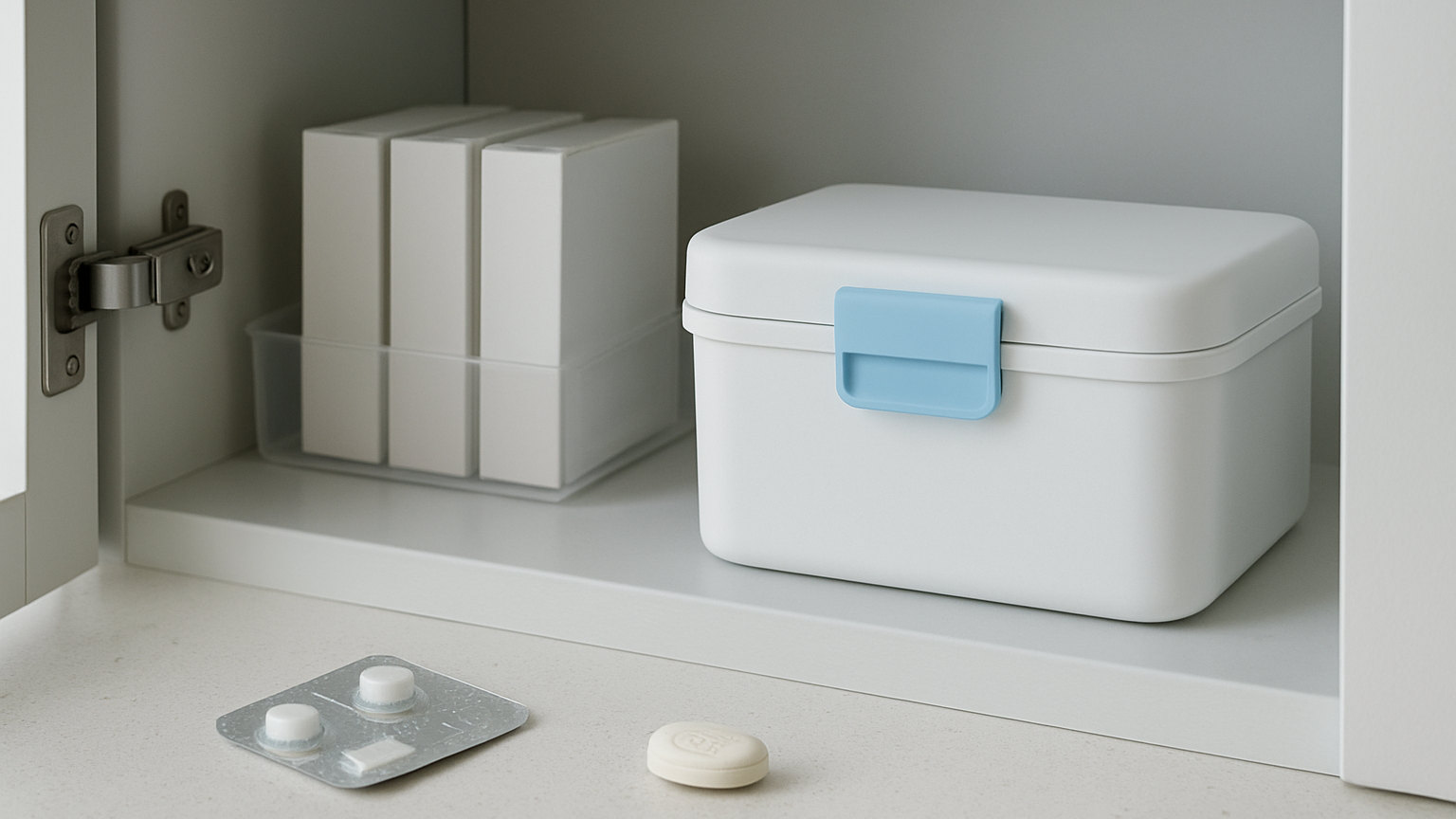
Cool, dry, dark, and out of sight and reach of children.
That rules out the bathroom cabinet, which is warm and humid, and the kitchen near a kettle or hob. A bedroom or hallway cupboard is usually better.
See where to keep your medicines.
House shares and student accommodation
The specific issues are theft, mistaken use and shared spaces.
Keep medicines in your own room, not a communal bathroom or kitchen, and keep them in their labelled packaging so nobody mistakes them for something else.
Consider a lockable box for anything valuable or liable to misuse - opioids, benzodiazepines, gabapentinoids, ADHD stimulants. These are the medicines that go missing from shared houses, and a missing supply is difficult to replace, particularly for a controlled drug where an early prescription will be queried.
Do not share medicines, including painkillers and antibiotics. It is a common courtesy in a house share and it is genuinely unsafe - allergies, interactions and pregnancy all make the same tablet unsuitable for someone else.
Do not label your own supply loosely or decant it into unmarked pots.
See emergency supply from a pharmacy if something does go missing.
Children visiting
The commonest serious scenario is a grandparent's home that is normally child-free.
Daily-use medicines sit on a bedside table, a kitchen worktop or a windowsill because that is convenient - and then a toddler visits.
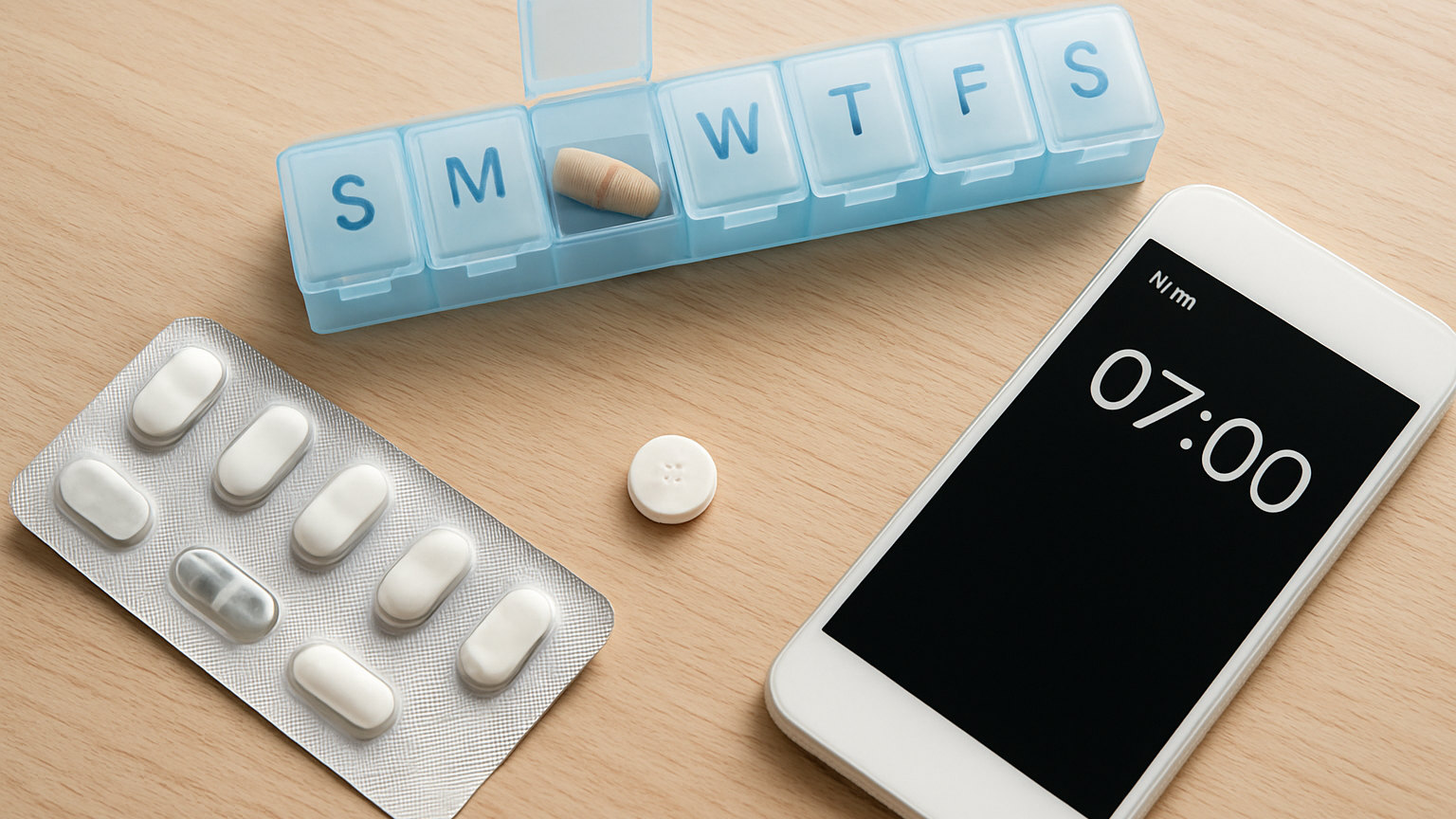
Weekly organisers are a particular hazard. They contain several days of medicine, they are not child-resistant, and they rattle attractively.
Handbags are the other. Visitors put bags on the floor, and medicines in them are at exactly toddler height. This applies to the visitors' bags as much as the householder's.
Before a visit, do a circuit: bedside, bathroom, kitchen, coffee table, coat pockets, bags.
If a child swallows any medicine that was not meant for them, call 999 or go to A and E, even if they seem well - and take the packaging.
See keeping medicines away from children.
Liquids and patches deserve extra care
Liquid medicines are sweet and look like soft drinks, which makes them among the most dangerous things in the house for a small child.
Methadone in particular must be kept in a locked box - it is a leading cause of fatal poisoning in young children, and take-home supplies come with this requirement for good reason. See methadone.
Used patches still contain enough drug to kill a child or a pet, and they end up in bins, in beds and on floors. Fold them sticky sides together and return them to a pharmacy.
See disposing of patches, creams and liquids and medicines and pets.
Living with someone with dementia
Two risks pull in opposite directions: taking too much, and not taking anything at all.
A locked box or a cupboard out of the usual sightline prevents repeated dosing, which is the more dangerous error.
Blister packs prepared by the pharmacy make it visible whether a dose has been taken, without anyone having to ask.
Where medicines need to be out of reach entirely, that is a conversation with the practice rather than an improvisation - and covertly giving medicine to an adult who has not agreed to it is a decision with legal weight, requiring a best-interests process.
See managing someone else's medicines and blister packs and dosette boxes.
Where someone in the house is at risk
If anyone in the household is struggling with their mental health, with addiction, or is a teenager going through a difficult period, limiting what is available in the house is a recognised and effective safety measure.
That means keeping only what is needed, storing it out of easy reach, and returning surplus to a pharmacy rather than letting it accumulate.
It is not a statement of distrust, and it is worth doing quietly rather than announcing.
If you are worried about someone, Samaritans are free on 116 123 at any hour, or you can text SHOUT to 85258.
Keep less in the house
The simplest measure of all.
Order only what you need, do not stockpile, and return anything you have stopped taking to a pharmacy - free, no appointment, no questions.
Surplus medicine accumulating in a shared home is the underlying condition for most of the risks above.
See disposing of leftover medicines.
Related reading: Power Cuts and Fridge Failures, with more on taking medicines day to day in Usage.