Insulin, biologic injections, some eye drops and certain antibiotics need refrigeration, and that makes travel feel like an obstacle. It is entirely manageable. The two things that actually ruin refrigerated medicines are the aircraft hold, which freezes them, and the hotel minibar, which freezes them too. Almost everything else is planning.
Never in the hold
Temperatures in an aircraft hold routinely drop below freezing, and freezing destroys insulin and most biologics permanently - the damage is not always visible afterwards.
Hold luggage also gets lost, which is a separate and sufficient reason.
Always carry them in hand luggage, and if you are travelling with someone, split the supply between two bags so a lost bag is not a lost holiday.
Cool bags and gel packs
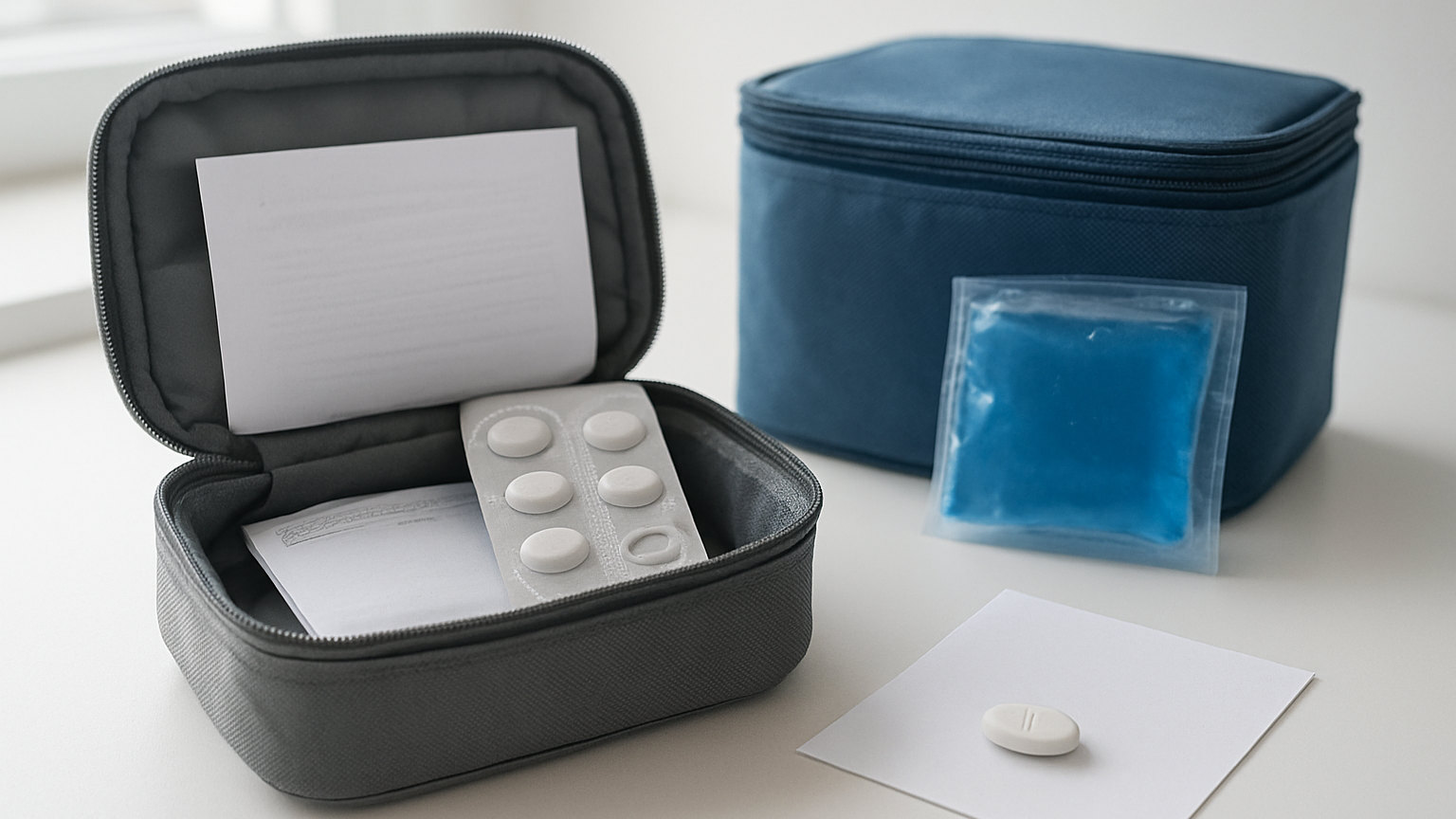
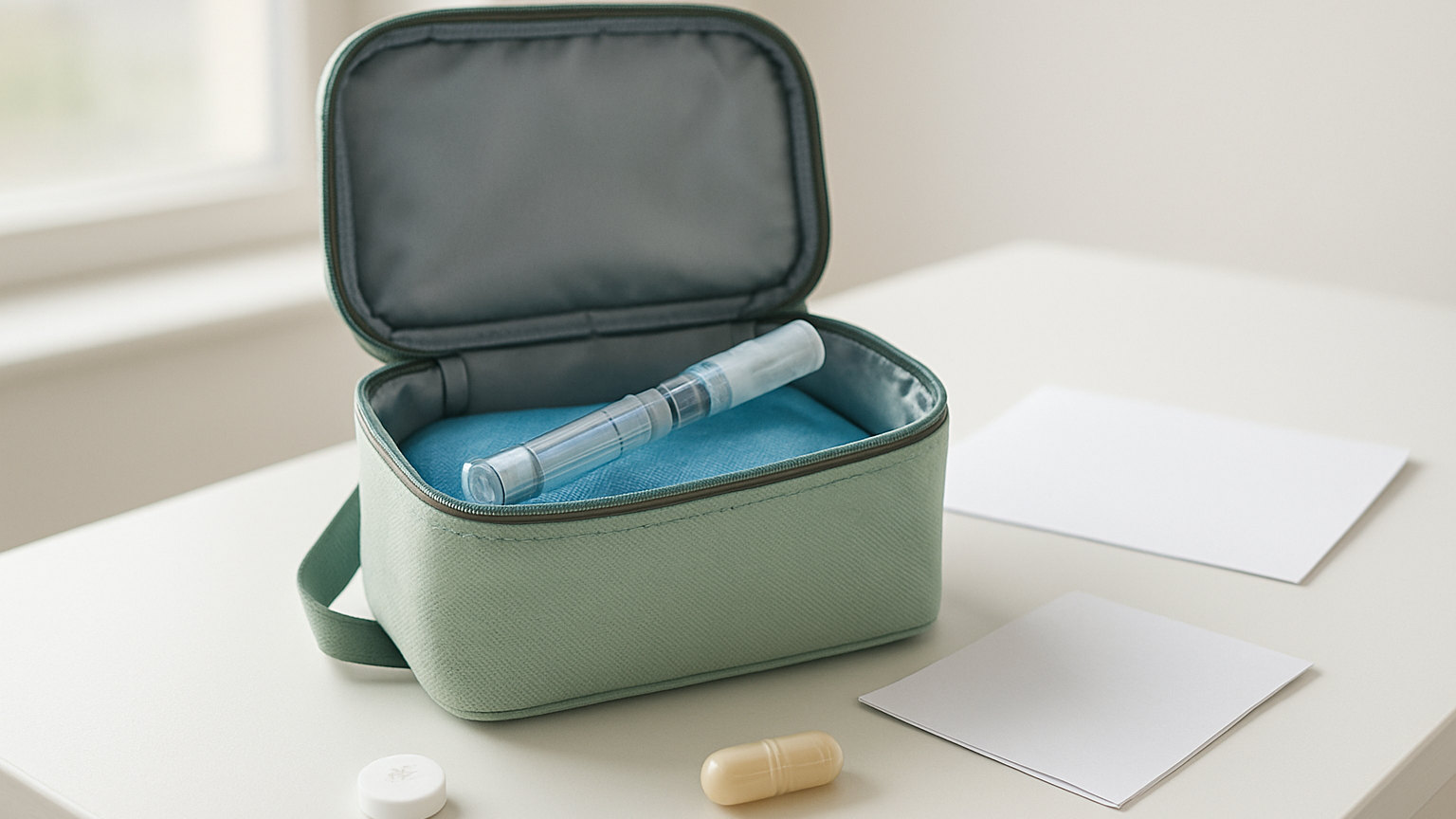
A purpose-made medical cool bag or wallet is worth having. Several designs exist:
Gel pack wallets keep contents cool for several hours and are refreshed in any fridge or freezer.
Evaporative cooling wallets are activated by soaking in cold water and work for days without any power or freezer - genuinely useful for remote travel, camping, and countries where refrigeration is unreliable.
The critical point: do not let the medicine touch a frozen gel pack directly. Wrap it, or use a bag designed with a separating layer. More insulin is ruined by contact freezing than by heat.
Some diabetes services supply cool wallets. Ask.
How long can it be out of the fridge?
More flexibility exists than people assume.
Insulin in use is kept at room temperature for a set number of weeks anyway, which is what the pen in your bag has been doing all along - so a day of travel is not the problem.
It is unopened spare supplies that need the fridge, and even those tolerate limited time out.
Check your specific product's leaflet, because the permitted period and temperature vary, and note them down before you travel.
Biologic pens have their own rules - many allow a defined number of days out of the fridge once, and cannot then go back in. That matters, because putting one back is not always permitted.
See medicines that need the fridge.
At the airport
Medicines, gel packs and liquids over the usual limit are permitted in hand luggage with supporting evidence.
Carry:
- A letter from your GP or clinic naming you, the medicines and the need to carry them, including needles
- A copy of your repeat prescription
- Medicines in their original labelled packaging
Tell security staff before screening rather than after. Insulin pumps and continuous glucose monitors should generally not go through X-ray or body scanners - ask for hand-searching and carry the manufacturer's advice.
Airlines have their own policies on sharps; check before flying.
See flying with prescription medicines.
Avoid the minibar
Hotel minibar fridges are frequently far colder than a domestic fridge and are a common cause of frozen insulin.
Better options: ask reception for a proper fridge, or for the medicine to be stored in the kitchen fridge with a thermometer.
If you must use a minibar, keep the medicine away from the back wall and the cooling element, and use a small thermometer.
A cheap fridge thermometer is one of the more useful things to pack.
Plan for the return of heat
The journey home from a hot country, and any long delay, are the risky parts - people plan the outward leg carefully and improvise on the way back.
Refresh gel packs before you leave, or use an evaporative wallet that needs only water.
Never leave medicines in a parked car - see medicines in hot weather.
Take more than you need
Take at least twice what the trip requires, split between bags, and allow for delays.
Ask for extra supply well in advance - practices will usually provide a reasonable amount for a holiday, and last-minute requests are the ones that get refused.
See extra medicine before a holiday.
Time zones and dosing
Long flights across several time zones change when doses fall due, and for insulin that needs a plan rather than improvisation.
Diabetes teams will work it out with you before you go. Do not attempt it on the aircraft.
See medicines across time zones.
If something goes wrong
If refrigerated medicine has frozen, discard it. Do not use insulin that has frozen even if it looks normal.
If it has been too warm for too long, contact a pharmacist rather than guessing - they can advise whether it remains usable.
Know how to get a replacement where you are going, and take the generic name rather than the UK brand, since brands differ between countries.
See getting medicines abroad and how to tell if a medicine has gone off.
Sharps
Take a travel sharps container. Disposal arrangements differ abroad, and needles must not go in ordinary bins.
See needles and sharps disposal.
See also Medicines That Are Illegal in Other Countries, and the Usage section for more on taking medicines day to day.