Travelling with a controlled drug means satisfying two separate sets of rules: the UK's, for taking them out and bringing them back, and the destination country's, which is where the real risk sits. People are detained abroad every year over medicines that are entirely ordinary here. The checks take an afternoon and need doing weeks ahead, not the night before.
What counts
More medicines than people expect.
Strong opioids - morphine, oxycodone, fentanyl, methadone, buprenorphine. Codeine and tramadol, which are widely assumed to be ordinary painkillers. Benzodiazepines including diazepam and temazepam. Z-drugs. Gabapentin and pregabalin, controlled since 2019. ADHD stimulants including methylphenidate and lisdexamfetamine. Some cannabis-based products.
If you are unsure, ask the pharmacist - it is written on the dispensing label and they will tell you in seconds.
See gabapentin.
The UK side
The Home Office operates a personal licence scheme for taking controlled drugs out of and back into the UK.
The broad principle is that a licence is required where you are carrying more than a defined period's supply - conventionally around three months - or travelling for longer than that. Shorter trips with smaller quantities generally do not need one.
The thresholds and the application process change, so check the current Home Office guidance rather than relying on what someone was told previously. Applications take time, so start well ahead.
A licence covers UK borders only. It has no effect whatever on what the destination country permits.
The destination side, which matters more
This is where people get into serious trouble.
Codeine is prohibited or tightly restricted in a number of countries. Several Gulf states, Japan and Singapore have strict rules, and penalties in some jurisdictions are severe - detention, prosecution, and in extreme cases far worse.
Some countries require advance permission, a specific form, or a limit on quantity. Some prohibit particular medicines outright regardless of documentation.
Contact the embassy or consulate of every country you will enter, including transit stops, and get the answer in writing where you can.
A stopover counts. Changing planes in a country whose rules differ puts you under those rules while you are there.
See medicines that are illegal in other countries.
What to carry
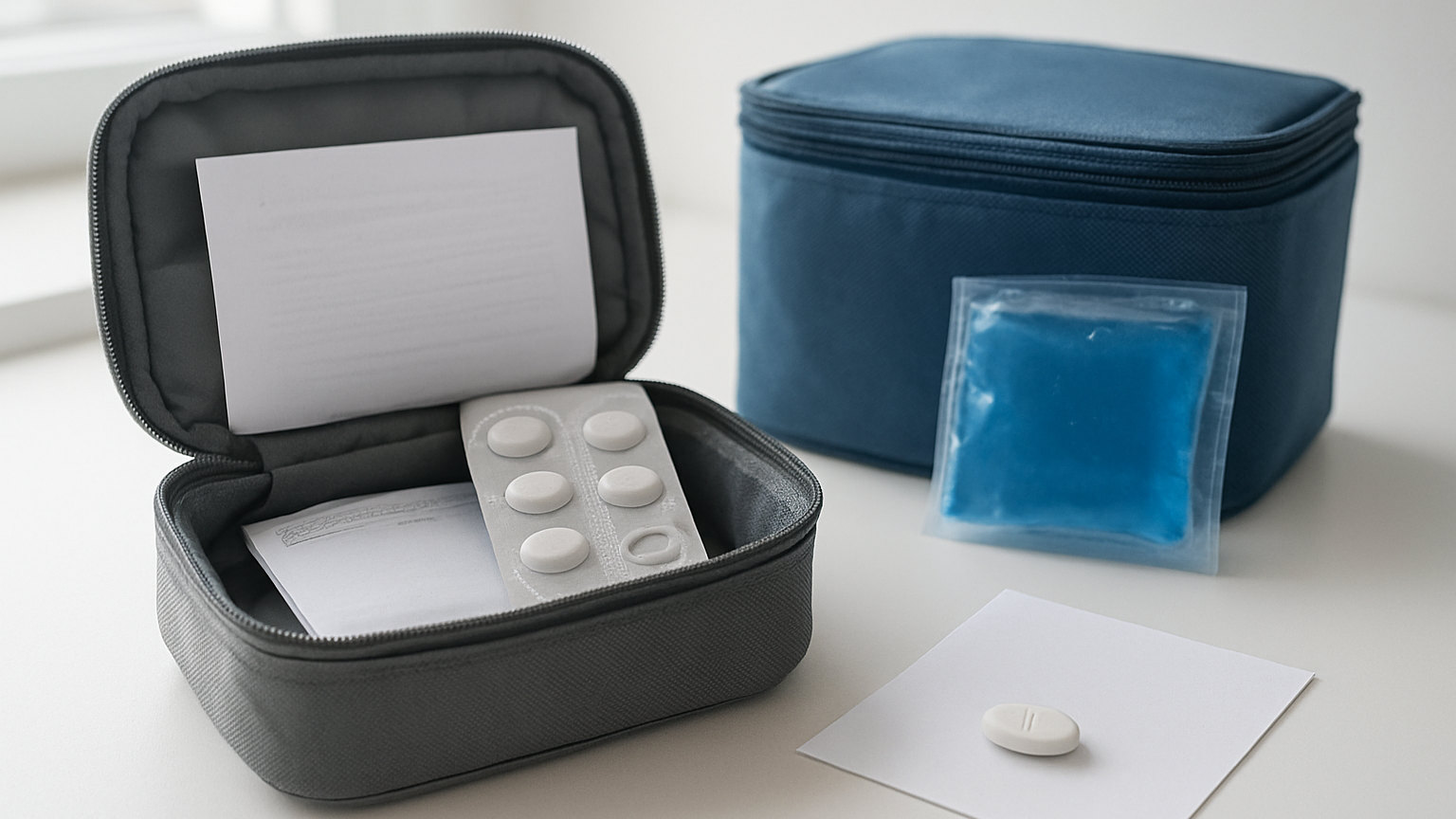
Original labelled packaging, with the pharmacy label showing your name. Never decant a controlled drug into an unlabelled container or a pill organiser for travel.
A letter from the prescriber, ideally on headed paper, stating your name, travel dates, the condition, and each medicine by generic name with the strength and total quantity carried. Practices usually charge for this, since it is not an NHS service - ask early.
A copy of the prescription.
Your licence, if you have applied for one.
Carry everything in hand luggage, and declare it before screening rather than after.
Take only what the trip requires plus a modest margin - a large surplus attracts attention and may exceed a quantity limit.
See flying with prescription medicines.
Getting the supply in the first place
This is frequently the practical obstacle.
Controlled drug prescriptions are valid for 28 days, and guidance is that no more than around 30 days' supply is normally prescribed at once. A three-month holiday therefore needs discussing rather than simply requesting.
Practices can prescribe a longer quantity where travel justifies it, but it is a decision rather than a routine issue, and it needs weeks of notice.
Start the conversation as soon as you book.
See shortages of controlled drugs and extra medicine before a holiday.
Opioid substitution treatment
Travelling on methadone or buprenorphine needs planning with the drug service specifically.
Arrangements for supervised consumption, instalment dispensing and take-home doses all have to be adjusted, and some destinations will not permit the medicine at all.
Give the service as much notice as possible. Missing doses is not a safe fallback - and tolerance falls quickly during a gap, so resuming at the previous dose afterwards is dangerous.
See buprenorphine.
Keep it with you and keep it obvious
Controlled drugs are the medicines most worth stealing and the hardest to replace abroad.
Keep them in hand luggage that stays with you rather than in an overhead locker on a long journey, and split nothing into a second bag - a partial supply with no matching documentation is harder to explain at a border than a complete one. See travel insurance and your medicines.
Coming home
The same rules apply in reverse, and a licence covers both directions if you needed one.
Be cautious about medicines bought abroad. Something sold over the counter in another country may be controlled here, and bringing it back can be an offence regardless of where you bought it.
Bring used sharps home in a sealed travel container rather than leaving them.
See sharps disposal away from home and getting medicines abroad.
Living Between Two Homes covers a related point, and the Usage section has the rest of these guides.