Medicines are regulated nationally, and the categories do not line up between countries. Things bought freely from a UK pharmacy are controlled substances elsewhere, and prescription medicines that are entirely routine here are prohibited in some jurisdictions. People are detained at borders over this every year, usually with no intent to break any law and no idea they were doing so. Checking takes ten minutes.
Where to check
The reliable source is the embassy or consulate of the country you are visiting, which can confirm what is permitted and what documentation is needed.
The UK government's foreign travel advice pages cover this for many destinations and are a sensible starting point.
Check for every country you will enter, including any where you merely change planes - a transit stop can count as entry for these purposes.
Do this weeks in advance, because some countries require a permit applied for before travel, and those take time.
The categories that cause problems
Opioid painkillers - codeine is the one that catches most people, because it is in ordinary combination painkillers bought without a prescription here. It is tightly controlled or banned in several countries.
Strong opioids - morphine, oxycodone, fentanyl patches, methadone, buprenorphine. Almost everywhere restricts these, usually permitting a limited supply with documentation.
Benzodiazepines and sleeping tablets - diazepam, temazepam, zopiclone.
ADHD medicines - methylphenidate, lisdexamfetamine and dexamfetamine are amphetamine-related and are prohibited outright in some countries, including Japan.
Decongestants - pseudoephedrine, in ordinary cold remedies, is prohibited in Japan and restricted elsewhere.
Gabapentin and pregabalin, now controlled in the UK and elsewhere.
Cannabis-based products, including CBD oil - legal here in some forms, and a serious criminal matter in a number of countries regardless of THC content.
Some hormone treatments and fertility medicines.
See travelling with controlled drugs.
Countries with strict regimes
Without attempting a list that will date, some jurisdictions are known for strict enforcement - the United Arab Emirates and several Gulf states, Japan, Singapore, China, Russia and Indonesia among them.
Penalties in some cases are severe, and "I did not know" is not a defence.
Equally, plenty of countries are straightforward provided you carry documentation. The point is to find out which you are dealing with rather than assume.
What to carry
Whatever the destination, the same preparation covers most situations:
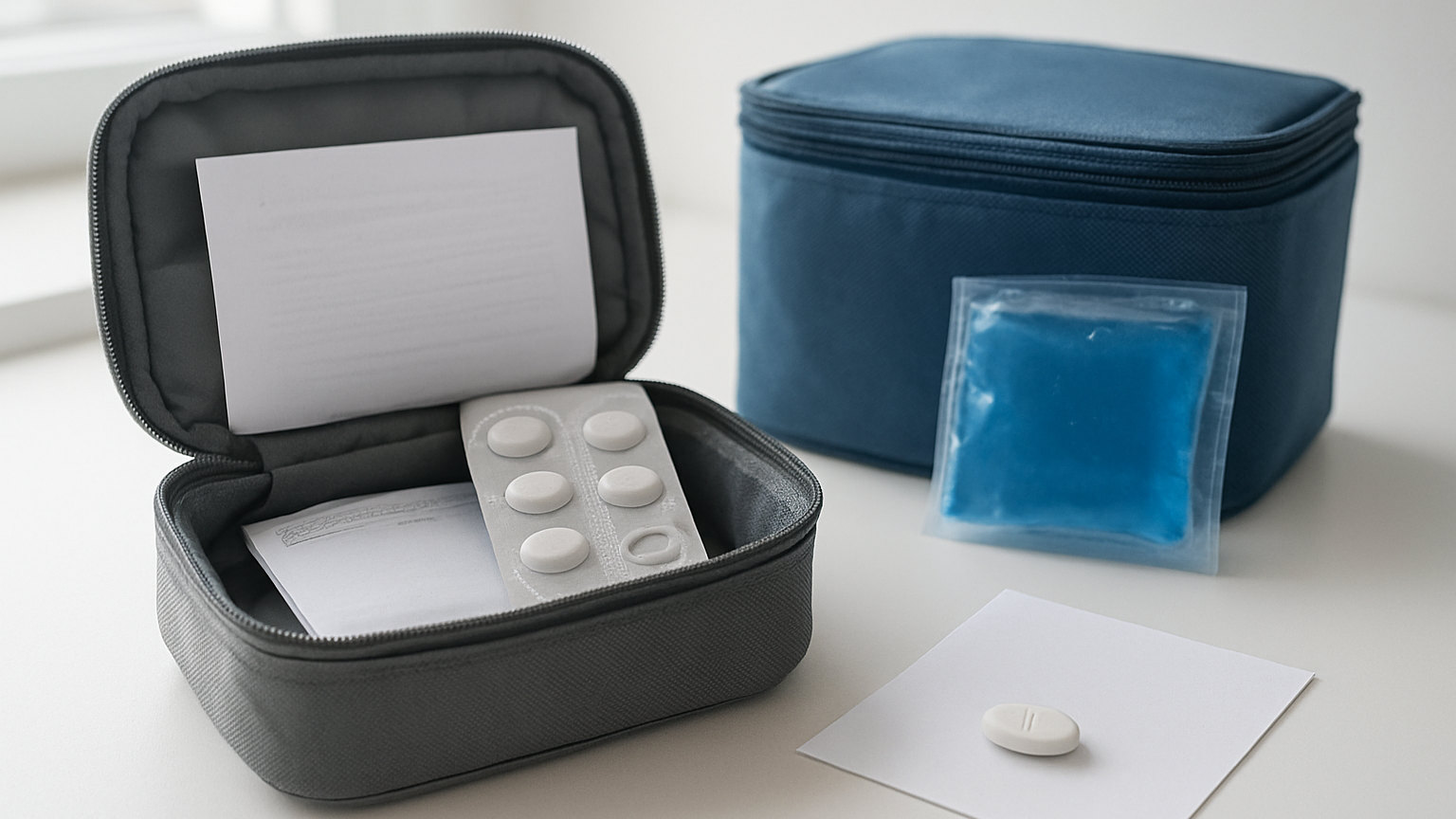
- Medicines in original, labelled packaging with your name on the pharmacy label - not decanted into an organiser
- A copy of your repeat prescription
- A letter from your GP or clinic stating your name, the condition, the medicines with their generic names, the doses and the quantity, and that they are for your personal use
- Any permit the destination requires
Use generic names in the letter. Brand names differ between countries and mean nothing to a border official elsewhere.
A translation into the local language helps in some destinations and is sometimes required.
Practices usually charge for a travel letter, since it is not an NHS service. Ask early.
Quantity limits
Many countries permit a personal supply - commonly up to about three months, and shorter for controlled drugs - and require a licence above that.
The UK itself has rules for taking controlled drugs out and bringing them back, with a Home Office licence needed above certain quantities and durations.
Carry only what you need for the trip plus a margin, rather than your whole supply.
Practical points
Hand luggage, always - the hold freezes, and bags get lost. Split the supply between two bags if travelling with someone.
Declare medicines if there is any doubt, rather than being found with them. Volunteering is treated very differently from concealment.
Be careful buying medicines abroad to bring home, too - importing prescription medicines without a prescription is an offence here.
See flying with prescription medicines and getting medicines abroad.
If something is not permitted
Do not simply stop taking it and hope.
Discuss it with your prescriber well before travelling. Options include switching temporarily to a permitted alternative, arranging supply at the destination through a clinic there, or reconsidering the itinerary.
For some medicines - anti-epileptics, insulin, steroid replacement, opioid substitution treatment - going without is not an option, and that needs planning rather than improvising.
See planning ahead for hard-to-get medicines.
Cruises and multiple countries
A cruise or a multi-country trip means entering several jurisdictions, each with its own rules, and a ship may be subject to the law of wherever it is docked.
Check each port of call rather than only the departure and arrival countries, and carry your documentation throughout rather than packing it away after the first border. See medicines across time zones.
Travel insurance
Declare all your conditions and medicines. An undeclared condition is the commonest reason a claim is refused, and a medicine you did not mention can be treated as evidence of one.
Travelling With Medicines That Need a Fridge covers a related point, and the Usage section has the rest of these guides.