Plenty of people live across two addresses - working away in the week, staying with a partner, a child moving between separated parents, a student between term and holidays, or splitting time between two family homes. Medicines do not follow automatically, and the usual result is half a supply in each place and a full supply in neither. A deliberate split solves it.
Decide what is duplicated and what travels
The useful distinction.
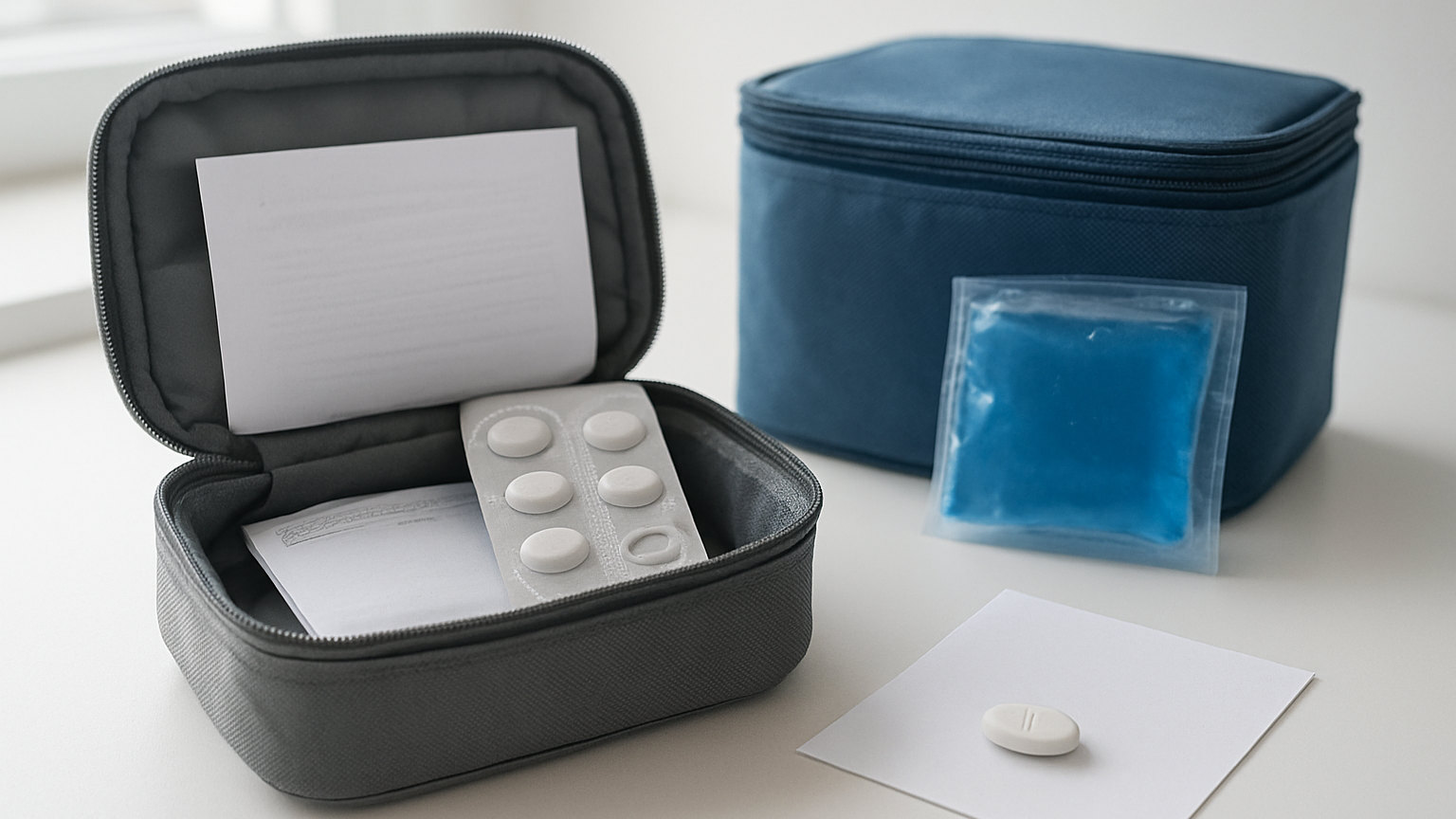
Duplicate anything needed in an emergency, where fetching it is not an option: a reliever inhaler, a GTN spray, an adrenaline auto-injector, a rescue pack. Two of these is not stockpiling - it is the same reason people keep one at work.
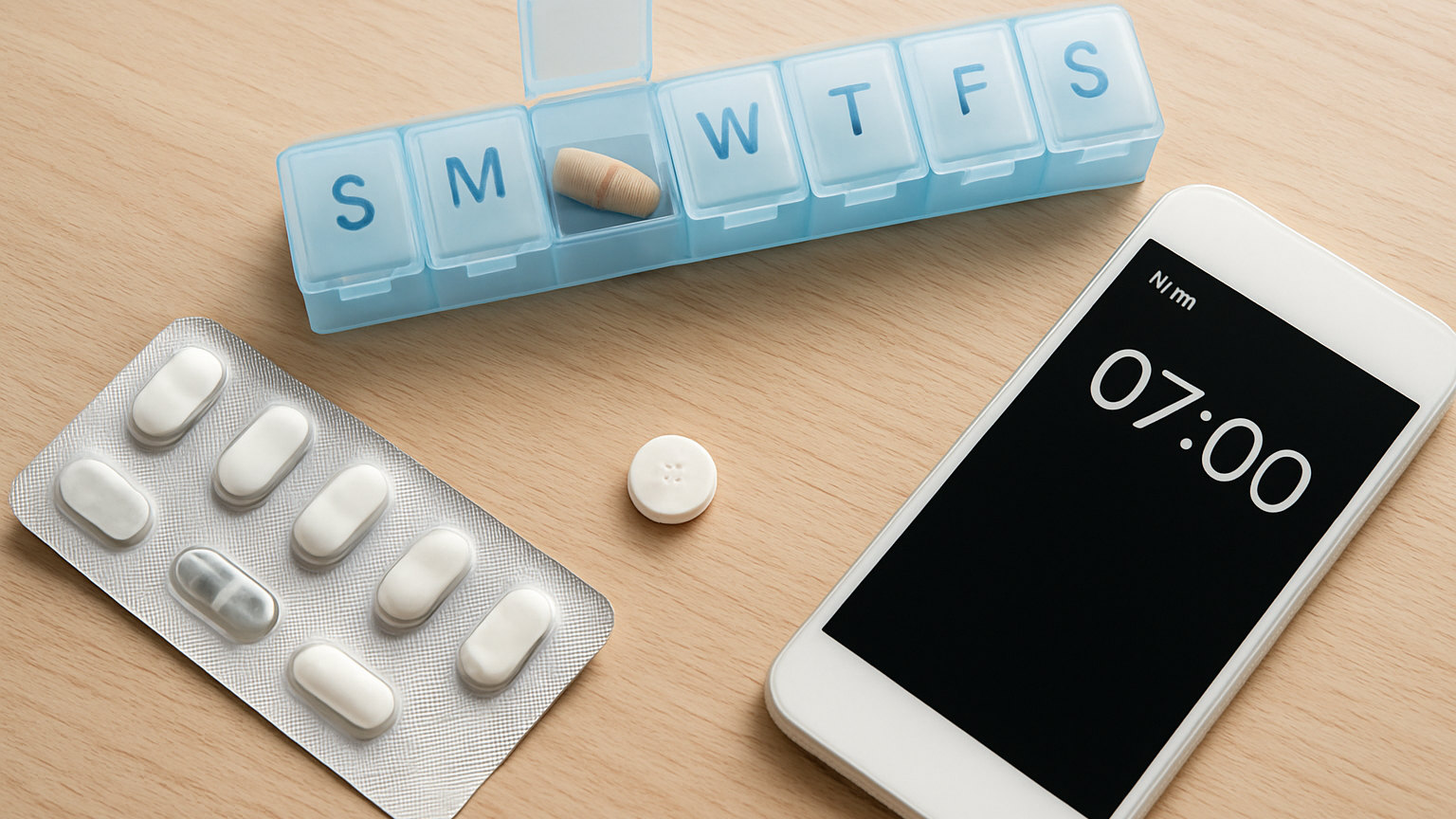
Travel the daily medicines, in one place, as a single set. Splitting a daily regimen across two addresses is how doses get missed, because you end up with Monday to Wednesday in one house and the rest in the other.
Keep a small margin at the second address for the night you arrive without your bag.
Ask the prescriber for duplicate emergency devices explicitly and explain why - it is a normal request and is usually granted.
One list, not two
Keep a single authoritative medicines list, dated, and carry it - on your phone and on paper.
Two partial lists in two houses is worse than one list, because each looks complete.
Include everything, including anything bought over the counter and any supplements.
One pharmacy and one practice
Resist the temptation to register in both places or use two pharmacies.
A single pharmacy builds a picture of what you take, spots interactions and duplications, and will order ahead for a regular patient. Splitting between two removes all of that, and neither sees the whole list.
You can remain registered with one GP practice and, when away for a defined period, register as a temporary resident elsewhere for up to three months without losing your main registration.
If you use electronic prescriptions, remember they go to your nominated pharmacy - so being at the other address on collection day means the prescription is in the wrong town.
See choosing a pharmacy and changing GP practice or pharmacy.
Delivery can solve the geography
Where the pattern is predictable, having medicines delivered to whichever address you will be at removes the collection problem entirely.
Many pharmacies deliver, and repeat dispensing - a batch of prescriptions held at the pharmacy and released at intervals - suits this particularly well.
Synchronising your repeats so everything falls due together means one delivery rather than four.
See synchronising your repeat prescriptions and repeat dispensing.
Children between two parents
The situation where this matters most, and where it goes wrong most easily.
Medicines need to travel with the child, in original labelled packaging, with a written note of what has been given and when.
A shared written record - a notebook, a shared note on a phone - prevents both the missed dose and the double dose, and it is more reliable than either parent remembering.
Emergency medicines should be duplicated so each home and the school all have one.
Make sure both households know the current dose, since a child's weight-based doses change as they grow.
Schools can hold spare inhalers and adrenaline auto-injectors, which removes one failure point entirely.
See medicines at work and school and giving medicines to children.
Students
Term-time and home addresses raise the same issues, with the added problem that nobody is organising it.
Register with a GP at the university address or as a temporary resident, know where the nearest pharmacy is before something goes wrong, and take a full supply at the start of term rather than assuming.
In shared accommodation, keep medicines in your own room and consider a lockable box for anything liable to misuse.
See storing medicines in a shared home.
Tell people where things are
Emergency medicines are only useful if someone else can find them.
In each home, keep them in the same predictable place and tell whoever you live with - a partner, housemates, a parent. Two homes means two sets of people who need to know, and the second household is usually the one nobody has briefed. See alert cards and medical ID.
Storage at both ends
Whatever is kept at the second address still needs storing properly - cool, dry, dark, and out of reach of children and animals.
A bag left in a car between journeys is the worst option and the most common one.
Check periodically what is at each address, since duplicates accumulate and expire quietly.
See where to keep your medicines and clearing out your medicine cupboard.
The Usage section covers more on taking medicines day to day - Taking Controlled Drugs Abroad is closely related to this one.