
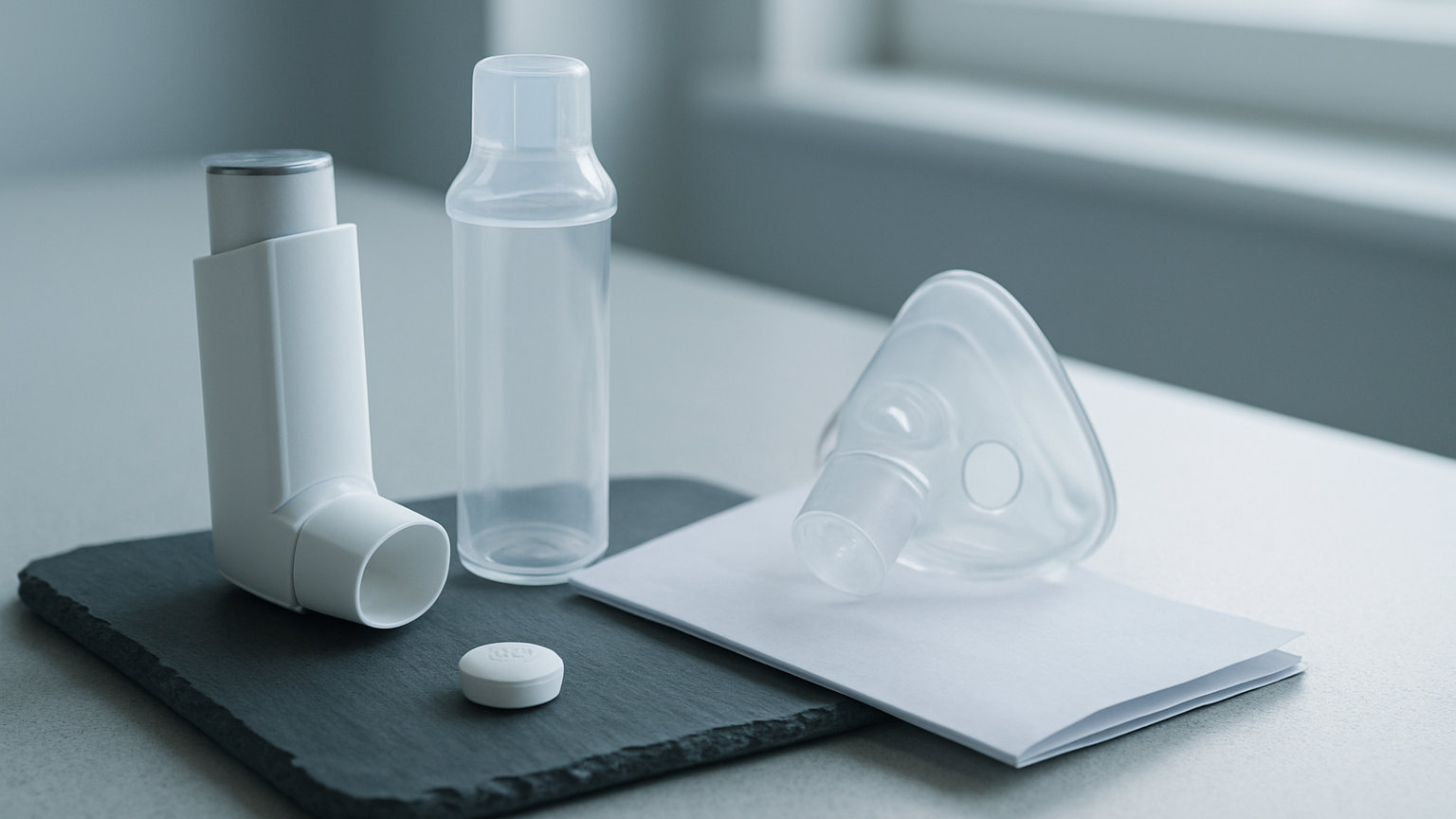
The underlying treatment of asthma in children follows the same logic as in adults: a preventer inhaler taken daily to control inflammation, and a reliever for symptoms. What differs is practical. Children need a spacer, and younger ones a spacer with a face mask. Growth is monitored on inhaled steroids. School needs a copy of the action plan and access to a reliever. And the threshold for seeking help is lower, because children deteriorate faster and less visibly than adults.
Call 999 if a child is too breathless to speak, eat or play, if their lips or fingers look blue or grey, if they are drowsy or floppy, or if the reliever is not working.
Spacers are not optional
Children should use a pressurised inhaler with a spacer rather than the inhaler alone. It removes the coordination problem entirely, catches drug that would otherwise hit the throat, and gets substantially more into the lungs.
Under about three to five years, a spacer with a soft face mask is used. The mask must seal around the nose and mouth. Above that age, most children can manage a mouthpiece, which delivers more.
One puff at a time into the spacer, then breathe in and out normally through it several times - tidal breathing - rather than trying to hold a breath. Firing several puffs in at once wastes most of them on the walls. Our guide to using your inhaler properly covers technique for both device types.
Wash the spacer monthly in warm soapy water and leave it to air dry rather than rubbing, which builds static that attracts the drug to the walls.
Steroid inhalers and growth
Inhaled steroids have been associated with a small reduction in growth rate, mainly in the first year of treatment, with studies suggesting a modest effect on final adult height.
Set against that, poorly controlled asthma itself affects growth, sleep, schooling and activity, and occasionally life. The dose used is small and delivered directly to the airways, and the risk of undertreatment is substantially greater.
Children on inhaled steroids should have their height measured at reviews. Rinse the mouth and spit after each dose, or give a drink for younger children, to reduce oral thrush - our guide to steroid inhaler safety covers the wider question.
The number that matters
How often the reliever is needed is the clearest measure of control. Needing it three or more times a week, waking at night with cough or wheeze, or being limited during play or PE all suggest treatment needs reviewing.
Getting through more than one reliever inhaler in a month is a recognised marker of increased risk. Our guide to preventers and relievers explains why more reliever is a warning rather than a solution.
School and nursery
Schools in England are permitted to hold an emergency salbutamol inhaler, but that does not replace your child having their own reliever and spacer available.
Give the school a copy of the written action plan, make sure staff know where the inhaler is and that the child is allowed to use it, and check expiry dates each term. Sport and PE are important - the aim is a child who can take part fully, and being unable to is a sign of poor control rather than a reason to opt out.
Make sure whoever else looks after your child - grandparents, clubs, childminders - has the plan too.
The action plan
A written asthma action plan sets out the usual treatment, what to do when symptoms worsen, and when to seek help. Children with one are less likely to end up in hospital.
Review it at least yearly and any time treatment changes. Our guide to what to do when asthma gets worse covers the warning signs, which appear days before anything dramatic.
Very young children
Diagnosing asthma under five is difficult, because viral wheeze is extremely common at that age and most children who wheeze with colds do not go on to have asthma. Treatment is often started as a trial, with a plan to review whether it helped.
If a trial of treatment is started, be clear what would count as it working and when it will be reassessed - otherwise children remain on preventers for years without anyone revisiting the question.
Getting doses right
Never adapt an adult dose or use an adult's inhaler for a child. Doses and devices are chosen for age and weight, and our guide to cutting and crushing tablets covers why improvising with medicines generally goes wrong.
For liquid medicines used alongside - antibiotics, steroids during a flare - use only the syringe or spoon supplied, since kitchen spoons vary considerably.
Keep inhalers and all medicines out of reach - see keeping medicines away from children.
What helps beyond the inhalers
Annual flu vaccination. A smoke-free home, since second-hand smoke measurably worsens childhood asthma. Attention to damp and mould. And attending the annual review with all the inhalers, so technique can be watched - it is the single most common fixable cause of poor control at any age.
Related reading: Montelukast: What It Does and Who It Helps, with more on what medicines are prescribed for in Conditions.


