Liraglutide is a GLP-1 receptor agonist, mimicking a gut hormone released after eating. It prompts insulin release when glucose is high, suppresses glucagon, slows stomach emptying and acts on appetite signalling in the brain. Unlike semaglutide it is injected daily rather than weekly. It is sold under different brand names at different doses for type 2 diabetes and for weight management - the same molecule doing two jobs, which causes a surprising amount of confusion.
Follow the plan your prescriber gave you. This guide contains no doses.
Two brands, two purposes
One brand is licensed for type 2 diabetes, at lower doses. Another is licensed for weight management, at higher doses, within defined criteria.
They are not interchangeable, prescribing is by brand, and the pens differ. If your brand changes, check what you have been given.
See why some medicines are prescribed by brand.
Daily or weekly?
Semaglutide and dulaglutide are weekly; liraglutide is daily. Weekly injection suits most people better, and trials generally show greater weight loss and glucose reduction with semaglutide.
Liraglutide retains a place: it has the longest safety record in the class, it is licensed for adolescents with obesity, and a daily drug clears the body faster if a problem develops - which occasionally matters.
See semaglutide, including what the withdrawal studies found about stopping.
Build the dose up slowly
Nausea, vomiting and diarrhoea are very common, worst after each dose increase, and usually settling.
The dose is therefore increased in steps over weeks. Rushing that is the main reason people abandon it.
Practical measures: eat smaller portions, stop when full, avoid fatty and very sweet food, and do not lie down straight after eating. The drug slows stomach emptying, so large meals sit uncomfortably.
If nausea is intolerable at a step, staying at the current dose for longer is the standard answer rather than stopping.
What it achieves
In type 2 diabetes it lowers HbA1c and produces weight loss alongside - unusual, since many diabetes treatments cause weight gain.
A cardiovascular outcome trial found a reduction in cardiovascular events in people with type 2 diabetes at high risk.
In weight management, average weight loss is meaningful but less than with semaglutide or tirzepatide.
As with the whole class, weight returns after stopping unless something else changes. The honest framing is long-term treatment for a chronic condition rather than a course.
What to report
Seek medical advice for severe, persistent abdominal pain radiating to the back, with or without vomiting - pancreatitis needs assessing and the drug stopping.
Report pain in the upper right abdomen after fatty meals, or jaundice - gallstones are more common with rapid weight loss generally and with this class.
Constipation, reflux and belching are common. Injection site reactions occur.
Hypoglycaemia
Liraglutide does not cause hypoglycaemia on its own, because it only enhances insulin release when glucose is raised.
Combined with insulin or a sulfonylurea it can, and those doses are often reduced when it is started - see glimepiride.
Who should not take it
People with a personal or family history of medullary thyroid carcinoma or MEN 2 syndrome. Anyone with a history of pancreatitis needs careful consideration.
It is not used in pregnancy and should be stopped well before conception.
Tell your anaesthetist before any procedure involving sedation, since delayed stomach emptying affects fasting requirements - this has caused problems and guidance now addresses it specifically.
Muscle as well as fat
Substantial weight loss from any cause includes muscle. Adequate protein intake and resistance exercise matter more than usual during treatment, particularly in older people.
See medicines and your weight.
Practical points
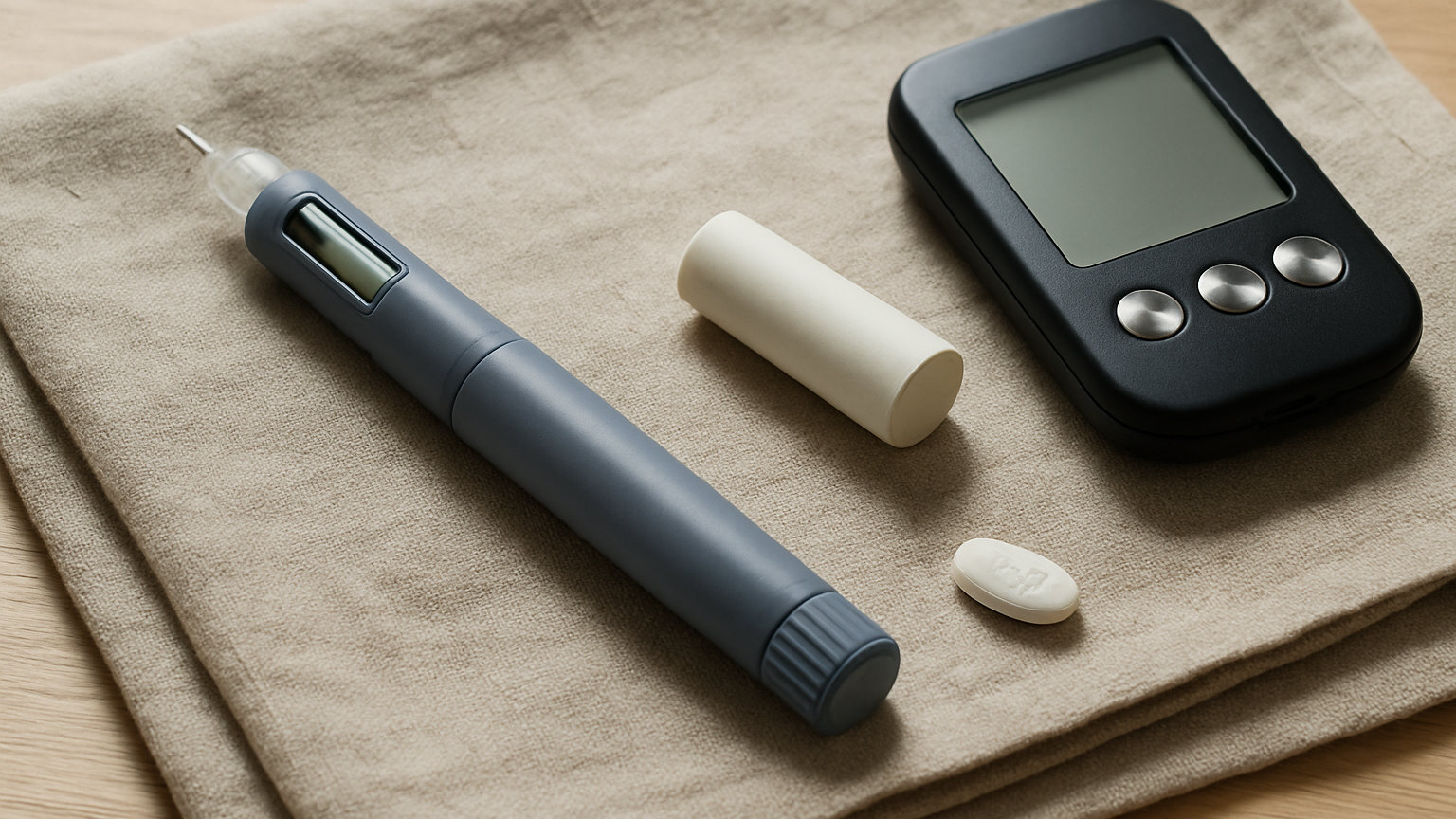
Injected once daily at any time, with or without food, but at roughly the same time each day. Into the abdomen, thigh or upper arm, rotating sites.
Unopened pens go in the fridge; in use, kept at room temperature for a set number of weeks. Never freeze - see medicines that need the fridge.
Used needles go in a sharps bin, not the household bin - see needles and sharps disposal.
Access on the NHS
For type 2 diabetes, GLP-1 agonists are prescribed within criteria based on HbA1c, BMI and cardiovascular risk, and are usually added when other treatments have not achieved control.
For weight management, access is through specialist weight management services with defined criteria, and availability has been limited. Your GP can explain what applies locally, and it is worth asking rather than assuming you would not qualify.
Counterfeits
Demand for GLP-1 medicines has outstripped supply, and falsified pens have been seized in the UK - some containing insulin, with people hospitalised as a result.
Buy only through a registered pharmacy with a prescription from someone who has assessed you. A site with stock when legitimate pharmacies have none is telling you something.
See weight loss injections bought online.
The Conditions section covers more on what medicines are prescribed for - Dapagliflozin: Beyond Diabetes is closely related to this one.