
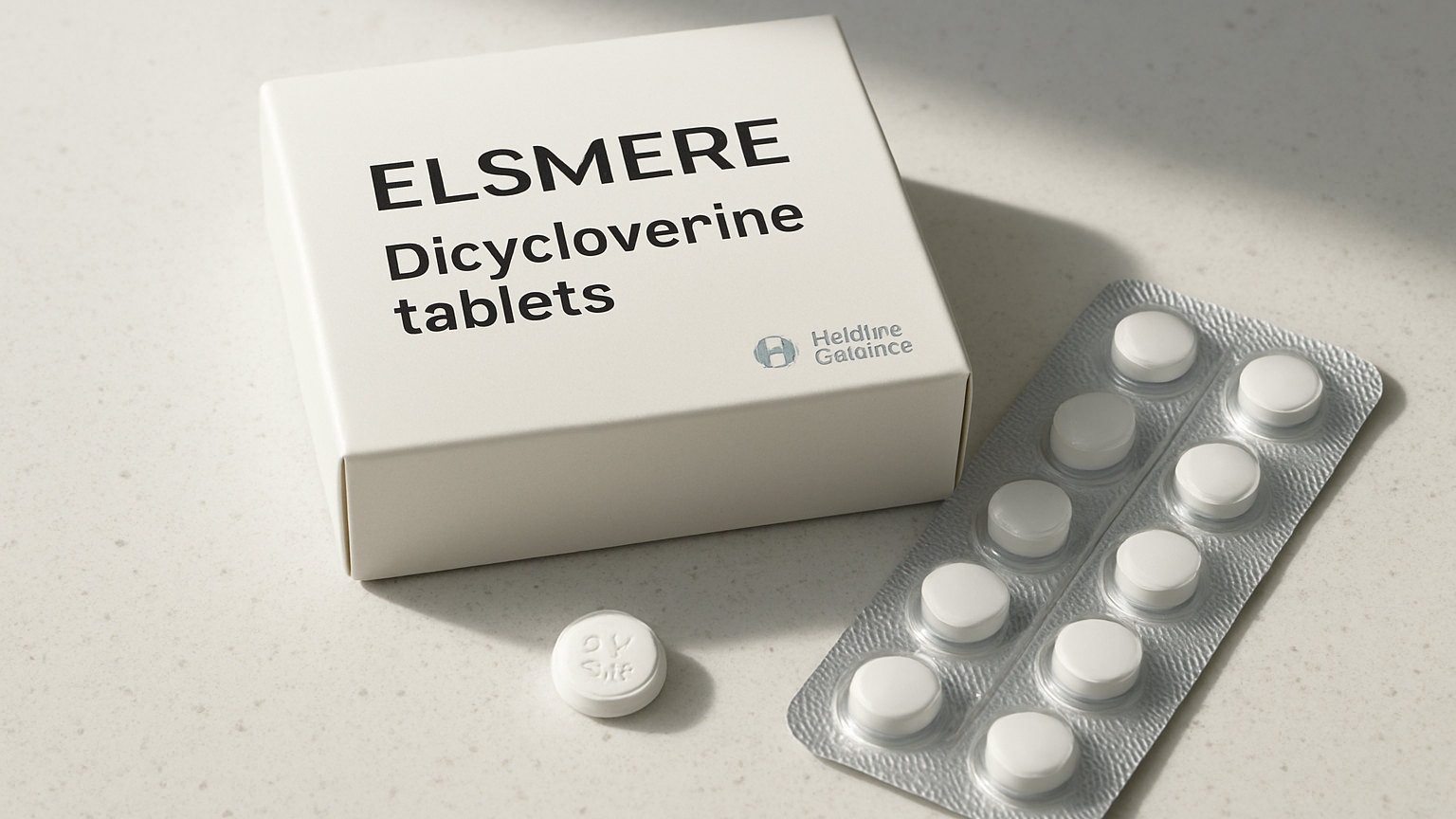
Dicycloverine - dicyclomine in American usage - is an antispasmodic. It relaxes the smooth muscle of the gut through an anticholinergic action, relieving the cramping pain of irritable bowel syndrome. It treats a symptom rather than the condition, and it sits alongside several alternatives that do broadly the same job by different routes. Choosing between them is mostly a matter of which side effects you would rather avoid.
Follow the instructions on your label. This guide contains no doses.
The options and how they differ
Dicycloverine - anticholinergic, so it causes dry mouth, blurred vision, constipation and urinary hesitancy. Effective for cramping, but the side effects limit it in older people.
Hyoscine butylbromide - also anticholinergic, but it barely crosses into the brain, so no drowsiness. Widely available over the counter. See hyoscine, including the important distinction from the travel-sickness form.
Mebeverine - acts directly on gut smooth muscle without anticholinergic effects, so it is generally the best tolerated. Often first choice for that reason. Taken before meals.
Peppermint oil - relaxes gut muscle through calcium channel effects. Genuinely effective for some people, with heartburn as the main drawback. Capsules are enteric-coated to release in the intestine and must be swallowed whole.
Alverine - another direct smooth muscle relaxant.
None is dramatically better than the others in trials, and individual response varies enough that trying a second if the first does not suit is entirely reasonable.
The anticholinergic drawback
Dicycloverine's dry mouth, constipation and blurred vision are the usual reasons people stop.
Constipation is a particular problem in IBS with constipation, where relieving the cramping at the cost of making the constipation worse is a poor trade. In that situation mebeverine or peppermint oil generally suit better.
Dry mouth matters more than it sounds, because saliva protects teeth - see dry mouth from medicines.
In older people it contributes to confusion and falls and adds to cumulative anticholinergic burden - see medicines and your memory and solifenacin, which is often on the same list.
Who should avoid it
People with untreated narrow-angle glaucoma, significant prostate enlargement or urinary retention, myasthenia gravis, severe ulcerative colitis, or bowel obstruction.
Seek urgent help for a painful red eye with blurred vision, or if you cannot pass urine at all.
It is not suitable for infants, and is avoided in young children.
Taking it
Antispasmodics generally work best taken before meals, since eating triggers the gut contractions that cause the cramping.
They can be taken regularly or as needed depending on whether your symptoms are constant or episodic - the as-needed approach suits people whose cramping is predictable, before a commute or a meeting out.
Give it a proper trial
Antispasmodics work within hours rather than weeks, so you will know fairly quickly whether one suits - but symptoms in IBS fluctuate anyway, which makes a few days an unreliable test.
A few weeks of consistent use, or consistent use before the situations that trigger cramping, gives a fairer picture. Keeping a simple record of symptoms alongside is more informative than memory, and it is useful at a review.
What else works in IBS
Antispasmodics are one part of a broader approach, and several of the non-drug measures have better evidence than any of the tablets:
- Dietary approaches, including a supervised low-FODMAP trial with a dietitian rather than an internet version
- Soluble fibre such as ispaghula, which helps - while insoluble bran often makes IBS worse
- Regular meals, adequate fluid, and limiting caffeine and alcohol - see caffeine and your medicines
- Psychological therapies, including cognitive behavioural therapy and gut-directed hypnotherapy, which have good evidence in IBS
- Low-dose tricyclic antidepressants, used for their effect on gut pain signalling rather than for mood - see nerve pain medicines
For IBS with constipation that has not responded, linaclotide is a later option - see linaclotide. For IBS with diarrhoea, loperamide is used - see loperamide.
When it is not IBS
See your GP rather than treating symptoms if you have blood in the stool, unintentional weight loss, a new abdominal or rectal mass, symptoms that wake you at night, anaemia, or a change in bowel habit starting over the age of 50.
Coeliac disease is tested for as part of the standard assessment, and it is a common cause of symptoms labelled as IBS for years. Inflammatory bowel disease, bile acid diarrhoea and, in older people, cancer all need excluding before symptoms are attributed to IBS.
See warning signs you should not ignore.
More on what medicines are prescribed for in the Conditions section, including Abacavir: Why the Genetic Test Comes First.


