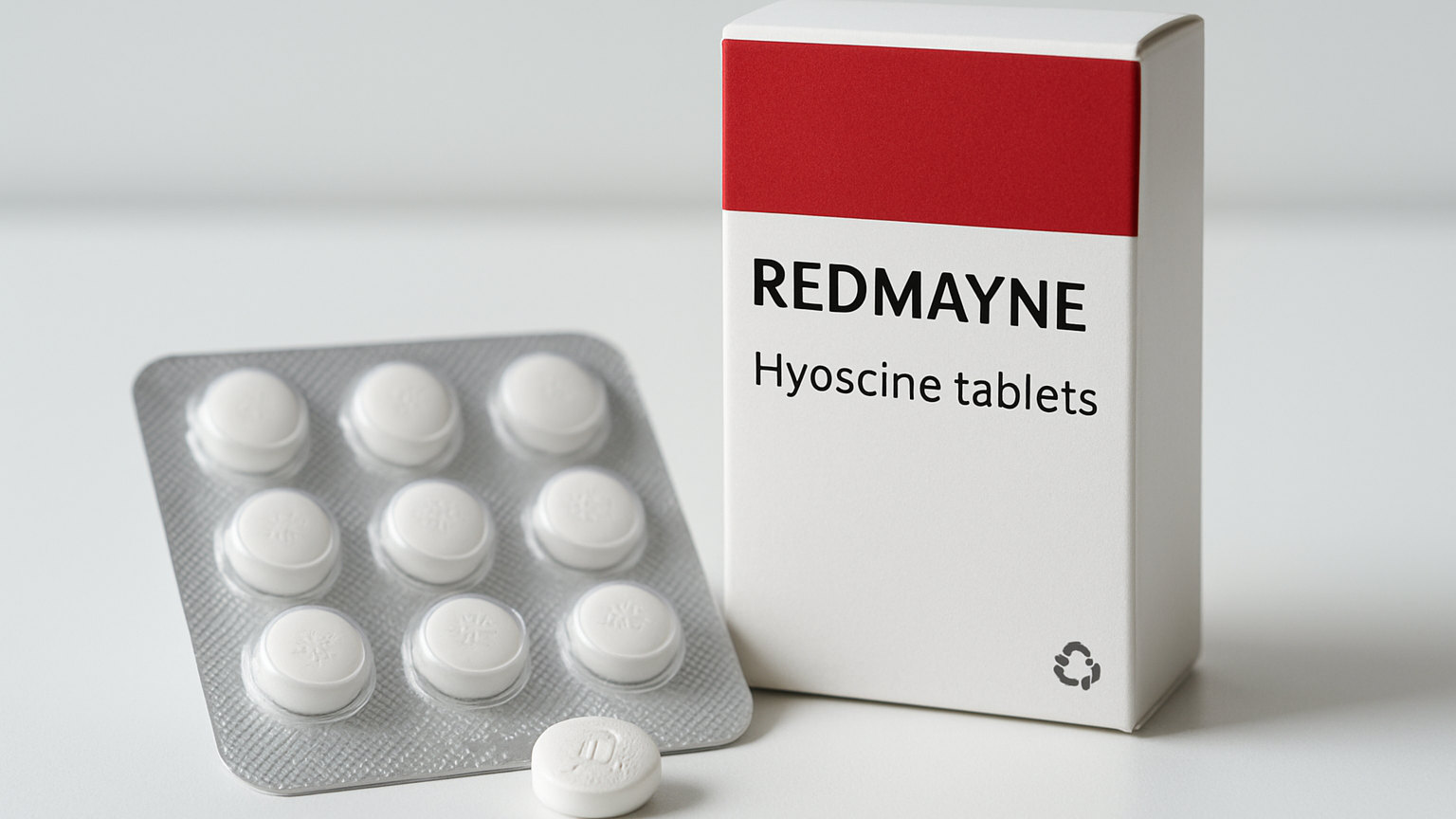
Hyoscine is an antimuscarinic derived from deadly nightshade and related plants. It comes as two different salts that behave almost like different drugs. Hyoscine hydrobromide crosses into the brain and is used for travel sickness and vertigo. Hyoscine butylbromide barely crosses at all, staying in the gut where it relaxes smooth muscle, and is used for abdominal and bladder cramps. They share a name, sit near each other on the shelf, and buying the wrong one simply will not work.
Follow the instructions on your label. This guide contains no doses.
Hyoscine hydrobromide: travel sickness
Motion sickness comes from a mismatch between what the inner ear senses and what the eyes see. Hyoscine hydrobromide blocks the signalling in the vestibular pathway, and it is among the most effective treatments available.
It is sold as tablets that dissolve in the mouth, and as a patch worn behind the ear, which lasts up to three days and suits long journeys, cruises and anyone who cannot keep a tablet down.
Take it before you travel, not once you feel sick - it works far better as prevention, and the patch in particular needs applying several hours ahead.
It does not work for nausea from other causes. Ondansetron and metoclopramide act on different pathways and suit different situations - see ondansetron and prochlorperazine.
The patch and your hands
This causes a surprising number of alarming phone calls. Hyoscine on the fingers transferred to an eye causes a widely dilated pupil and blurred vision in that eye only, which can persist for a day or more.
It looks exactly like something neurological, and people present to emergency departments with it.
Wash your hands thoroughly after applying or removing a patch, and after touching it. If it happens, it resolves - but tell whoever assesses you that you have been using a patch, because it saves a great deal of investigation.
Apply to clean dry skin behind the ear, remove the old one before applying a new one, and fold used patches sticky sides together for disposal - see how to use and rotate patches.
Hyoscine butylbromide: cramps
Sold as Buscopan, this form relaxes smooth muscle in the gut and urinary tract. It is used for abdominal cramping in irritable bowel syndrome, for period pain in some people, and in hospital for bladder spasm and for reducing secretions in palliative care.
Because it does not cross into the brain, it does not cause drowsiness and does not help travel sickness at all.
It is one of several antispasmodic options for IBS - see antispasmodics for IBS, which covers the alternatives including mebeverine and peppermint oil.
Anticholinergic side effects
Both forms cause the familiar set, though more so with the hydrobromide:
Dry mouth, blurred vision, constipation, difficulty passing urine, fast heart rate, and - with the hydrobromide - drowsiness and occasionally confusion.
Dry mouth matters more than it sounds, because saliva protects teeth - see dry mouth from medicines.
In older people the hydrobromide contributes to confusion and falls and adds to cumulative anticholinergic burden - see medicines and your memory.
Who should avoid it
People with untreated narrow-angle glaucoma, since antimuscarinics can precipitate an acute attack. Also those with significant urinary retention, prostate enlargement causing obstruction, myasthenia gravis, or bowel obstruction.
Seek urgent help for a painful red eye with blurred vision and haloes around lights, or if you cannot pass urine at all.
Caution in heart disease, since it raises heart rate.
Driving
Hyoscine hydrobromide causes drowsiness and blurred vision and affects driving. Do not drive until you know how it affects you, and be careful the day after removing a patch.
Alcohol and other sedatives add to it. See medicines and driving.
Other things that help travel sickness
Sitting where movement is least - over the wing, midship, in the front seat. Looking at the horizon. Fresh air. Avoiding reading and screens. Eating lightly beforehand rather than not at all.
Sedating antihistamines such as cinnarizine and promethazine are alternatives, and suit some people better - see promethazine, including its age restrictions in children.
In palliative care
Hyoscine butylbromide and hydrobromide are both used at the end of life to reduce respiratory secretions - the noisy breathing sometimes called a death rattle - and for bowel colic in obstruction.
Families find those secretions distressing, and it is worth knowing that the treatment exists and is routine. The butylbromide form is generally preferred because it does not add to drowsiness or confusion, which matters when someone is still communicating.
When abdominal pain needs assessing
See a doctor rather than treating with an antispasmodic if you have severe or worsening pain, pain with fever, vomiting, blood in the stool, unintentional weight loss, or a persistent change in bowel habit - particularly over the age of 50.
Related reading: Ritonavir: The Booster That Interacts With Everything, with more on how the main families of medicine work in Medicines.