
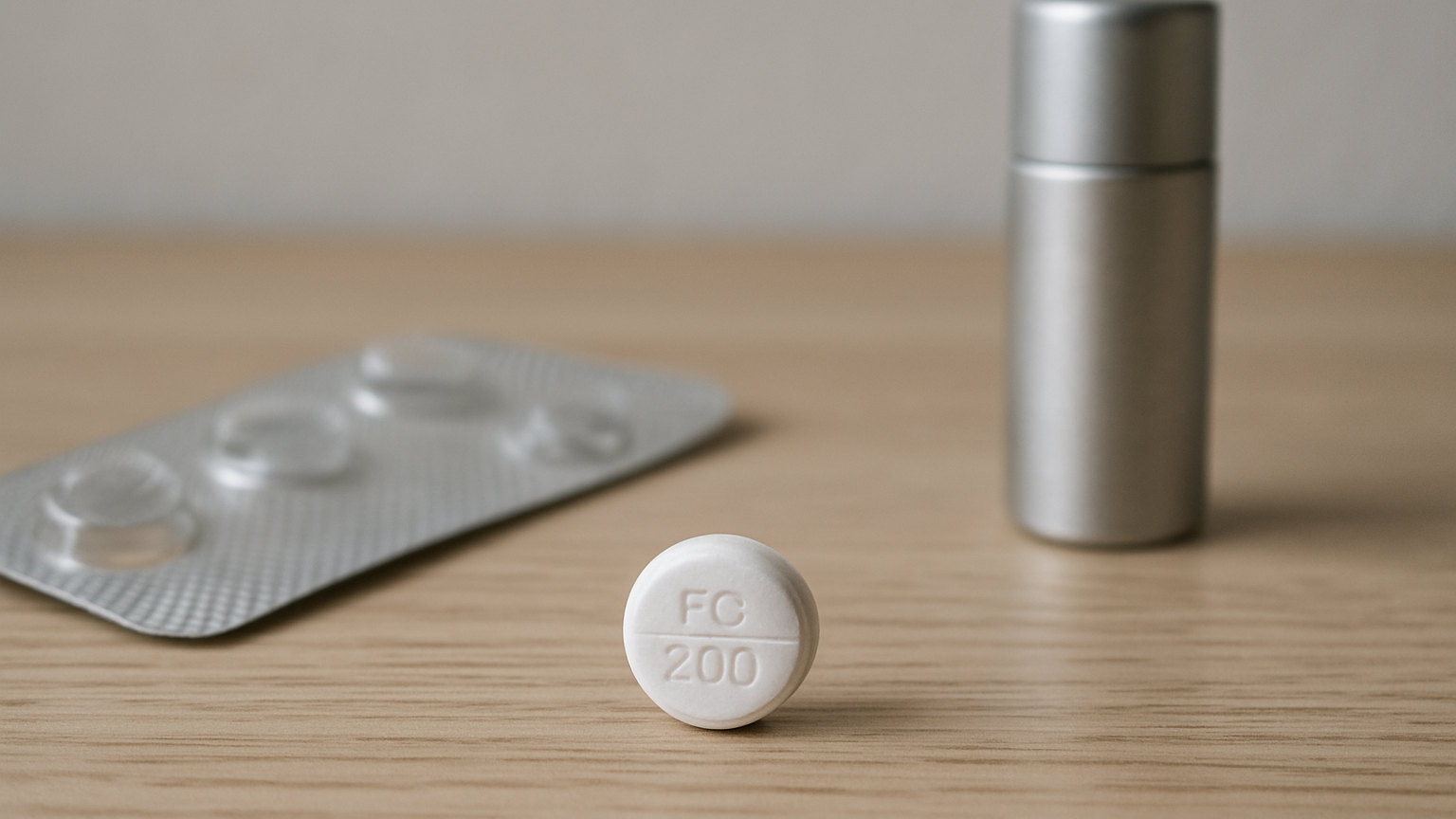
Flecainide is a class Ic antiarrhythmic - it blocks sodium channels in heart muscle, slowing electrical conduction. It is effective at restoring and maintaining normal rhythm in atrial fibrillation, and it can be taken as a single dose to end an episode. It is also a drug with a firm boundary: in a heart with structural or ischaemic disease, flecainide increases the risk of dangerous arrhythmia and death.
Follow the plan your cardiology team gave you. This guide contains no doses.
Only in a structurally normal heart
The CAST trial, run in people who had had a heart attack, found higher mortality on flecainide than on placebo - the suppressed extra beats were not the problem, and suppressing them caused harm.
Flecainide is therefore contraindicated in:
- Coronary artery disease or previous heart attack
- Heart failure or impaired left ventricular function
- Significant valve disease or left ventricular hypertrophy
- Conduction disorders without a pacemaker
That is why an echocardiogram is done before starting it. If flecainide has been suggested, the heart scan is not a formality.
See atrial fibrillation and heart failure medicines.
Pill in the pocket
For people with infrequent, symptomatic paroxysmal atrial fibrillation, a single dose taken at the onset of an episode can restore normal rhythm within a few hours - avoiding a hospital visit.
This approach requires:
- A structurally normal heart, confirmed
- The first dose supervised in hospital, to check it works and is tolerated
- Clear instructions about when to take it, how long to wait, and when to seek help instead
- Not repeating it within a defined interval
It is not a treatment to try on your own initiative or on someone else's advice.
Call 999 for chest pain, severe breathlessness, fainting or collapse during an episode rather than waiting for a tablet to work.
Atrial flutter and the 1:1 problem
This is the technical point that matters most.
Flecainide slows conduction in the atria, which can convert atrial fibrillation into a slower, more organised atrial flutter. If the AV node then conducts every flutter beat through to the ventricles - one to one - the ventricular rate can become dangerously fast.
For that reason flecainide is given alongside an AV-nodal blocking drug, usually a beta blocker or a rate-limiting calcium channel blocker, which prevents that conduction.
See bisoprolol and verapamil.
If you have been prescribed flecainide without anything to control rate, that is worth querying.
Monitoring
An ECG is done before starting, after initiation and periodically, looking at the QRS width - excessive widening indicates too much sodium channel blockade.
Exercise increases flecainide's effect on conduction, so an exercise ECG is sometimes used to check safety in active people.
Kidney function matters, since flecainide is partly renally cleared and accumulates in impairment. Levels can be measured.
See monitoring long-term medicines.
Anticoagulation is separate
Restoring normal rhythm does not remove the stroke risk of atrial fibrillation.
Whether you need an anticoagulant depends on your stroke risk score, not on whether your rhythm is currently normal or on how you feel.
People whose AF is well controlled on flecainide sometimes assume anticoagulation is no longer needed. It usually is.
See apixaban and rivaroxaban.
Side effects
Visual disturbance is characteristic - blurring, difficulty focusing, spots or flickering, usually soon after a dose. It is dose-related and usually settles or improves with a dose reduction.
Dizziness, headache, nausea, tremor and fatigue occur.
Report palpitations that feel different from your usual episodes, fainting, or worsening breathlessness - a new arrhythmia caused by the drug needs assessing.
Where it fits
Flecainide is a rhythm-control drug, and rhythm control is chosen for people whose symptoms are troublesome rather than for everyone with atrial fibrillation - many people do as well on rate control alone.
Catheter ablation is the alternative for maintaining rhythm and is more effective than drugs in the longer term, particularly in younger people with paroxysmal AF. If flecainide is not holding your rhythm, asking about ablation is reasonable.
Interactions and diet
Flecainide is cleared by CYP2D6, so paroxetine, fluoxetine, bupropion and terbinafine raise its levels - see bupropion.
Amiodarone raises levels substantially and the flecainide dose is usually reduced - see amiodarone.
Flecainide absorption is affected by dairy products, which is particularly relevant in infants fed milk, and a very alkaline diet can raise levels.
Low potassium or magnesium worsens arrhythmia risk - see potassium chloride.
That matters practically during illness with vomiting or diarrhoea, when electrolytes fall - a reason to seek advice rather than continue regardless. See sick day rules.
More on what medicines are prescribed for in the Conditions section, including Diltiazem: Between Verapamil and Amlodipine.


