
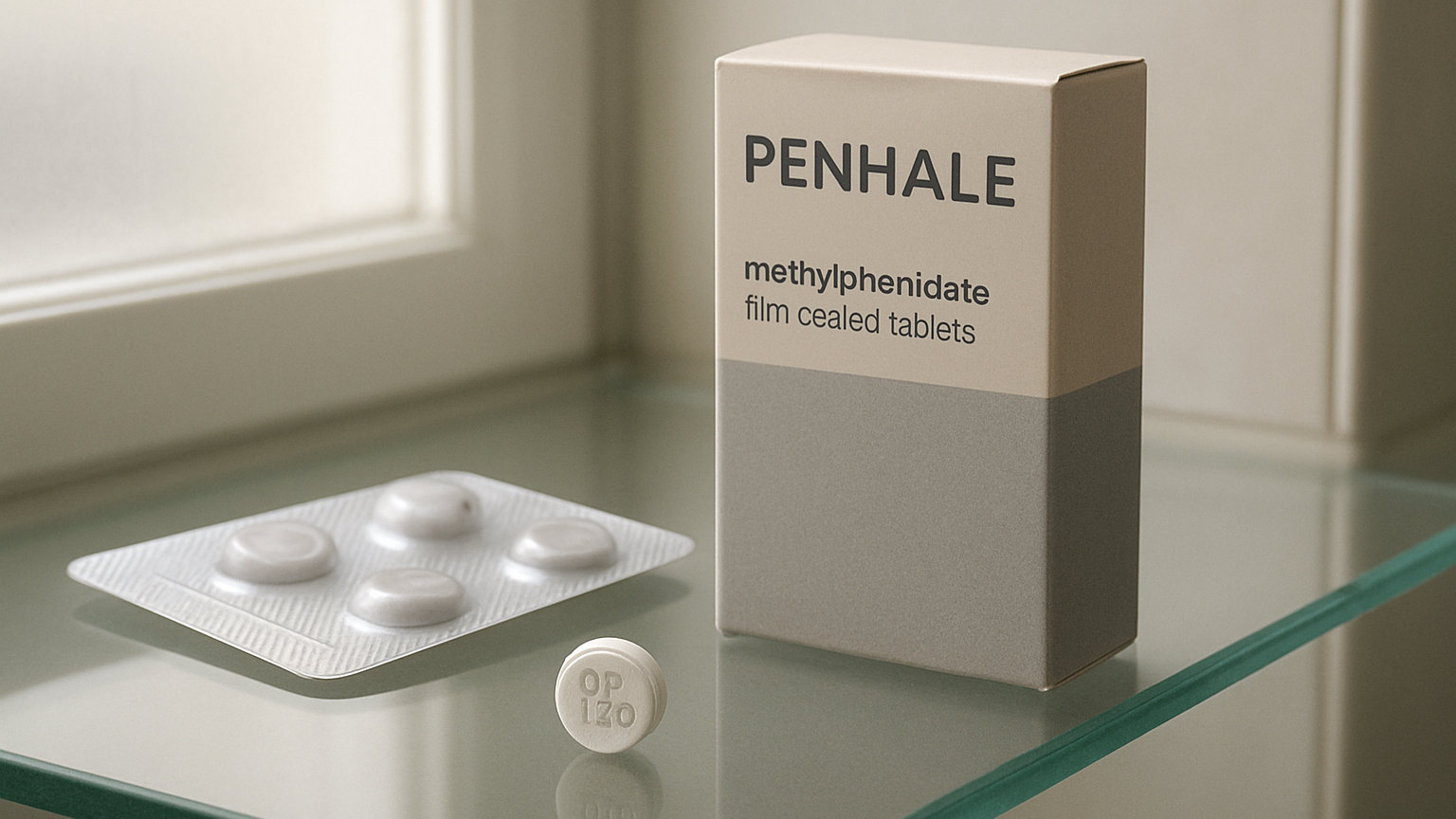
Methylphenidate is the usual first-choice medicine for ADHD in children and adults in the UK. It is a stimulant that increases dopamine and noradrenaline signalling in parts of the brain involved in attention and impulse control. Unlike most psychiatric medicines it works quickly - often within days - which makes it unusual and makes a trial informative. What needs planning around it is the monitoring, the practical business of appetite and sleep, and the fact that different brands are not interchangeable.
Follow the plan your specialist gave you. This guide contains no doses.
What it does, and what it does not
It improves attention, reduces impulsivity and hyperactivity, and for many people makes it possible to start and finish things. It does not change personality, and it is not a substitute for the non-medicine parts of ADHD support - routines, environmental adjustments, and help at school or work.
A common and unhelpful myth is that stimulants work paradoxically in ADHD. They do not; they improve attention in most people. What differs is how much difference that makes to someone whose difficulties come from that system in the first place.
Short and long-acting forms
Immediate-release methylphenidate lasts a few hours and is taken two or three times a day. Modified-release preparations last most of a school or working day and avoid a lunchtime dose, which matters for privacy and for adherence.
Different modified-release brands release the drug in different proportions and over different periods. They are not interchangeable, which is why these are prescribed by brand. If your product changes, check what you have been given rather than assuming - see why some medicines are prescribed by brand.
Modified-release capsules and tablets must be swallowed whole unless the leaflet specifically allows opening - see cutting and crushing tablets.
The monitoring
Before starting, baseline height, weight, blood pressure, pulse and a cardiovascular history are recorded, including any family history of sudden cardiac death.
Afterwards, height and weight are plotted regularly in children, because appetite suppression can slow growth, and blood pressure and pulse are checked at intervals and after dose changes.
If nobody has measured your child in a year, that is worth asking about. Our guide to monitoring long-term medicines covers what a proper review includes.
Appetite and sleep
Reduced appetite is the commonest side effect and is most marked in the middle of the day when the drug is at its peak. Practical answers: a substantial breakfast before it takes effect, a proper evening meal once it wears off, and calorie-dense snacks rather than nagging at lunchtime.
Difficulty getting to sleep is the other common one, usually from a dose taken too late. Moving the last dose earlier often fixes it. Ironically, some people with ADHD sleep better on treatment because their mind is quieter at bedtime.
Headache, stomach ache, irritability and a low mood as the dose wears off - the rebound - are all recognised. Rebound often responds to a change in preparation rather than stopping.
When to seek advice
Contact your team about chest pain, fainting or palpitations, which need assessing before continuing; new or worsening tics; significant weight loss or a drop across growth centiles; marked mood changes, anxiety or agitation; and any hallucinations or unusual thoughts, which are rare but recognised.
Prolonged painful erections are a rare effect that needs urgent attention.
It is a controlled drug
Methylphenidate is a Schedule 2 controlled drug in the UK. That affects several practical things: prescriptions have a limited validity period, quantities may be restricted, you may need to collect rather than have it delivered, and taking it abroad requires paperwork.
Our guide to travelling with controlled drugs covers licences and letters - start six to eight weeks before you travel.
Store it securely. Stimulant medication is diverted and sold, particularly around exam periods, and someone else taking it is both dangerous and illegal.
Shortages
ADHD medicines have been subject to repeated supply problems in the UK, and switching between preparations is not straightforward because of the brand issue above.
Order repeats early, tell your pharmacist in advance if you are on something affected, and do not ration what you have. Our guides to what to do if your medicine is out of stock and stockpiling cover both sides of this.
Shared care
ADHD medication is usually started by a specialist and continued by your GP under a shared care agreement. That works when it works and fails in familiar ways - nobody arranging the monitoring, dose changes not reaching the GP record, or a new practice declining to continue.
Our guide to shared care prescribing covers what should be in place, and changing your GP practice covers the transfer, which is a common point of failure.
Drug holidays
Planned breaks - weekends or school holidays - are sometimes used to allow appetite and growth to recover. They suit some people and not others, particularly adults whose symptoms affect driving, work and relationships every day.
It is a decision for your team rather than something to try independently. Do not stop abruptly without discussing it.
The Conditions section covers more on what medicines are prescribed for - Atrial Fibrillation: Rate, Rhythm and Stroke Risk is closely related to this one.


