
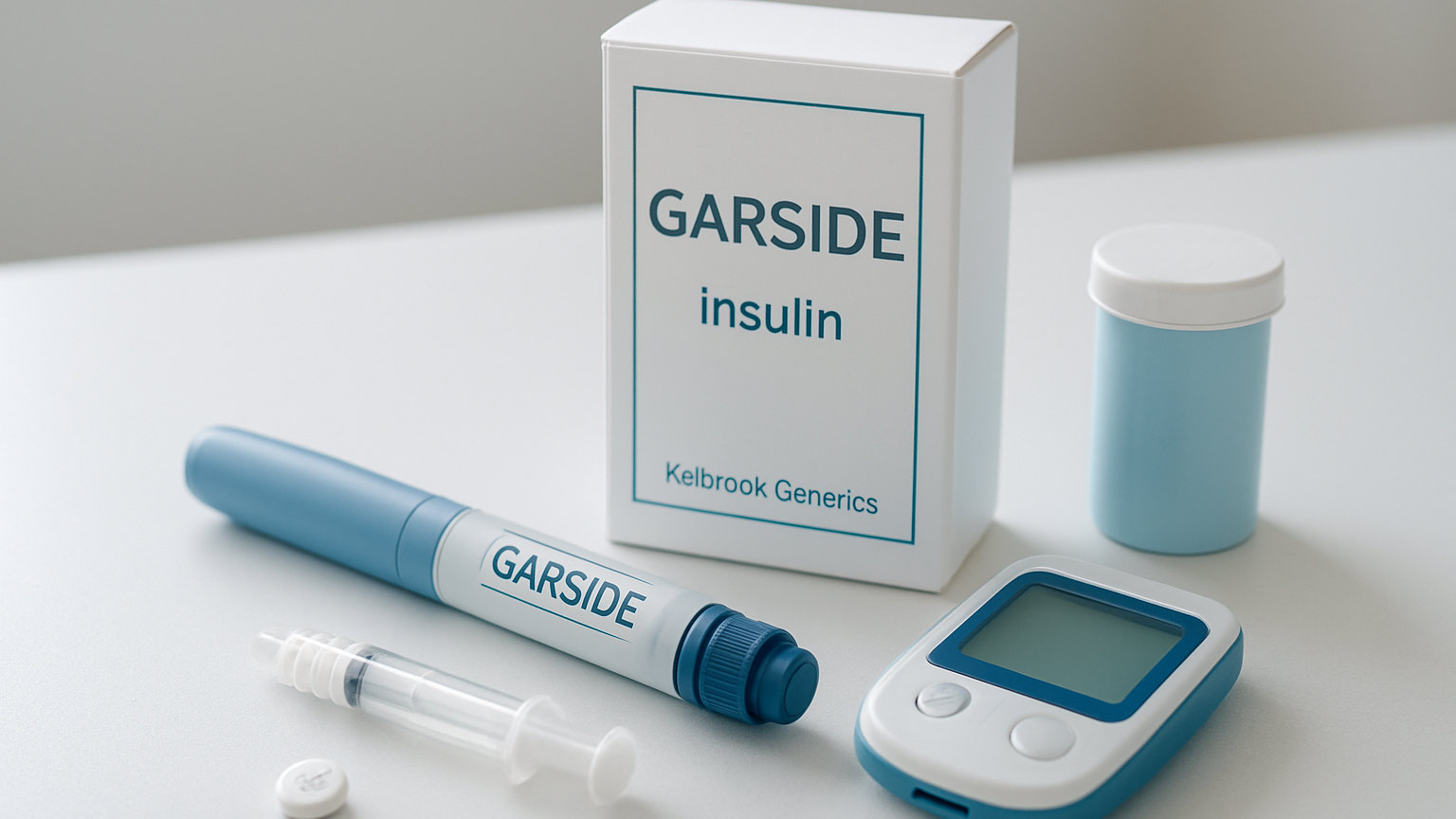
Insulin degludec is an ultra-long-acting basal insulin. After injection it forms long chains under the skin that dissolve slowly, releasing insulin over more than forty-two hours. In practice that produces a flat, very steady background level with little peak. Two consequences follow, and both change how it is used: timing becomes flexible, and dose adjustments take days rather than hours to show their full effect.
Follow the plan your diabetes team gave you. This guide contains no doses.
Flexible timing
Because its action outlasts a day comfortably, degludec can be taken at different times on different days - guidance generally allows a minimum interval of around eight hours between doses.
That is genuinely useful for shift workers, for people whose routine varies, and for teenagers. It is a real advantage over glargine, which needs reasonably consistent timing.
Flexibility is not the same as inattention - it still needs taking every day. But a dose taken four hours late does not destabilise things the way it might with a shorter-acting insulin.
See insulin glargine for the comparison.
Titrate slowly
This is the part that catches people out. Degludec takes around three days to reach a new steady state after a dose change.
Adjusting the dose daily in response to a single reading stacks changes on top of one another before the previous one has taken effect, and produces swings.
Titration is therefore usually done once or twice a week against a pattern of fasting readings rather than day by day. Your team will give you a specific approach - follow it rather than improvising.
Fewer night-time hypos
Trials comparing degludec with glargine found fewer nocturnal hypoglycaemic episodes, which is its main clinical advantage.
The flat profile means no overnight peak, and overall glucose control was similar rather than better - so degludec is chosen for people troubled by night-time lows, or with hypoglycaemia unawareness, rather than for better HbA1c.
Recognising and treating a hypo works the same way: fast-acting carbohydrate immediately, then longer-acting carbohydrate. Carry treatment and tell those around you where it is.
Report hypoglycaemia unawareness - losing the early warning symptoms. It is reversible, and it affects driving eligibility. Beta blockers mask the warning signs too - see bisoprolol.
The concentration warning
Degludec comes in a 100 units per millilitre pen and a 200 units per millilitre pen - twice as concentrated.
The pens deliver the correct number of units, so the device handles the difference. The danger is if insulin is drawn out of a pen or cartridge with a syringe, which would deliver double.
Never draw insulin out of a pen with a syringe. If a pen fails, contact your team or pharmacy.
Check you have the right pen - long-acting and rapid-acting insulins from the same manufacturer often have similar names and similar packaging.
Injection sites
Abdomen, thigh or upper arm, and rotate systematically, moving a couple of centimetres each time.
Repeated injection into one spot causes lipohypertrophy - a painless lump of thickened tissue from which absorption is erratic and reduced. Because it does not hurt, people keep using it, and unexplained glucose swings follow.
Moving to healthy tissue delivers considerably more insulin, so doses often need reducing. Feel your sites and ask for them to be checked at review. Use a new needle each time.
Never stop insulin when unwell
Illness raises glucose even when you are eating less, and stopping basal insulin in type 1 diabetes leads to ketoacidosis.
Continue your background insulin during illness, check glucose more often, test for ketones and keep drinking. Extra correction doses of rapid-acting insulin are usually needed.
Seek urgent help for ketones rising, persistent vomiting, rapid deep breathing or confusion.
Note the contrast with metformin and SGLT2 inhibitors, which are paused when unwell - see empagliflozin and sick day rules.
Missed doses
Because of the long action, missing one dose has less immediate effect than with other insulins - but it is still a missed dose and glucose will rise.
Take it when you remember, then return to your usual schedule, keeping the minimum interval before the next. Ask your team for specific guidance rather than doubling up.
Storage
Unopened pens in the fridge, never frozen - insulin that has frozen is discarded. In use, at room temperature for a set number of weeks then discarded regardless of how much remains.
Write the opening date on the pen. Heat destroys insulin, so do not leave it in a car or direct sun - see medicines that need the fridge and flying with prescription medicines.
Driving
DVLA rules apply to anyone treated with insulin - checking before driving, carrying fast-acting carbohydrate, and reporting severe hypoglycaemia or hypoglycaemia unawareness.
See medicines and driving. Used needles go in a sharps bin - see needles and sharps disposal.
See also Insulin Isophane: The Cloudy One You Must Mix, and the Medicines section for more on how the main families of medicine work.


