
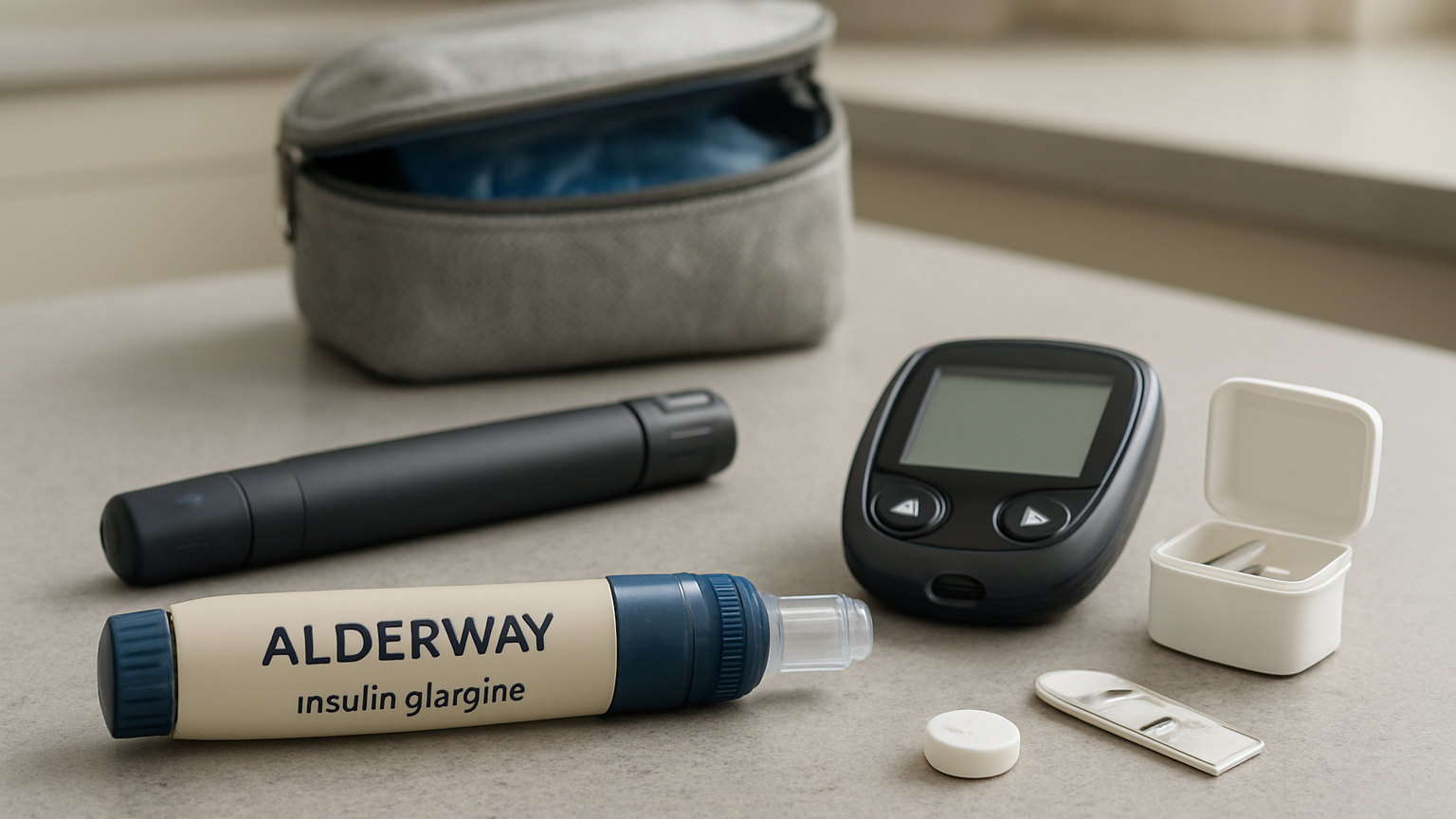
Insulin glargine is a long-acting insulin analogue. It forms a small deposit under the skin from which insulin is released slowly and fairly evenly, giving background - basal - cover for around twenty-four hours. It is used in type 1 diabetes alongside mealtime insulin, and in type 2 diabetes when tablets and other injectables are no longer enough. The errors that cause real harm with it are almost all about strength, brand or injection site rather than about insulin itself.
Follow the plan your diabetes team gave you. This guide contains no doses.
Strength confusion
Most insulin is 100 units per millilitre. Glargine is also available as a 300 units per millilitre preparation - three times as concentrated.
The pens deliver the correct number of units, so the concentration is handled by the device. The danger arises if insulin is drawn out of a cartridge or pen with a syringe, which would deliver three times the intended dose.
Never draw insulin out of a pen or cartridge with a syringe. If a pen fails, contact your team or pharmacy rather than improvising.
The 300 unit preparation also lasts longer and is not interchangeable unit-for-unit with the 100 unit one - a switch requires a dose adjustment.
Brand matters
Several glargine products exist, including biosimilars. They are similar but not identical, and switching between them should be a deliberate decision with follow-up rather than something that happens at the pharmacy counter.
Insulin is prescribed by brand for this reason. If your box looks different, check before using it - see why some medicines are prescribed by brand and why your medicine looks different.
Name similarity is a known hazard: long-acting and rapid-acting insulins from the same manufacturer often have similar names, and mixing them up is dangerous in both directions.
Injection sites
Abdomen, thighs, buttocks or upper arms - and rotate systematically, moving at least a couple of centimetres each time.
Injecting repeatedly into the same spot causes lipohypertrophy, a firm lump of thickened fatty tissue. It is painless, so people keep using it - and absorption from it is erratic and reduced, causing unexplained swings in glucose.
Moving to healthy tissue then delivers considerably more insulin, so doses often need reducing. That is why the switch should be discussed rather than made unilaterally.
Feel your injection sites, and ask for them to be examined at your annual review. Use a new needle each time.
Recognising and treating a hypo
Sweating, trembling, hunger, palpitations, anxiety, tingling lips, then confusion, slurred speech and difficulty concentrating.
Treat immediately with fast-acting carbohydrate - glucose tablets, a sugary drink or glucose gel - then follow with longer-acting carbohydrate once you feel better.
Carry treatment at all times. Tell people around you what to look for and where it is.
Hypoglycaemia unawareness - losing the early warning symptoms - is important and reversible. Report it, because it changes driving eligibility and your targets.
Beta blockers can mask hypo warning signs - see bisoprolol.
Never stop insulin when unwell
This is the rule that differs from almost every other medicine. Illness raises blood glucose even if you are eating less, and stopping insulin in type 1 diabetes leads to ketoacidosis, which is life-threatening.
Continue your background insulin during illness, check glucose more often, test for ketones, and drink fluids.
Seek urgent help for ketones that are raised and rising, persistent vomiting, rapid or deep breathing, or confusion.
Note the contrast with metformin and SGLT2 inhibitors, which are paused when unwell - see empagliflozin and sick day rules.
Storage
Unopened pens go in the fridge, not the freezer - insulin that has frozen must be discarded. In use, a pen is kept at room temperature for a set number of weeks and then discarded regardless of how much remains.
Write the opening date on it. Heat destroys insulin, so do not leave it in a car or in direct sun.
See medicines that need the fridge and flying with prescription medicines, including carrying insulin in hand luggage, and medicines across time zones.
Driving
DVLA rules apply to anyone treated with insulin. You must check glucose before driving and at intervals on long journeys, keep fast-acting carbohydrate within reach, and not drive if your glucose is below the threshold.
Severe hypoglycaemia requiring another person's help, and hypoglycaemia unawareness, must both be reported to the DVLA - see medicines and driving.
Sharps
Used needles go in a sharps bin, never the household bin - see needles and sharps disposal.
If this was useful, Sitagliptin: What DPP-4 Inhibitors Do is worth reading next, and Medicines collects the rest.


