
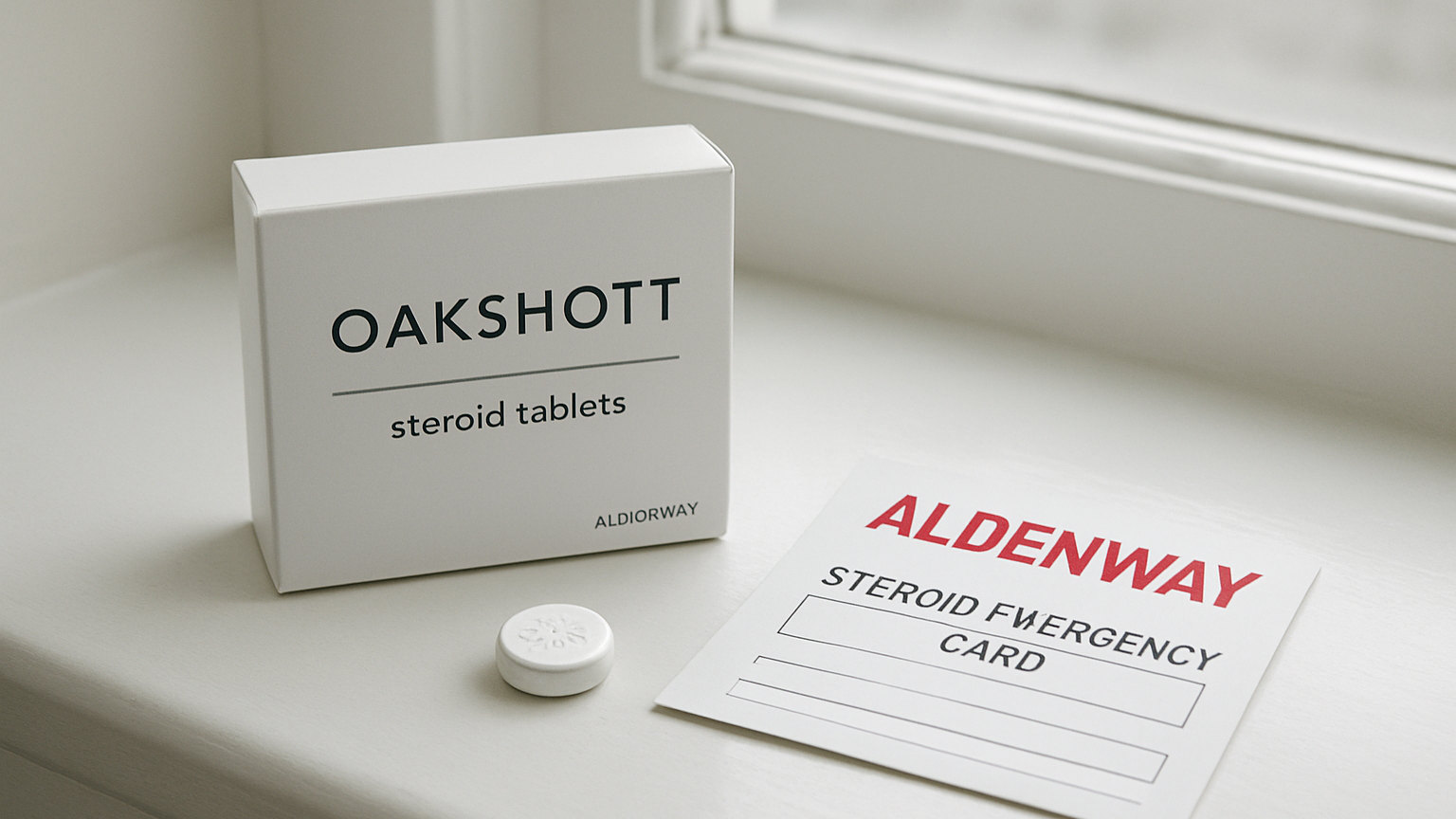
Hydrocortisone is cortisol - the hormone the adrenal glands produce naturally. That gives it three quite separate roles. As a cream it is the mildest topical steroid, available without prescription. As tablets it replaces cortisol in people whose adrenal glands cannot make enough, where it is life-sustaining rather than merely helpful. As an injection it is emergency treatment. The first use is trivial and the second is where people come to harm.
Follow the instructions on your label. This guide contains no doses.
The cream
Hydrocortisone 1% is a mild topical steroid, used for eczema, insect bites, mild dermatitis and irritant rashes. It is available over the counter with restrictions on site and duration.
It is not for use on the face, around the eyes, or on broken or infected skin without advice, and not for children under ten without advice - those restrictions exist because absorption from thin skin is far higher.
Apply thinly to affected skin only, once or twice daily, for a short course. If a rash is not settling within a week, it needs looking at rather than more cream - fungal infections treated as eczema are a common trap, and steroid makes them worse.
Our guides to steroid creams and potency and clobetasol cover the potency ladder, and emollients covers what should be used alongside.
The tablets: replacement
In adrenal insufficiency - Addison's disease, after pituitary surgery or disease, or following long-term steroid treatment - the body cannot produce cortisol.
Hydrocortisone tablets replace it, usually in divided doses through the day to mimic the natural rhythm, with the largest dose on waking.
This is not treatment of a condition in the usual sense. It is replacement of a hormone you cannot live without, and the consequences of missing it are measured in hours, not weeks.
Sick day rules matter more here than anywhere
The healthy adrenal gland produces several times the normal amount of cortisol during illness, injury or surgery. Yours cannot.
The dose must be increased during illness - typically doubled during fever or significant infection - and continued until you recover. This is the opposite of the sick day rules for blood pressure and diabetes medicines, which are paused.
If you are vomiting or have diarrhoea and cannot absorb tablets, this is an emergency. You need hydrocortisone by injection.
Ask for written sick day rules specific to you - see sick day rules.
The emergency injection kit
Anyone on replacement should have an emergency hydrocortisone injection kit at home, and should know how to use it - as should the people they live with.
Adrenal crisis presents with severe weakness, vomiting, abdominal pain, confusion, collapse and dangerously low blood pressure. It is rapidly fatal untreated.
Give the injection and call 999. Do not wait to see whether things improve. Treating someone who turns out not to be in crisis does no harm; the reverse is catastrophic.
Carry a steroid emergency card and wear a medical alert. Show them to any clinician, particularly in an emergency department where adrenal insufficiency is easily missed.
Fludrocortisone
In primary adrenal insufficiency the adrenal glands also fail to produce aldosterone, which controls salt and water balance.
Fludrocortisone replaces that, and it is a separate tablet with a separate purpose. Salt intake matters too, particularly in hot weather or with heavy exercise.
Report persistent dizziness on standing, salt craving, or unexplained weight loss - these can indicate under-replacement.
Why hydrocortisone rather than prednisolone
Hydrocortisone is identical to natural cortisol and has a short duration of action, which allows the dose to be spread through the day in a pattern resembling normal physiology.
Prednisolone lasts longer and is taken once daily, which some people prefer and which suits some situations - but the shorter action of hydrocortisone makes it easier to avoid over-replacement.
Over-replacement over years causes the same problems as long-term steroid treatment: bone thinning, weight gain, raised glucose and blood pressure. See prednisolone and medicines and bone health.
Interactions that matter
Enzyme inducers - rifampicin, carbamazepine, phenytoin - increase cortisol breakdown, so the replacement dose may need raising. This is a genuine cause of crisis when an inducer is started without anyone adjusting the steroid.
Conversely, strong inhibitors such as ritonavir and cobicistat raise steroid levels - see ritonavir.
Tell every prescriber that you are steroid-dependent, and check any new medicine - see over-the-counter interactions.
Never run out
Running out of replacement hydrocortisone is not an inconvenience, it is a medical emergency in waiting.
Keep a reserve, order repeats early, and take more than you need when travelling - split between bags. See ordering repeats and flying with prescription medicines.
Related reading: Triamcinolone: Injections, Sprays and Creams, with more on how the main families of medicine work in Medicines.


