
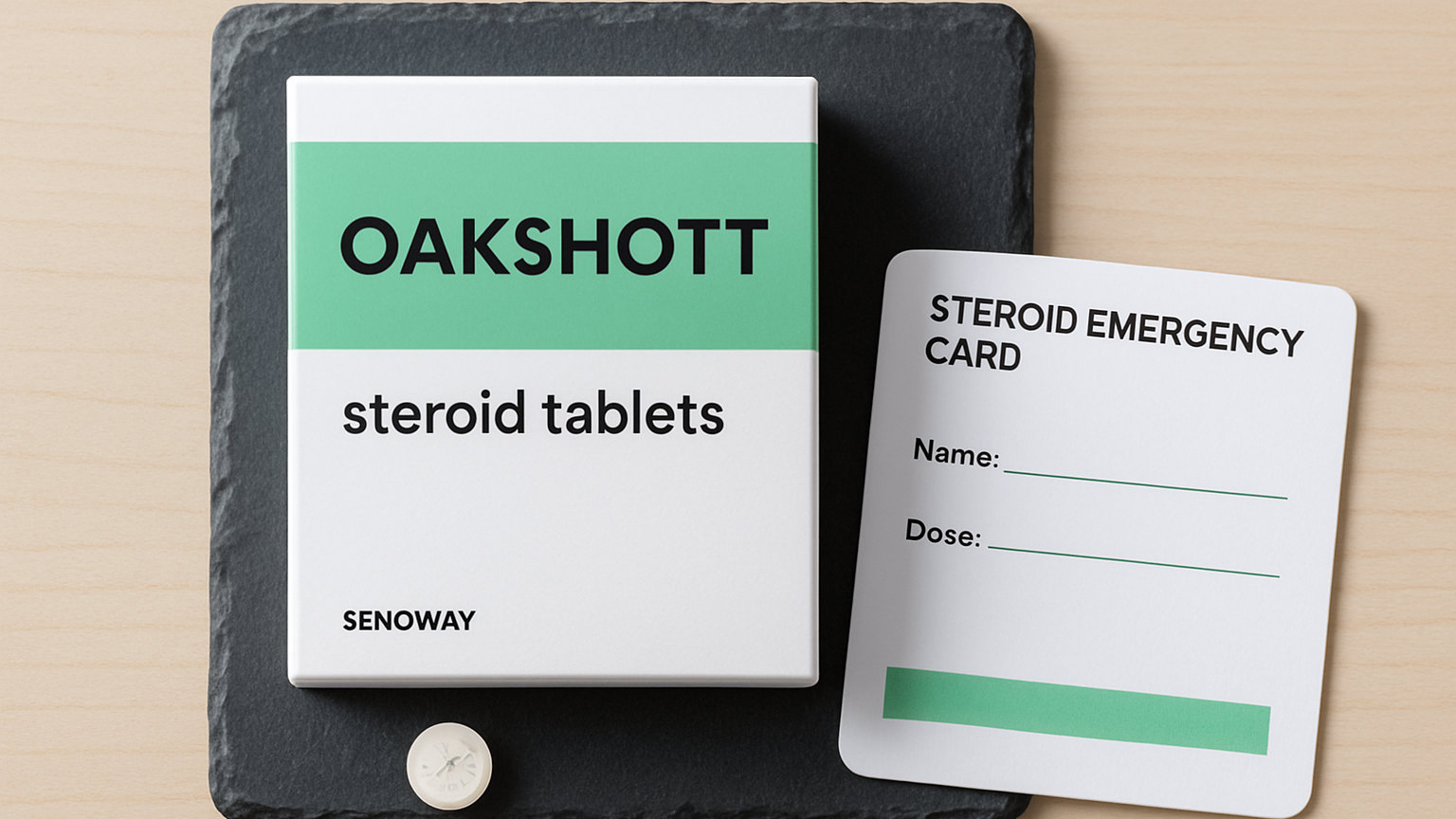
Prednisolone is a corticosteroid - a synthetic version of cortisol, the hormone the adrenal glands produce. It suppresses inflammation and immune activity powerfully and quickly, which is why it is used across asthma, inflammatory bowel disease, rheumatoid arthritis, polymyalgia rheumatica, severe allergic reactions and many other conditions. Two rules matter more than the entire side effect list, and both concern what happens when the tablets stop.
Follow the instructions on your label. This guide contains no doses.
Rule one: never stop abruptly
On steroid tablets for more than about three weeks, the adrenal glands stop producing cortisol because the body senses there is plenty. They take time to restart.
Stopping suddenly leaves you with no cortisol at all, which causes an adrenal crisis - severe weakness, vomiting, abdominal pain, collapse and dangerously low blood pressure. It is a medical emergency and it can be fatal.
Longer courses are therefore reduced gradually, sometimes over months. Short courses of a few days for an asthma flare do not need tapering, which is why some courses stop outright and others do not - if you are unsure which yours is, ask.
See coming off steroid tablets safely.
Rule two: carry a steroid card
Anyone on steroids long-term should carry a steroid emergency card, available from your pharmacy.
It tells anyone treating you that your adrenal glands are suppressed, which changes what they do in an emergency. Suppression can persist for months after stopping, so the card matters after the course as well as during it.
Show it to any doctor, dentist, paramedic or pharmacist. It is the single most useful thing you can carry on this medicine.
Sick day rules
In illness, injury or surgery the body normally produces extra cortisol. Suppressed adrenal glands cannot.
So during illness with fever, or before surgery, the steroid dose is usually increased rather than held - the opposite of the sick day rules for blood pressure and diabetes medicines.
If you are vomiting and cannot keep tablets down, this is urgent - you need steroid by injection. Call 111 or go to A and E, and show the card.
Ask for written sick day rules specific to you - see sick day rules.
How to take it
Usually as a single dose in the morning with or after food, which matches the body's natural cortisol rhythm and reduces sleep disturbance.
Enteric-coated tablets are available for people who get stomach upset, and should be swallowed whole.
Taking it late in the day is a common cause of insomnia on steroids.
Side effects of a short course
Difficulty sleeping, increased appetite, mood changes - often feeling energised or irritable, occasionally markedly so - indigestion, fluid retention and raised blood glucose.
Mood disturbance can be severe, including mania and psychosis, usually at higher doses. Report marked mood change rather than waiting it out.
Blood glucose rises in almost everyone, which matters if you have diabetes - monitoring usually needs stepping up during a course.
Side effects of long-term use
- Bone thinning - the main reason bone protection is often prescribed alongside. See medicines and bone health and alendronate.
- Weight gain and changed fat distribution - see medicines and your weight
- Diabetes, or worsening of existing diabetes
- Raised blood pressure
- Thin, fragile skin that bruises easily
- Cataracts and glaucoma - worth mentioning at eye tests
- Muscle weakness, particularly around the hips and shoulders
- Increased infection risk, with fever sometimes masked
Our guide to infection risk on immune-suppressing medicines covers the vaccination position - inactivated vaccines yes, live vaccines generally not at higher doses.
Chickenpox and shingles
If you are on steroids and have not had chickenpox, exposure to chickenpox or shingles needs urgent medical advice - it can be severe in someone immunosuppressed, and preventive treatment exists but is time-critical.
See aciclovir.
Interactions
Anti-inflammatory painkillers add substantially to the risk of stomach ulceration, which is why a stomach-protecting medicine is often prescribed alongside - see naproxen and ibuprofen.
Steroids plus fluoroquinolone antibiotics markedly raise tendon rupture risk - see ciprofloxacin.
HIV boosters and some antifungals raise steroid levels considerably - see cobicistat. Enzyme inducers such as carbamazepine and rifampicin reduce them.
Do not run out
Because running out means stopping, and stopping abruptly is the dangerous part, order repeats with a good margin - see ordering repeats.
If you are prescribed a short course
A few days of prednisolone for an asthma flare or a gout attack does not suppress the adrenal glands meaningfully, and no taper or steroid card is needed.
The confusion arises when someone who has had several short courses in a year assumes the rules still do not apply. Repeated courses do accumulate risk, and they are also a signal that the underlying condition is not controlled - which is worth addressing rather than treating each flare as it comes. See when asthma gets worse.
The Medicines section covers more on how the main families of medicine work - Hydrocortisone: Cream, Tablets and Replacement is closely related to this one.


