Penicillin Allergy: Worth Getting Rechecked
It is one of the most consequential lines on your medical record, it is usually wrong, and almost nobody is ever offered the chance to have it checked.
Every effective medicine can do something you did not ask for. Most side effects are mild and fade in the first fortnight; a small number matter urgently and are worth being able to recognise. These guides separate the two, explain how interactions actually happen, and cover what to do when something is not right.
It is one of the most consequential lines on your medical record, it is usually wrong, and almost nobody is ever offered the chance to have it checked.
Four separate routes exist and they do completely different things. People often use the one that cannot help them and conclude nothing can be done.
Some medicine-related constipation fades as the body adjusts. Opioid constipation does not, and treating it as though it will is why people give up on pain relief.
Timing, distribution and what else is happening tell you far more than the rash itself. Two features in particular turn a nuisance into an emergency.
This is the medicine where stopping suddenly is genuinely dangerous rather than merely unpleasant, and the reason is worth understanding properly.
Nothing warns you that kidney function is falling, which is why the blood test is scheduled rather than symptom-driven - and why three ordinary medicines together can cause real damage.
Bone loss is silent until something breaks. Several common long-term medicines contribute, and for the main one there is protection that should be offered automatically.
It comes from combinations rather than from any one drug, and several of the triggers are things people take without mentioning them - including one sold over the counter.
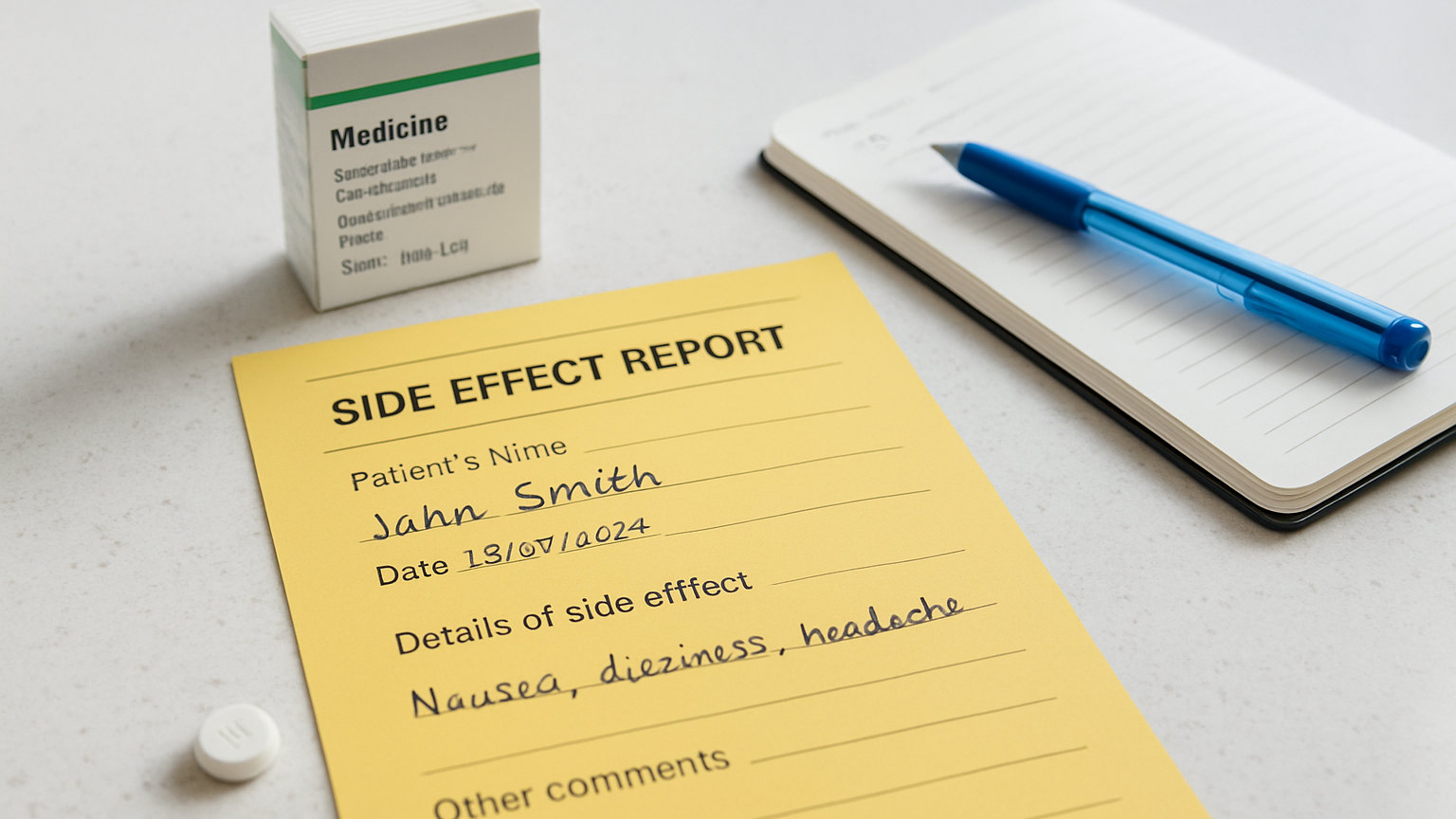
People often read the symbol as a warning that something is unsafe. It means almost the opposite - that the safety picture is still being built, and your report contributes.
People burn severely in conditions that would normally be harmless, then conclude the sunscreen failed. The medicine is usually the missing piece.
Most drug interactions happen because two medicines compete for the same liver enzymes. The same organ is also where a small number of medicines cause real damage.
Fogginess in an older person is routinely put down to age. A surprising proportion of it comes from the medicine cabinet, and much of that is reversible.