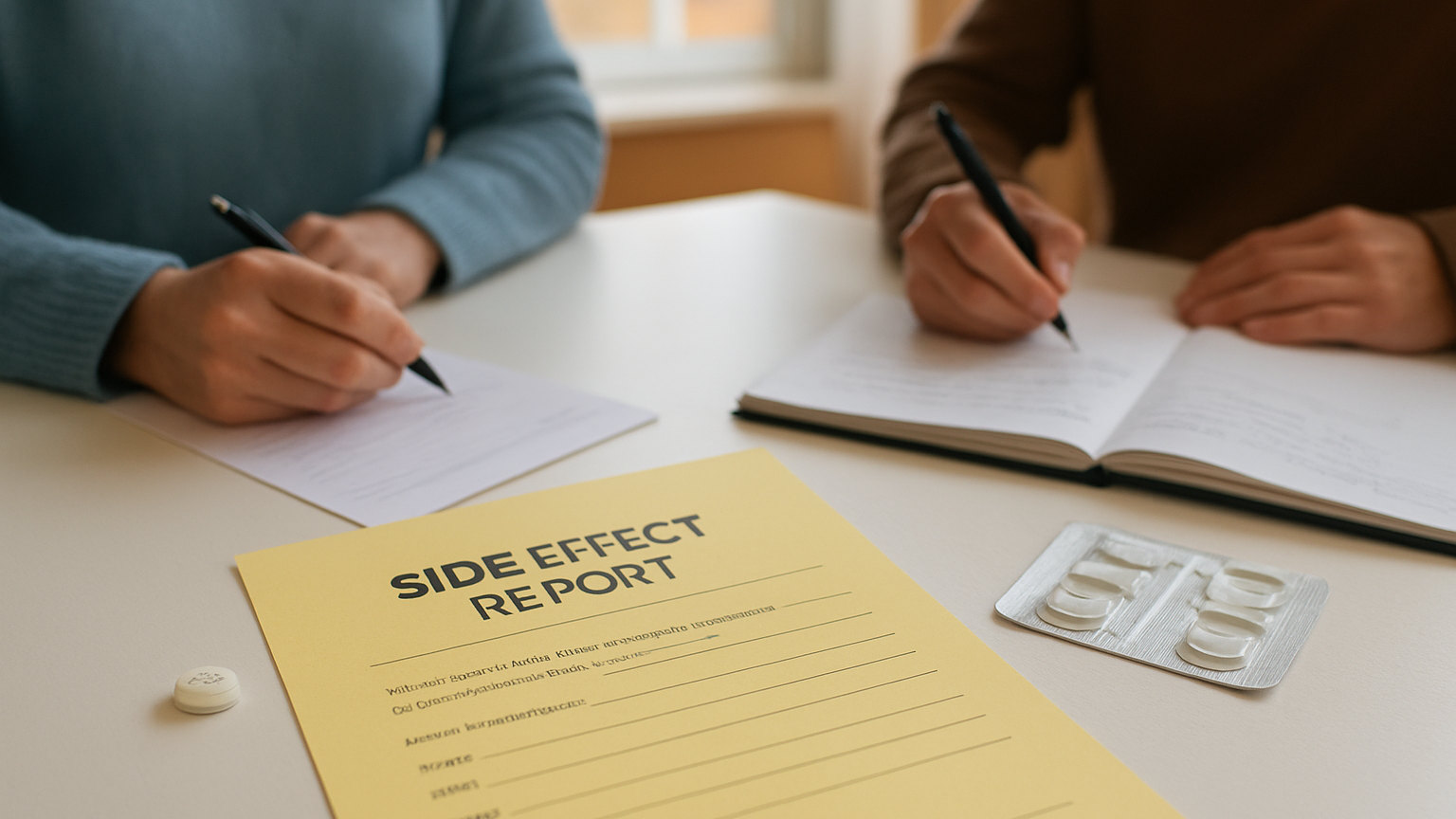
Yellow Card reports can be made by anyone - you do not need to be the person who took the medicine, and you do not need to be a health professional. That matters because the people best placed to notice a change are frequently those around someone rather than the person themselves, particularly where confusion, dementia, a learning disability, very young age or serious illness makes describing symptoms difficult.
Who can report
Patients, carers, parents, relatives, friends and health professionals.
You can report on behalf of someone who cannot report themselves, someone who has died, or a child.
Formal consent is not required for a report, and the data is handled confidentially. Where the person can be involved, involving them is obviously better - but their inability to participate is not a reason not to report.
See how the Yellow Card scheme works.
What relatives notice
This is the real value of a third-party report.
Someone living with a person sees the change rather than the symptom - and change is what a clinician cannot observe in a fifteen-minute appointment.
Worth reporting:
- Confusion or drowsiness that is new, or worse than usual
- Falls, or unsteadiness, or a change in how someone walks
- A change in personality, mood or behaviour - agitation, withdrawal, apathy
- Loss of appetite or unexplained weight loss
- New incontinence, or difficulty passing urine
- Sleeping far more or far less
- Stopping activities they used to manage
These get attributed to age or to the underlying condition almost by default, and a substantial proportion are medicine effects.
See side effects in older people.
The prescribing cascade
Worth understanding because carers are frequently the only people positioned to spot it.
A side effect gets mistaken for a new condition, and a second medicine is prescribed to treat it. That causes its own effect, and a third is added.
The classic sequence: an anticholinergic causes urinary retention, which is treated as a new bladder problem; or a calcium channel blocker causes ankle swelling, which is treated with a diuretic.
If a new symptom appeared shortly after a new medicine, say so plainly - the timing is the piece of information nobody else has.
See when a side effect is actually the illness.
What makes a useful report
Describe behaviour rather than interpretation where the person cannot explain themselves - "stopped getting out of the chair" is more useful than "seemed depressed".
Include:
- The medicine, by generic name, and the brand if known
- When it started, and when the symptom began relative to it
- Any dose change, and whether the symptom changed with it
- Everything else being taken, including over-the-counter medicines and supplements
- What happened, and whether it improved when the medicine stopped
- Other conditions and the person's age
The batch number matters for vaccines and biologics.
Keeping a short dated note as things happen is far more reliable than reconstructing it afterwards.
See keeping a side effect diary.
Reporting for a child
Parents and carers are the main source of reports in children, and this is one of the areas where evidence is thinnest.
Much paediatric prescribing is off-label - entirely legal, well established, and outside what the manufacturer submitted evidence for - which means the safety picture depends heavily on reporting.
Include the child's age and weight, since doses are calculated from them.
See side effects in children and off-label and unlicensed prescribing.
After a death
A report can be made where a medicine is suspected of having contributed, and these reports carry particular weight.
Doing so does not start an investigation into anyone's care, and it is not a complaint - if you have concerns about the care given, that is a separate route through the provider's complaints procedure or the coroner.
Keep any remaining medicines rather than disposing of them immediately, in case they are needed.
See medicines after a death and if a medicine has harmed you.
Tell the prescriber as well
Reporting to the MHRA contributes to national safety monitoring over months and years. It does nothing for the person in front of you this week.
So do both: report, and contact whoever prescribes, because the immediate decision - reduce, switch, stop, investigate - is made locally.
If you are a carer, ask to be included in reviews. You hold information that does not otherwise reach the record.
See managing someone else's medicines and medication reviews.
You do not need to be certain
The threshold is suspicion, deliberately.
Carers frequently hesitate because they are not medically qualified and cannot be sure. That hesitation is exactly what the system is designed to overcome - under-reporting is its main limitation, and it is worst in older people, in children, and in people who cannot speak for themselves.
If this was useful, When a Side Effect Is Not in the Leaflet is worth reading next, and Side Effects collects the rest.