A number of medicines suppress parts of the immune system - methotrexate and other DMARDs, biologics, steroids at higher doses, chemotherapy, transplant medicines, and some treatments for inflammatory bowel disease and psoriasis. What changes is not the symptoms but the threshold. A sore throat, a mild fever or a small area of redness that would be unremarkable otherwise becomes a reason to ring the same day, because infections in this situation can escalate far faster than expected.
If you have a fever, feel unwell, or think you may have an infection while on one of these medicines, contact your specialist team or GP the same day - or 111 out of hours.
The warning signs
Seek advice urgently for:
- fever, chills or shivering
- a persistent sore throat or mouth ulcers
- a cough that is new or worsening
- pain or burning passing urine
- redness, heat or swelling anywhere on the skin
- unexplained bruising or bleeding
- feeling generally very unwell without an obvious reason
Some people on these medicines do not mount a normal fever, so feeling unwell without a temperature still counts. Confusion, breathlessness or a very fast heart rate need emergency assessment - our guide to warning signs you should not ignore covers what needs 999.
Neutropenic sepsis
Some of these medicines reduce neutrophils, the white cells that fight bacterial infection. With a low count, an infection can progress to sepsis within hours and there may be very little to see - no pus, no obvious redness, because those signs depend on the very cells that are missing.
Anyone on chemotherapy or a medicine known to affect blood counts should have been given a 24-hour number to ring and told to treat fever as an emergency. If you have not been given one, ask for it.
This is why blood counts are monitored, and why a prescription may be held pending results - our guide to monitoring long-term medicines covers what is being checked.
Carry your alert card
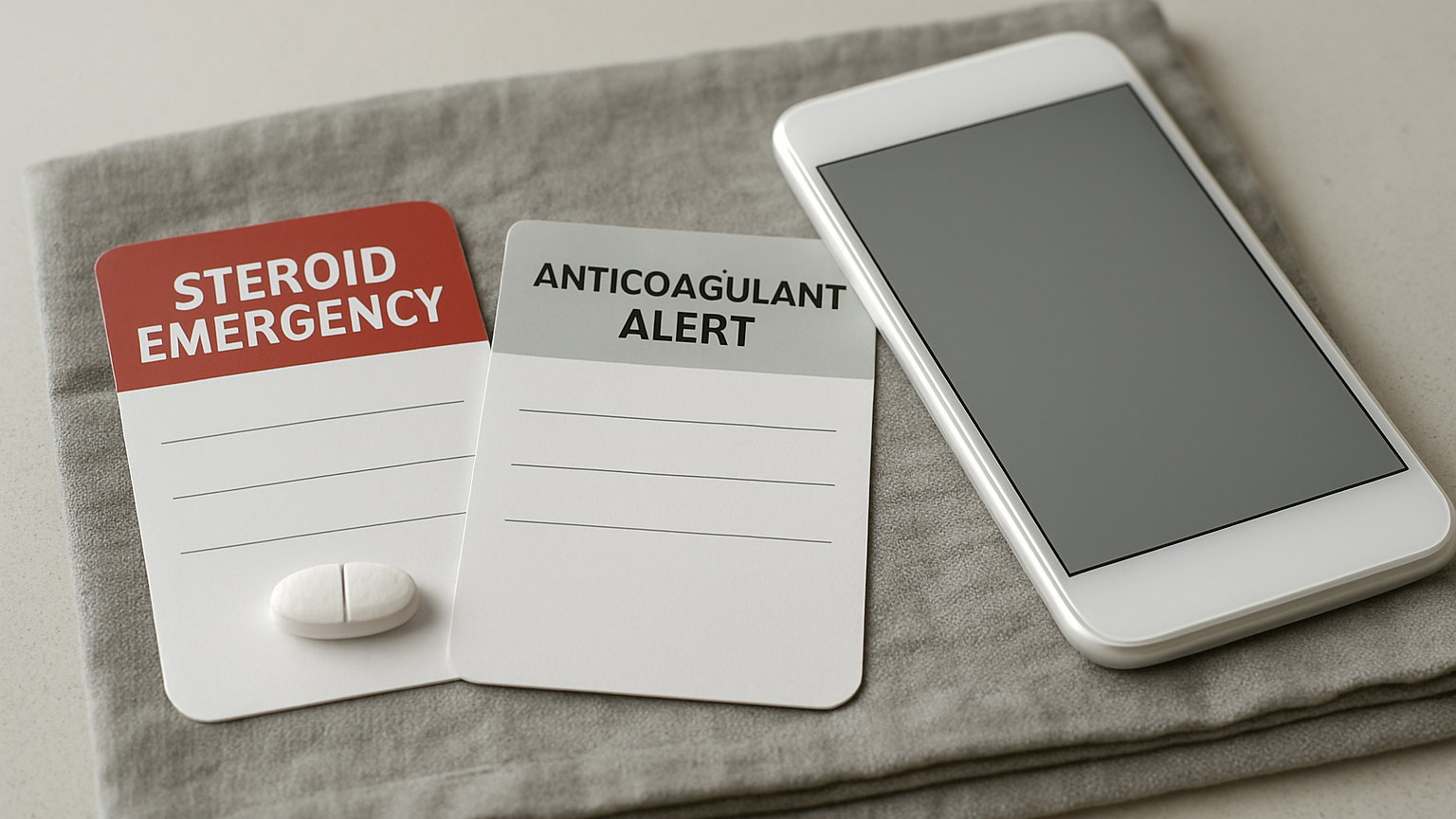
Most of these medicines come with a card. Carry it, and show it to anyone treating you - in A&E, at the dentist, at an out-of-hours service.
It tells whoever is treating you something that changes their decisions, particularly in an emergency when you may not be able to explain. Steroid cards matter for a related but different reason: the dose may need increasing during illness rather than pausing, as our guide to coming off steroid tablets safely explains.
Vaccinations
Live vaccines are generally avoided on immune-suppressing treatment, because a weakened live organism can cause illness in someone whose immunity is reduced. That includes several travel vaccines - check before booking, as our guide to travel vaccines and malaria tablets covers.
Inactivated vaccines are safe and actively recommended: annual flu vaccination, the pneumococcal vaccine, and others depending on your treatment. They may work less well than in someone with normal immunity, which is a reason to have them rather than a reason to skip them.
Where possible, vaccines are given before starting treatment. If you are about to start, ask what should be brought up to date first.
Chickenpox, shingles and measles
If you have never had chickenpox or the vaccine, contact with chickenpox or shingles needs prompt medical advice - there is treatment that can be given after exposure, and it is time-limited.
Measles exposure similarly warrants advice. Both are worth knowing about in advance rather than working out during a school outbreak.
Shingles itself is more common and more severe on these treatments - our guide to shingles and why treatment must start early covers the 72-hour window, which matters more here than for anyone else.
Everyday precautions
Hand hygiene, care with food preparation, prompt attention to cuts and skin breaks, and dental care all matter more than usual. Tell your dentist what you take before any procedure.
This is not a reason to withdraw from ordinary life. It is a reason to act early on things you would otherwise ignore.
Before starting treatment
Screening usually happens before these medicines are started - for tuberculosis, hepatitis B and C, and sometimes HIV, because immune suppression can reactivate an infection that has been dormant for years.
Vaccinations are brought up to date at the same point, since live vaccines become unavailable once treatment begins. If you are about to start, ask what screening and which vaccines should happen first - it is easier before than after.
Do not stop the medicine yourself
If you develop an infection, your team may pause treatment temporarily - but that is their decision, and stopping abruptly can cause a flare of the condition being treated.
Ring and ask rather than deciding. Our guide to shared care prescribing covers who to contact when a medicine is prescribed by your GP but managed by a specialist, which is the arrangement for many of these.
The Side Effects section covers more on side effects and safety - Serotonin Syndrome: What to Watch For is closely related to this one.