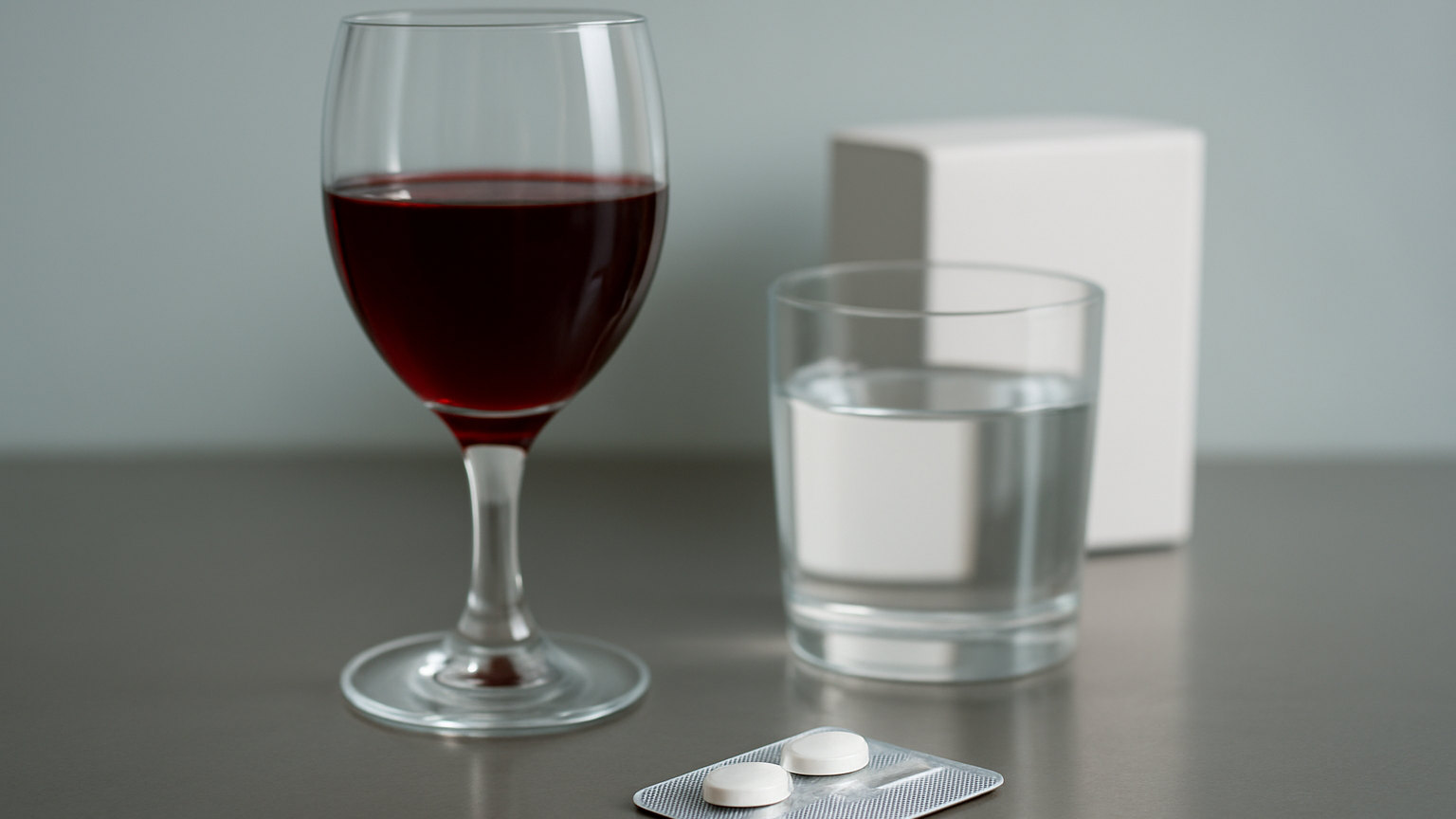
Ethanol appears in medicines as a solvent, a preservative and a flavour carrier, and it is present in far more products than people realise - liquid medicines, mouthwashes, some inhaled and injected preparations, and many over-the-counter cough and cold remedies. For most people the amounts are irrelevant. For a few, they matter a great deal, and the labelling is not always prominent.
Where it turns up
Oral liquid medicines, particularly older formulations and some cough preparations, where alcohol keeps the active ingredient in solution.
Mouthwashes, some of which have a substantial alcohol content.
Tinctures and herbal preparations, which are frequently alcohol extracts.
Some injectable and inhaled products, where ethanol is a co-solvent.
Topical preparations - skin antiseptics, and some gels and lotions.
Regulations require alcohol to be declared as an excipient with a warning where the amount is significant, but the information sits in the leaflet rather than on the front of the box.
See hidden ingredients in medicines.
Metronidazole and tinidazole
The interaction where this matters acutely.
Both drugs interfere with alcohol metabolism, causing a disulfiram-like reaction - flushing, throbbing headache, vomiting, palpitations and a fall in blood pressure.
The advice to avoid alcohol during and for a period after the course includes alcohol in medicines and mouthwashes, which is the part people miss.
Check any liquid medicine and switch to an alcohol-free mouthwash for the duration.
See metronidazole and antibiotics and alcohol.
Disulfiram
More serious again. Disulfiram is prescribed specifically to make drinking unpleasant, and the reaction it produces can be severe.
Anyone taking it must avoid all sources of alcohol - including medicines, mouthwashes, some sauces and vinegars, and in sensitive individuals even alcohol-containing skin preparations and hand gels.
The reaction can begin within minutes and includes flushing, vomiting, chest pain and collapse.
Check every medicine with the pharmacist while taking it.
See naltrexone, which does not carry this problem.
Recovery from alcohol dependence
For someone in recovery, this is not a pharmacological question so much as a practical and personal one.
Some people are entirely comfortable taking a medicine containing a trace of ethanol. Others find the taste or the knowledge difficult, and for some it represents a genuine risk to their recovery.
Both positions are reasonable, and the request for an alcohol-free alternative is a legitimate one.
Tell the prescriber and the pharmacist. Alcohol-free versions exist for most common liquids, and a tablet or capsule sidesteps the issue entirely where swallowing allows.
Alcohol-free mouthwashes are widely available.
See alcohol and mental health medicines.
Children
Children are more sensitive to ethanol, and regulators have tightened the position over recent years - alcohol-free formulations are now standard for most paediatric liquids.
Older products and some imported ones may still contain it.
Ask for an alcohol-free version for a child, particularly for anything taken regularly rather than as a single course.
The same applies to liver disease, epilepsy and pregnancy, where accumulation matters more.
See giving medicines to children.
Religious and personal reasons
Many people avoid alcohol for religious reasons, and are not told that a medicine contains it.
Religious authorities generally take the position that a necessary medicine should be taken where no alternative exists, and that alcohol used as an excipient is different in kind from alcohol as a drink - but that is a decision for the individual, not something to be decided on their behalf by not mentioning it.
The practical answer is usually straightforward: ask, and an alcohol-free version can frequently be supplied.
Raise it when the medicine is prescribed rather than after, and note it on your record alongside other preferences.
See medicines and vegetarian or vegan diets, where the same principle applies to other ingredients.
How much is actually in there
The amounts vary enormously, and it is worth keeping in proportion.
A single dose of most alcohol-containing liquid medicines delivers a tiny fraction of what is in an alcoholic drink - far less than a ripe banana in some cases. What matters is not usually the quantity but the circumstance: an interaction, a personal commitment, or a child taking several doses a day over months. See how to read a medicine label.
Breath tests
Alcohol-containing mouthwash used shortly before a breath test can produce a falsely elevated reading from residual mouth alcohol.
Proper procedure includes a waiting period to allow for this, but it is worth knowing - particularly for anyone subject to workplace testing.
The same applies to some inhalers and oral sprays.
What to do
Check the leaflet, which lists excipients including ethanol.
Ask the pharmacist, who can check the manufacturer's information and tell you whether a different product avoids it.
Because pharmacies buy from different suppliers, a product that was alcohol-free may not be next time - so mention it at each collection if it matters to you.
See switching between manufacturers.
Related reading: How Long to Wait Before Drinking Again, with more on taking medicines day to day in Usage.