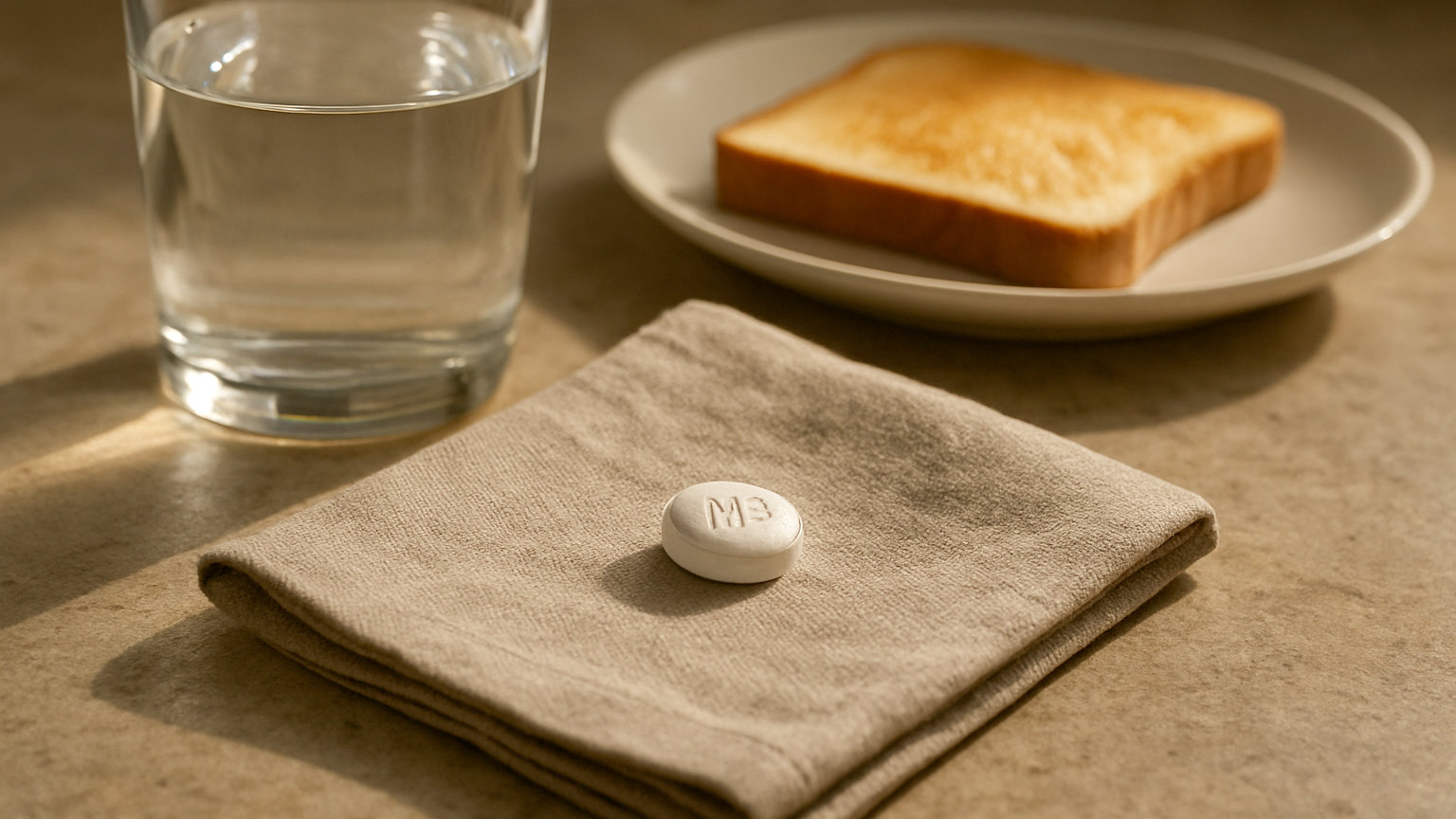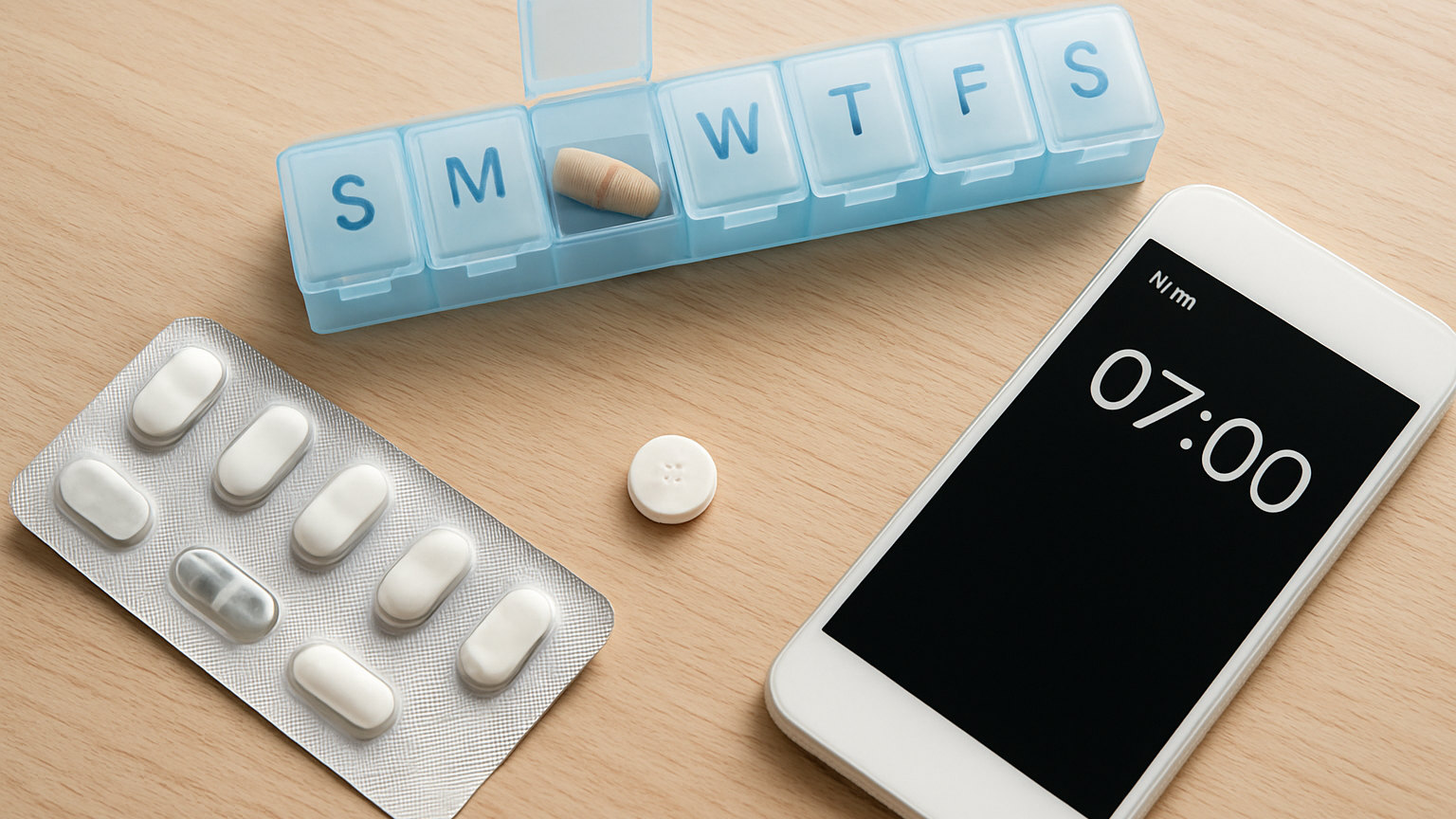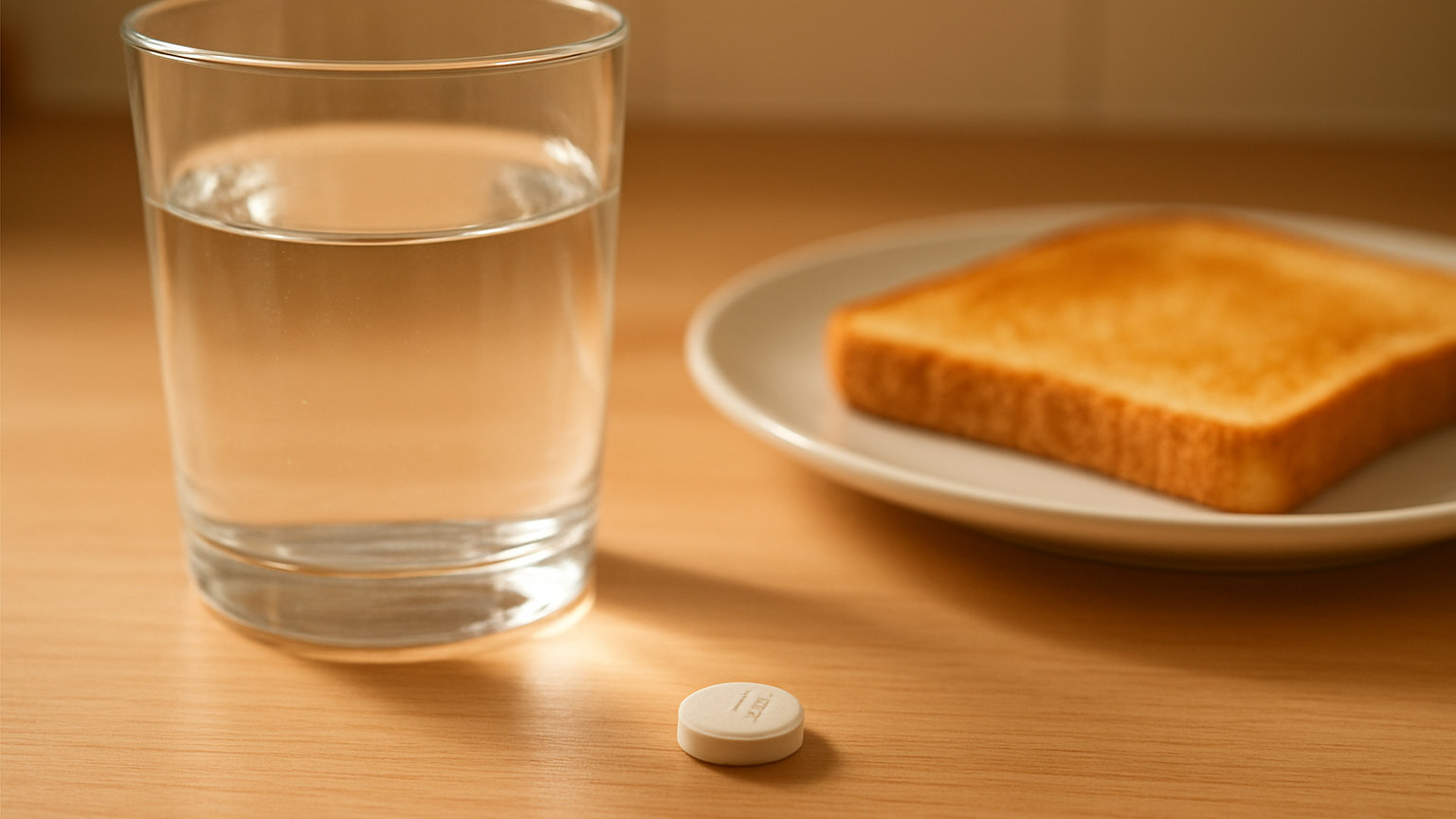
Instructions to take something with food assume a person who eats three meals. For anyone whose appetite has gone - through illness, age, treatment, or the medicines themselves - that instruction becomes a daily obstacle, and the usual result is doses skipped or taken on an empty stomach and abandoned because of nausea. Both problems are usually solvable.
What "with food" actually means
It is worth knowing why the instruction is there, because the answer differs.
To protect the stomach - anti-inflammatories, steroids. A small amount of food is enough; a full meal is not required.
To reduce nausea - metformin, many antibiotics, some antidepressants. Again, something in the stomach is the point rather than a quantity.
To improve absorption - rivaroxaban at treatment doses is absorbed substantially less on an empty stomach, which can leave someone inadequately anticoagulated. Here the food genuinely matters, and a proper meal is preferable.
To match the food - sulfonylureas and mealtime insulin are timed so their effect coincides with eating. If you are not eating, these need specific advice, because taking them without food causes hypoglycaemia.
Ask which reason applies to yours. For the first two, a biscuit, a yoghurt or a slice of toast is sufficient.
See what "take with food" means and rivaroxaban.
The medicine may be the cause
Before working around a small appetite, it is worth asking whether something is causing it.
Common culprits: metformin, SSRIs early in treatment, opioids, digoxin - where appetite loss and nausea can indicate toxicity - levodopa, bisphosphonates, and several antibiotics.
GLP-1 medicines reduce appetite by design, which is therapeutic in obesity and a problem in someone frail who was prescribed one for diabetes.
A dry mouth or a metallic taste from medicines makes food unappealing without reducing appetite directly, and treating that frequently restores eating.
See medicines that change taste and appetite and dry mouth from medicines.
Practical measures
Eat little and often rather than aiming for meals, and take medicines with whatever you are having.
Time doses to when appetite is best, which for many people is the morning.
Use nourishing drinks - milk-based drinks, or prescribed supplements - which count as food for most purposes, though check with a pharmacist for anything where absorption matters and for calcium-containing drinks, which bind several medicines.
Keep something suitable by the medicines, so the food is not a separate errand.
Treat nausea properly rather than enduring it - an anti-sickness medicine for the first couple of weeks of a new treatment is entirely reasonable.
See medicines, milk and dairy.
Reducing the number of doses
If several medicines each require food, that is several occasions a day you cannot manage.
Worth asking at a review whether any can be taken once daily instead, whether any can be taken without food, and whether any can be stopped altogether.
Deprescribing is frequently the most effective intervention here - fewer tablets, fewer occasions, less nausea, better appetite.
See deprescribing and medication reviews.
Weight loss is not a minor finding
Unintentional weight loss reduces muscle, immunity and recovery from illness, and in an older person it has serious consequences.
Report it rather than attributing it to age.
See your GP about unexplained weight loss, difficulty swallowing, appetite loss with abdominal pain or a change in bowel habit, or persistent nausea and vomiting - these need assessing rather than working around.
A referral to a dietitian is reasonable where nutrition is genuinely affected, and prescribable nutritional supplements are available.
See side effects in older people.
Doses may need reviewing
Substantial weight loss changes what doses are appropriate.
Blood pressure medicines frequently become too strong, with dizziness and falls the first sign. Diabetes medicine requirements fall, sometimes sharply. The paracetamol maximum is lower below about fifty kilograms.
Ask for a review after a significant change rather than waiting for the annual one.
See does your weight change the dose.
Medicines that can be moved
If the food requirement is the obstacle, the medicine itself may not need to be.
Some treatments come as patches, injections or dispersible forms that sidestep the stomach entirely. Others have a once-daily equivalent that reduces the number of occasions food is needed. Both are worth asking about rather than skipping doses. See trouble swallowing tablets.
If eating is not going to improve
In advanced illness, appetite loss is part of the picture rather than a problem to solve, and forcing food causes distress without benefit.
The medicines question then becomes which are still worth the effort of getting down - and stopping the ones aimed at years from now is a legitimate part of good care.
See stopping medicines near the end of life.
Which Supplements Are Worth Taking covers a related point, and the Usage section has the rest of these guides.