
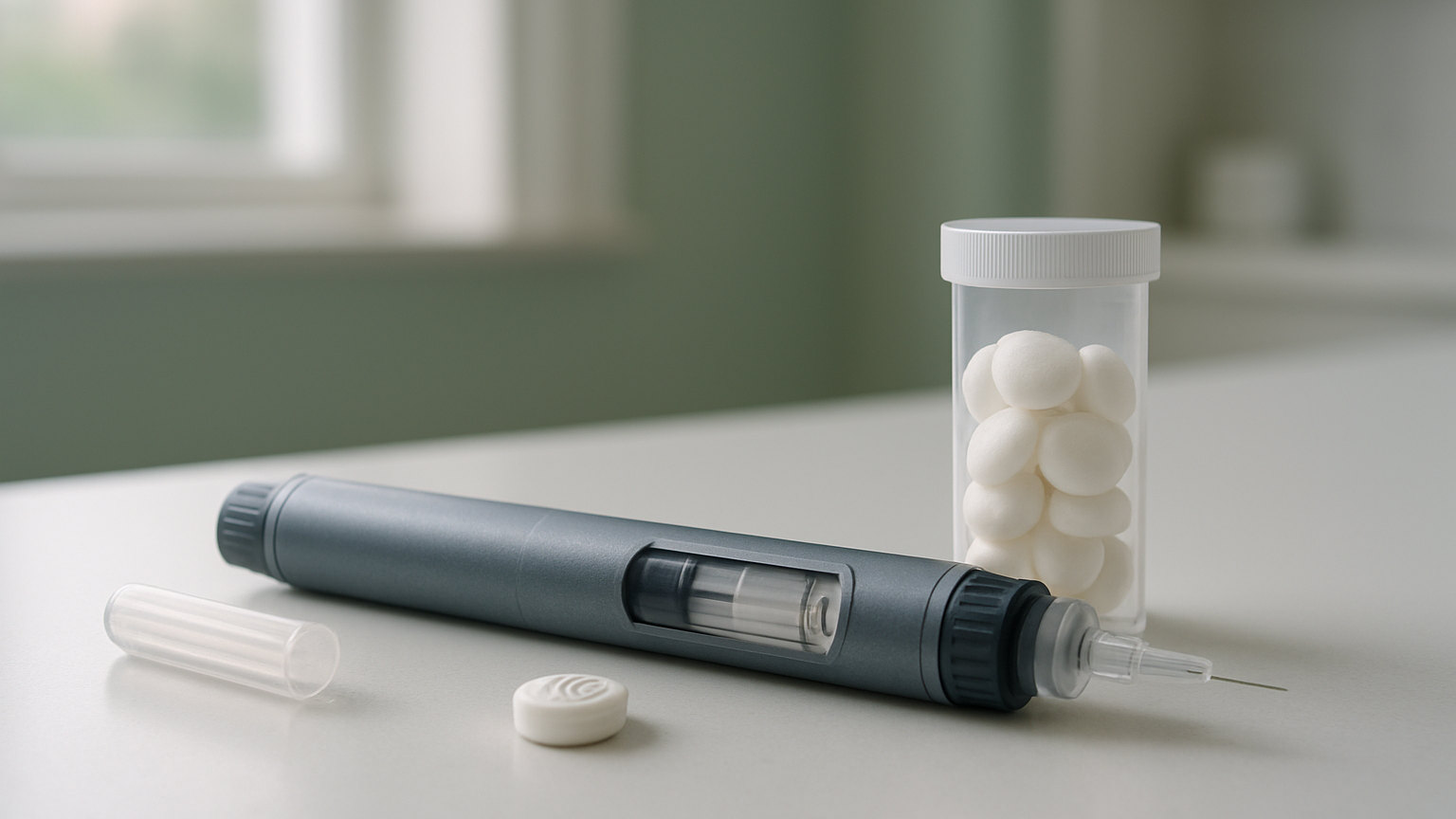
Insulin detemir is a long-acting analogue with an unusual mechanism. A fatty acid chain attached to the molecule makes it bind reversibly to albumin in the blood, creating a circulating reservoir that releases insulin slowly. The result is a background level that is notably predictable - variability between days is lower than with isophane insulin. Its duration, though, is often less than a full day, which is why many people take it twice.
Follow the plan your diabetes team gave you. This guide contains no doses.
Once or twice daily
Detemir's duration is dose-dependent and typically falls short of twenty-four hours, particularly at lower doses.
Many people therefore take it twice daily - morning and evening - rather than once.
That is not a failure of the insulin. It reflects its pharmacology, and a twice-daily regimen gives flexibility to adjust the daytime and overnight background separately, which a single flat dose cannot.
If your fasting glucose is fine but you run high through the afternoon, or vice versa, that is exactly the kind of pattern a split dose addresses. Raise it rather than assuming the dose simply needs increasing.
See insulin glargine and insulin degludec, which last longer.
Predictability is the advantage
Albumin binding smooths absorption, so the same dose produces a more consistent effect from one day to the next than isophane insulin does.
Less day-to-day variability means fewer unexplained highs and lows, and trials found less nocturnal hypoglycaemia than with isophane.
It is also a clear solution rather than a cloudy suspension, so it does not need resuspending before each dose - which removes one of the commonest sources of erratic dosing.
See insulin isophane, where mixing it properly is the whole difficulty.
Weight
Detemir is associated with less weight gain than other basal insulins, consistently across trials.
The reason is not fully settled - it may relate to effects on appetite signalling in the brain, or simply to fewer hypoglycaemic episodes prompting extra eating.
For someone whose weight has climbed since starting insulin, that is a reason to ask about it. See medicines and your weight.
Pregnancy
Detemir is licensed for use in pregnancy, which distinguishes it from some other analogues, and it has been studied specifically in pregnant women with type 1 diabetes.
Isophane insulin has the longest experience behind it and is also widely used.
Insulin requirements change substantially through pregnancy and fall sharply immediately after delivery, so doses are reviewed frequently. Follow your maternity diabetes team's plan rather than your pre-pregnancy regimen.
Titration
Background insulin is adjusted against fasting glucose, and changes are made every few days rather than daily.
Adjusting in response to a single reading stacks changes before the previous one has taken effect, and produces swings.
Your team will give you a specific approach. Follow it rather than improvising.
Recognising and treating a hypo
Sweating, trembling, hunger, palpitations, anxiety and tingling lips, progressing to confusion, slurred speech and difficulty concentrating.
Treat immediately with fast-acting carbohydrate - glucose tablets or a sugary drink - then follow with longer-acting carbohydrate.
Carry treatment at all times and tell the people around you where it is. Glucagon should be available at home for severe hypos.
Report hypoglycaemia unawareness - losing the early warning symptoms. It is reversible and affects driving eligibility.
Beta blockers mask the warning signs - see atenolol.
Injection sites
Rotate systematically, moving a couple of centimetres each time.
Repeated injection into one spot causes lipohypertrophy - a painless lump of thickened tissue from which absorption is erratic and reduced. Because it does not hurt, people keep using it, and unexplained glucose swings follow.
Moving to healthy tissue delivers considerably more insulin, so doses often need reducing. Feel your sites and ask for them to be checked at review. Use a new needle each time.
Never stop insulin when unwell
Illness raises glucose even when you are eating less, and stopping basal insulin in type 1 diabetes leads to ketoacidosis.
Continue your background insulin during illness, check glucose more often, test for ketones and keep drinking. Extra correction doses of rapid-acting insulin are usually needed.
Seek urgent help for ketones rising, persistent vomiting, rapid deep breathing or confusion.
Note the contrast with metformin and SGLT2 inhibitors, which are paused when unwell - see dapagliflozin and sick day rules.
Storage and safety
Unopened pens in the fridge, never frozen. In use, at room temperature for a set number of weeks then discarded - write the opening date on the pen.
Never draw insulin from a pen with a syringe, and check you have the right pen - long-acting and rapid-acting insulins from the same manufacturer often have similar packaging.
Used needles go in a sharps bin - see needles and sharps disposal.
Glucagon: The Rescue Treatment for Severe Hypos covers a related point, and the Conditions section has the rest of these guides.


