
Most serious drug interactions happen in the liver, where a family of enzymes breaks medicines down. Some drugs block those enzymes and some speed them up, and the consequences run in opposite directions on different timescales. Understanding the two patterns explains most of the interaction warnings you will ever encounter, and explains the counter-intuitive cases where trouble starts after a medicine is stopped.
The two patterns
Inhibitors block the enzyme. The other drug is broken down more slowly, so its level rises - potentially into toxicity.
This happens fast, within a day or two, because it is a direct blockade.
Inducers make the body produce more enzyme. The other drug is broken down faster, so its level falls - potentially to the point of not working.
This happens slowly, building over one to two weeks, because new enzyme has to be manufactured. And it takes a similar period to wear off after the inducer stops.
That asymmetry in timing is the most useful thing to remember.
Common inhibitors
Clarithromycin and erythromycin - which is why a chest infection can destabilise someone on several medicines. See clarithromycin.
Antifungals - fluconazole, itraconazole, ketoconazole. See fluconazole.
Ritonavir, used in HIV treatment and deliberately as a booster in some antiviral combinations.
Fluoxetine, paroxetine, fluvoxamine and bupropion, which inhibit the enzyme handling many other drugs.
Amiodarone, verapamil, diltiazem and cimetidine.
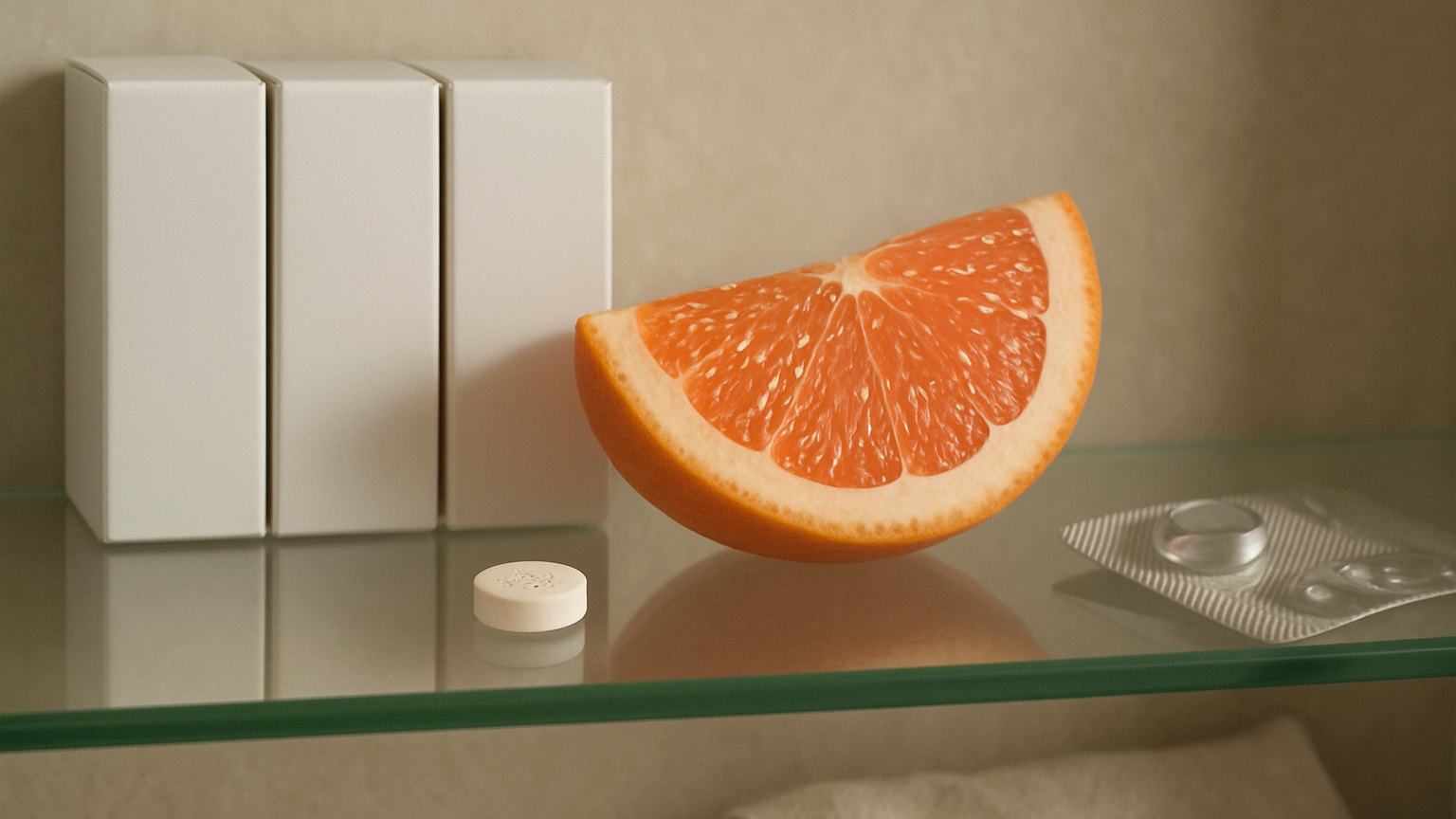
Grapefruit, which blocks the enzyme in the gut wall - and the effect outlasts the drink, so separating them by a few hours does not help. See grapefruit and medicines.
Common inducers
Rifampicin, the most powerful in routine use.
Carbamazepine, phenytoin and phenobarbital.
St John's wort, which is bought freely and is a potent inducer - it has caused transplant rejection and contraceptive failure. See supplements that interfere with your medicines.
Tobacco smoke, which induces the enzyme handling theophylline, clozapine and caffeine. This is why stopping smoking raises those levels, sometimes to toxicity - and why it can happen within days of admission to a smoke-free hospital. It is the smoke rather than the nicotine, so patches and vaping do not prevent it.
See theophylline and clozapine.
Which drugs are most affected
Interactions matter most where the margin between an effective and a harmful level is narrow.
Warfarin, where both directions are dangerous - see warfarin.
Statins, where raised levels cause muscle damage - which is why simvastatin has dose caps alongside several common medicines, and why pravastatin and rosuvastatin are preferred when interactions are a concern. See simvastatin.
Immunosuppressants after transplant.
Anti-epileptics, digoxin, theophylline and lithium, though lithium is handled by the kidneys rather than the liver.
Hormonal contraception, where an inducer can cause failure.
Prodrugs work backwards
A wrinkle worth knowing, because it reverses the expected direction.
Some medicines are inactive until an enzyme converts them. Codeine must be converted to morphine, and clopidogrel must be activated similarly.
So an inhibitor of the relevant enzyme makes these drugs less effective, not more - someone taking codeine with an inhibitor gets little pain relief.
Genetics matter here too. People vary considerably in these enzymes, which is why codeine does nothing for some people and is unexpectedly strong in others.
See metoprolol, which is affected by the same genetic variation.
The danger is in the change
Steady state is rarely the problem. Trouble arrives when something is started or stopped.
Starting an inhibitor raises levels within days.
Stopping an inducer does the same, more slowly - so someone stabilised on a higher warfarin dose while taking rifampicin will drift into over-anticoagulation in the weeks after it stops, unless the dose is reduced.
That delayed effect is easy to miss because nothing changed on the day the problem appeared.
Not everything happens in the liver
Two other mechanisms account for most of the remaining interactions.
Absorption - antacids, iron and calcium bind several medicines in the gut, which is solved by spacing them apart. Kidney clearance - lithium, digoxin and metformin are cleared by the kidneys rather than the liver, so what matters there is kidney function and anything that reduces it. See medicines you need to space apart.
What to do
Tell every prescriber and pharmacist everything you take, including supplements and anything bought online.
Flag the high-risk medicines specifically - warfarin, anti-epileptics, transplant medicines, lithium, theophylline, digoxin and clozapine - before accepting anything new, particularly an antibiotic or an antifungal.
Mention stopping smoking if you take theophylline or clozapine.
Expect extra monitoring when a new medicine is added - an extra INR check, or a drug level.
Pharmacists check for this routinely as part of the clinical check, which is one of the reasons dispensing is not instant.
See what happens behind the pharmacy counter and monitoring long-term medicines.
Medicines That Lower Your Sodium covers a related point, and the Side Effects section has the rest of these guides.


