The date printed on a medicine carton is frequently misunderstood in both directions. It is not the moment the contents become dangerous, and it is not a suggestion either. It is the point up to which the manufacturer guarantees full potency and purity - in the unopened original packaging, stored as directed. Once you open it, or store it badly, a different and usually much shorter clock starts.
What the printed date means
Manufacturers establish it through stability testing, storing batches under defined conditions and measuring how the product changes.
The date is set conservatively, with a margin, and it assumes correct storage throughout.
It applies to the unopened product. It stops being meaningful the moment conditions differ - a bottle opened, a carton left on a sunny windowsill, tablets decanted into a pot.
Where only a month and year are given, the date means the last day of that month.
What actually happens after it
For most solid tablets and capsules in intact packaging, the usual outcome is gradual loss of potency rather than the formation of anything harmful.
That sounds reassuring and is the reason not to rely on it: a medicine that is 80% as effective is not a safe way to treat anything that matters, and you cannot tell by looking.
Where reduced potency is genuinely dangerous - an adrenaline auto-injector, a GTN spray, an antibiotic, an anti-epileptic, insulin - the margin does not exist.
Liquids, creams, eye drops and anything refrigerated degrade faster and can support bacterial growth, which is a different problem from losing strength.
The much shorter clocks
These matter more than the printed date, and they are widely missed.
Eye and ear drops - typically discarded around four weeks after opening, because of contamination risk. Single-use preservative-free vials are discarded immediately after use.
Reconstituted antibiotic liquids - usually a week or two, and usually requiring the fridge. The pharmacy writes the discard date on the bottle.
Insulin in use - a defined number of weeks at room temperature once started, regardless of the carton date.
GTN tablets - discard around eight weeks after opening. The active ingredient evaporates, and a tablet producing no tingle under the tongue may well be inert. The spray does not have this problem.
Creams and ointments in tubs, where fingers introduce bacteria.
Biologic pens once removed from the fridge.
Write the opening date on the box. It takes two seconds and removes all the guesswork.
See how to tell if a medicine has gone off.
Storage shortens it further
Heat, moisture, light and air all accelerate degradation, and the printed date assumes none of them.
A bathroom cabinet is warm and repeatedly humid. A car in summer exceeds any tested temperature within minutes. A sunny windowsill delivers light the packaging was designed to block.
A medicine stored badly may be past its useful life well before the printed date, with no outward sign.
See medicines, damp, light and air.
Where it genuinely matters most
Adrenaline auto-injectors and glucagon - emergency devices that sit unused for years and expire quietly. Check them termly, not annually.
Rescue packs of steroids and antibiotics kept at home.
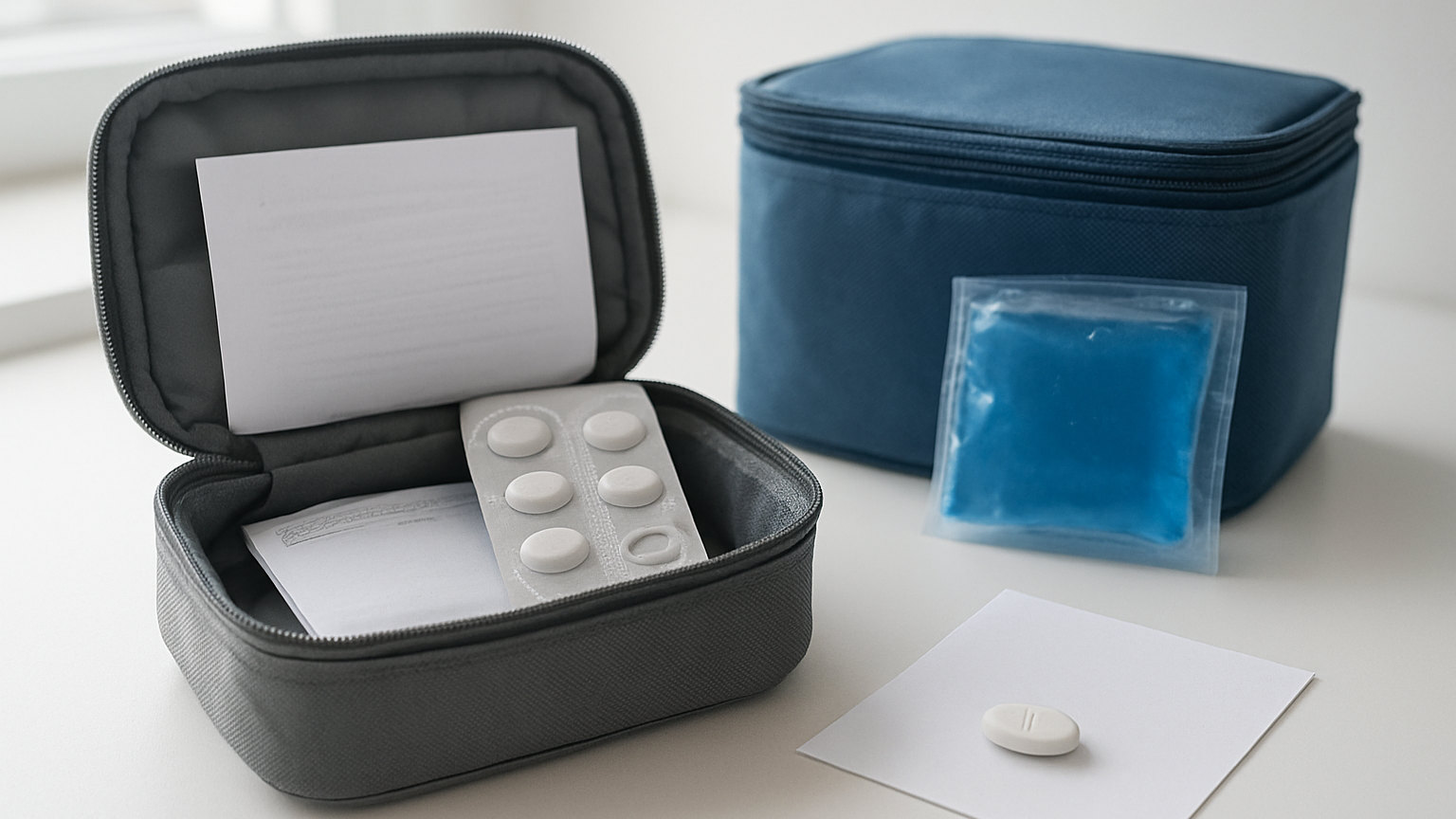
Anything in a travel bag or a car, which is both forgotten and badly stored.
Contraception and emergency contraception.
Set a recurring reminder for these specifically rather than relying on noticing.
See an emergency bag for your medicines.
Using something out of date
The position is straightforward: do not.
For anything treating a serious condition, for any emergency medicine, and for anything liquid, refrigerated or applied to the eye, it is not a judgement call.
For a paracetamol tablet a fortnight past its date in a sealed blister, the real-world risk is loss of potency rather than harm - but the sensible response is still to replace it, because it costs very little.
Where a medicine matters and you have run out, an emergency supply from a pharmacy is the right answer rather than the old box.
See emergency supply from a pharmacy.
Dates on repackaged medicines
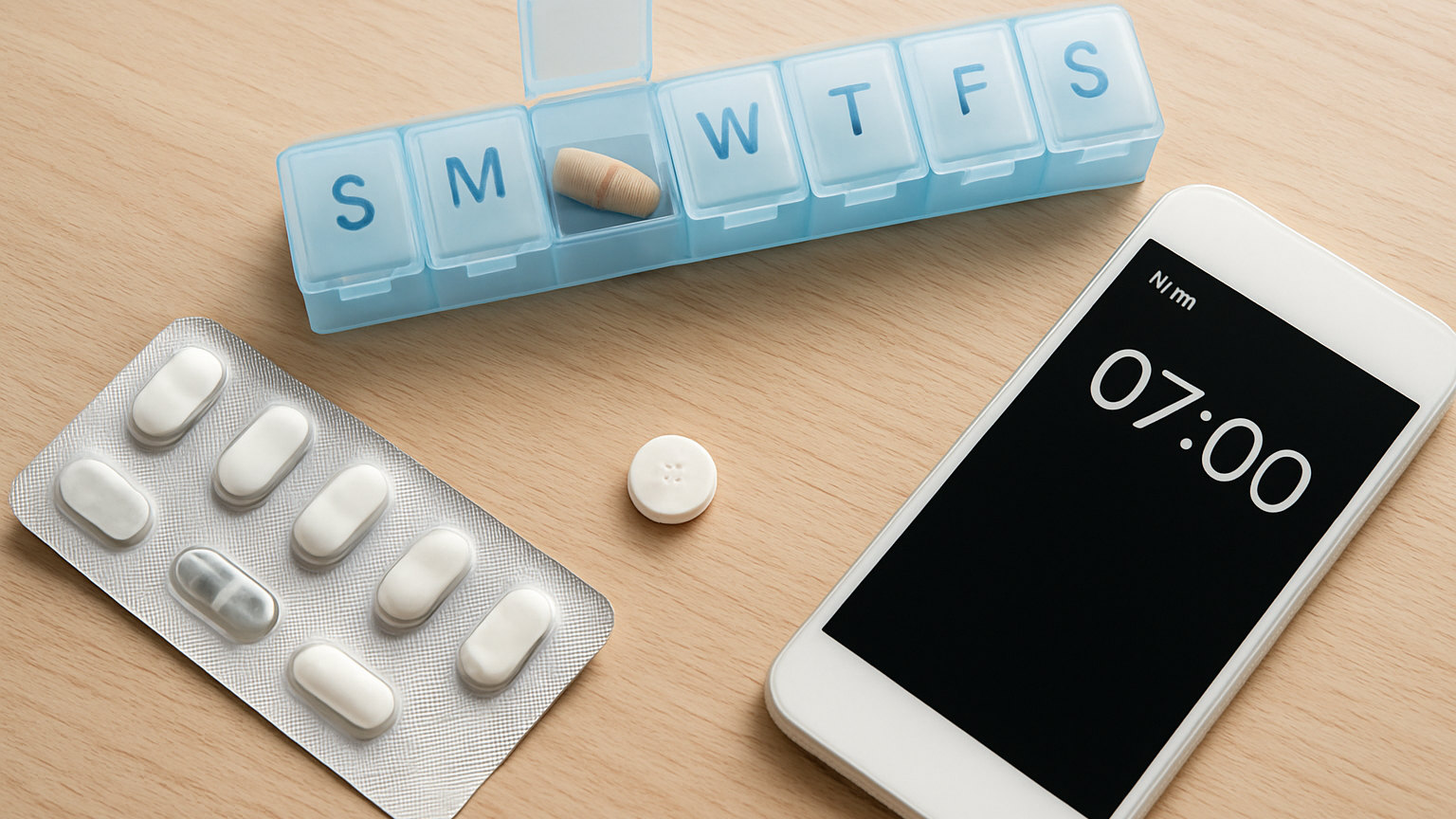
A weekly organiser filled by you or by a pharmacy carries no expiry date at all.
Once tablets leave their blister, the manufacturer's date no longer applies, because the moisture and light protection has gone. Pharmacy-filled blister packs are given a short in-use life for that reason, and a home organiser should be filled no more than a week or two ahead. See blister packs and dosette boxes.
Practical habits
Check dates annually alongside a cupboard clear-out, and check emergency items more often.
Use the oldest supply first, putting new boxes behind rather than in front.
Do not stockpile. Surplus is what expires, and once dispensed it cannot be reused.
Return expired medicines to a pharmacy rather than binning or flushing them.
See clearing out your medicine cupboard.
Related reading: Storing Medicines When Someone Has Dementia, with more on taking medicines day to day in Usage.