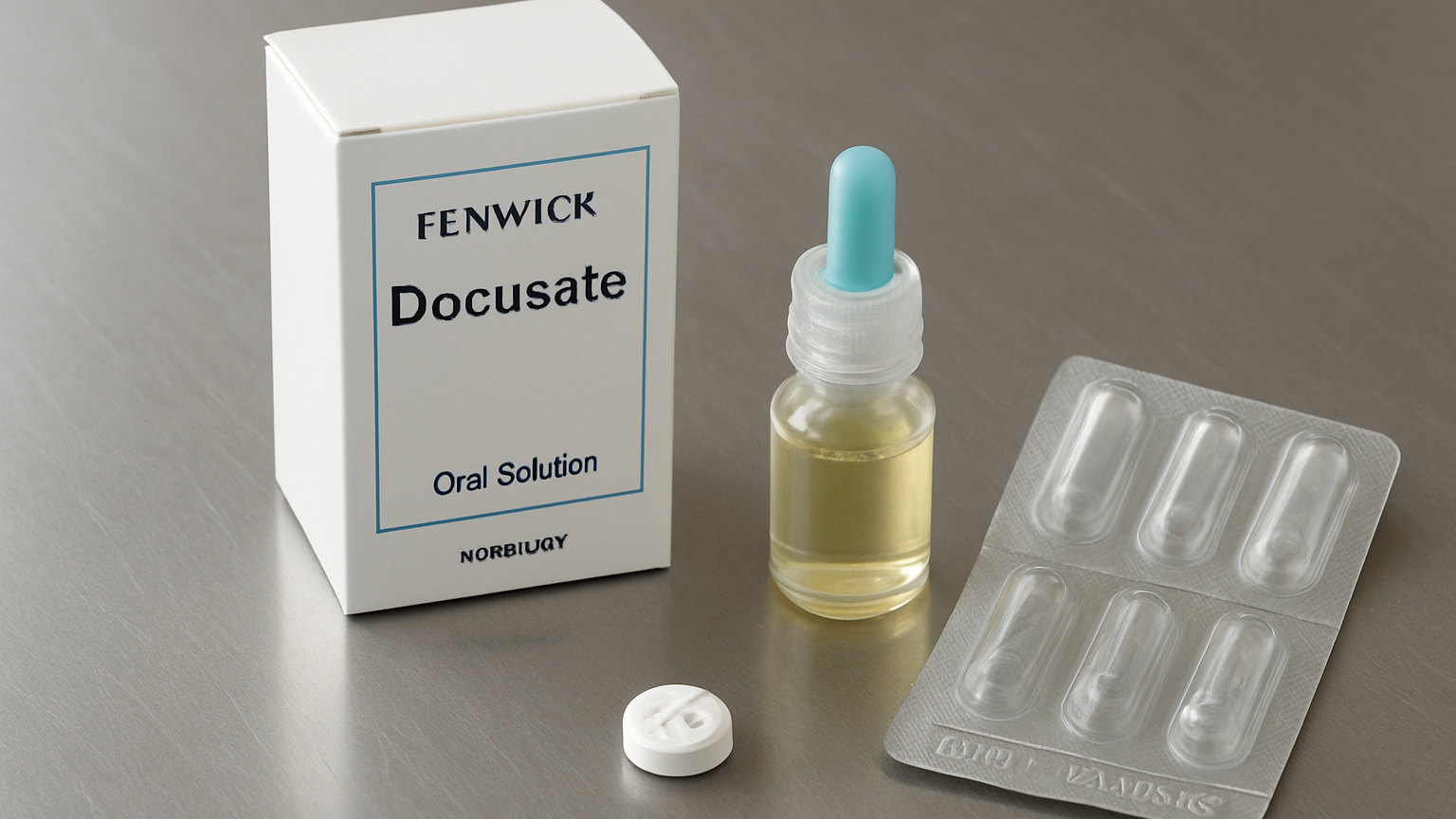
Docusate sodium is a surfactant - a detergent. In the bowel it lowers surface tension, letting water and fat penetrate hard stool and soften it. The same property makes it useful for softening earwax. It is very widely prescribed, particularly in hospitals and care homes, and the evidence behind that popularity is thinner than for almost any other laxative.
Follow the instructions on your label. This guide contains no doses.
What the evidence shows
Trials of docusate for constipation have generally been small and unimpressive, and several found it no better than placebo. Systematic reviews have repeatedly concluded the evidence does not support its routine use.
It remains in wide use largely through habit and because it is gentle and well tolerated - it does not cause cramping, which makes it feel safe.
UK guidance generally favours macrogol first for constipation, with a stimulant added if needed. Our guides to macrogol and lactulose cover the better-supported options.
That is not a reason to stop something that is working for you. It is a reason not to persist with it if it is not.
Where it still has a place
It has a mild stimulant action alongside the softening, and it is often combined with senna in a single product - the combination of a softener and a stimulant being a standard approach for opioid-induced constipation.
That is the situation where it is most defensible. Opioid constipation does not settle with time, so a laxative should be started at the same time as the opioid rather than after the problem appears - see why medicines cause constipation and tramadol.
It is also used where straining is best avoided - after surgery, with haemorrhoids or an anal fissure, or in heart conditions.
It needs fluid and it is slow
Docusate works by helping water into the stool, so there has to be water available. Taken without adequate fluid it does very little.
Expect one to three days for an effect. It is not a rescue treatment for someone uncomfortable now.
Side effects
Docusate is well tolerated. Abdominal cramps, nausea, diarrhoea and a bitter taste are the occasional complaints.
Rectal preparations can cause local irritation.
It should not be taken alongside liquid paraffin, since it increases absorption of the paraffin, which is undesirable.
Seek advice for severe abdominal pain, vomiting, or if you stop passing wind as well as stool - obstruction needs excluding and laxatives are not the answer.
Docusate ear drops
The same detergent action softens earwax, and docusate is one of the agents used for that - usually applied for a few days before syringing or irrigation.
Practical points: warm the bottle in your hand first, since cold drops in the ear cause dizziness. Lie with the affected ear upwards, instil the drops, and stay there for several minutes so they run in rather than out.
Do not use ear drops if you have or might have a perforated eardrum, or if there is discharge, unless specifically told to. Check with a pharmacist or GP first.
Our guide to eye drops and ear drops covers the technique, and notes that sudden hearing loss needs urgent assessment rather than wax-softening drops.
Olive oil and sodium bicarbonate drops are equally reasonable alternatives for wax, and cheaper.
When constipation needs assessing
See your GP rather than self-treating if you have a persistent change in bowel habit, blood in the stool, unintentional weight loss, a new abdominal lump, or constipation starting over the age of 50 without an obvious cause.
See warning signs you should not ignore.
Look at the rest of the list first
A great deal of constipation is caused by something else being taken. Opioids above all, but also iron tablets, some antidepressants, anticholinergics including bladder medicines, some blood pressure tablets, calcium supplements and ondansetron.
See iron tablets, solifenacin and ondansetron.
If several appear on your list, the useful question is whether any can be reduced rather than whether another laxative can be added - see deprescribing.
Softener plus stimulant
The reasoning behind combining docusate with senna is that one softens the stool and the other makes the bowel move it - addressing both halves of the problem at once.
In practice, for opioid constipation, guidance now often favours a macrogol with a stimulant added, on the basis that the macrogol softens more reliably. If a combination product is not working, that is the substitution worth asking about rather than simply increasing the dose.
The unglamorous part
Fluid, fibre, activity, and a regular unhurried routine - particularly not ignoring the urge and allowing time after breakfast, when the bowel is most active. None of it is exciting and all of it works.
If this was useful, Emtricitabine and Tenofovir: Treatment and PrEP is worth reading next, and Medicines collects the rest.