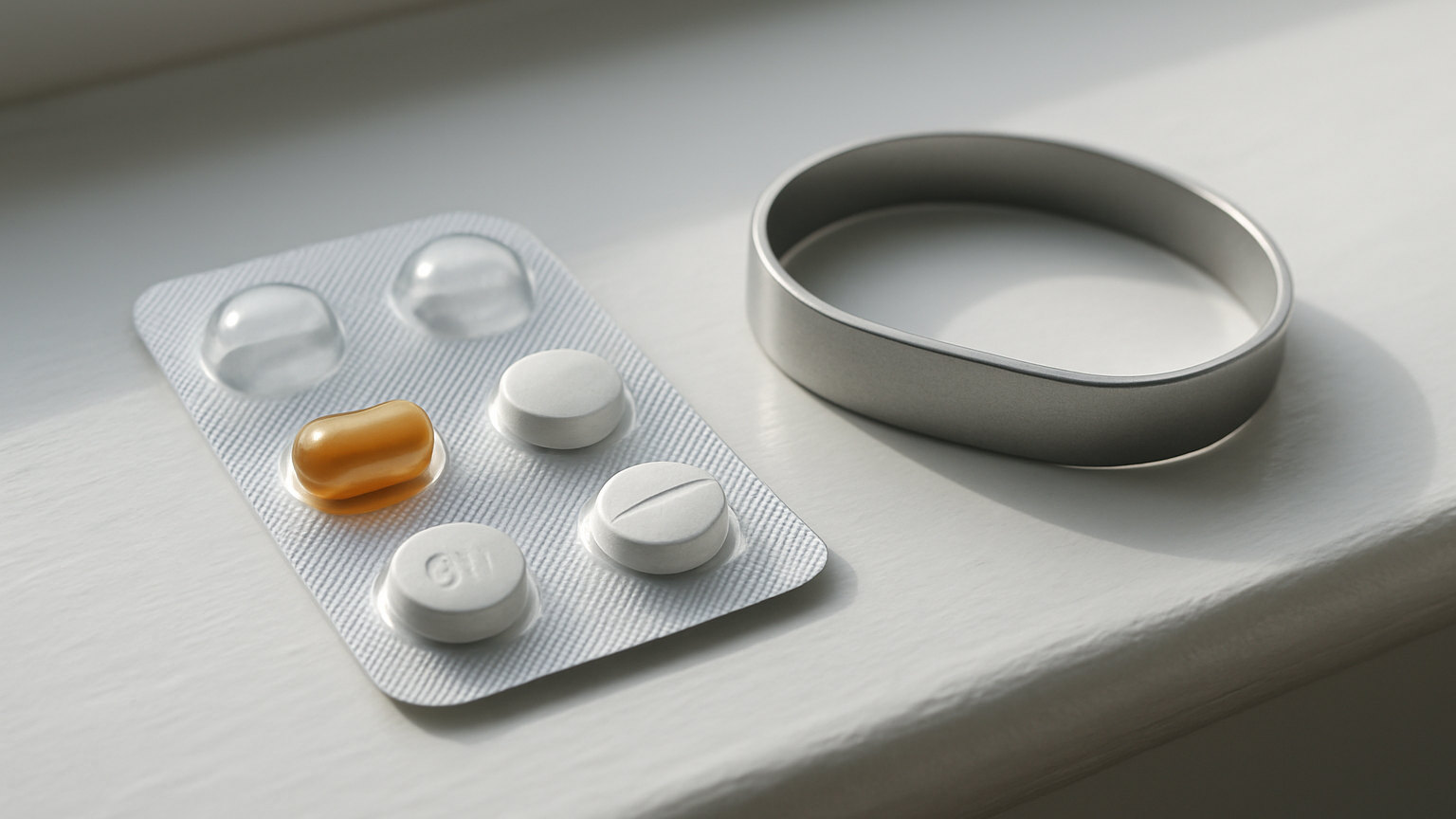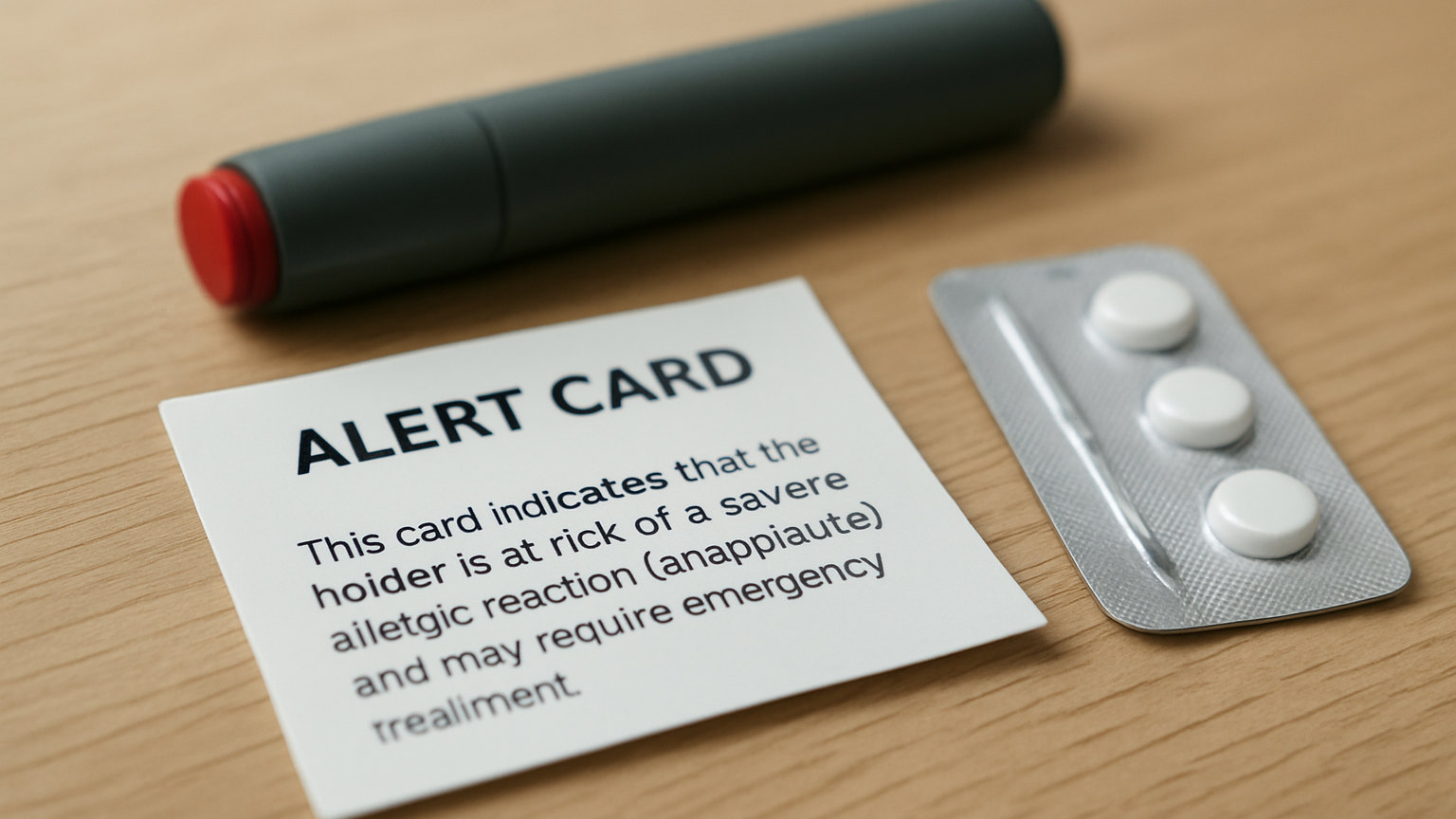
Several treatments come with a card you are supposed to carry, and a great many of those cards end up in a drawer. They exist because the information on them changes what someone does in the first ten minutes of an emergency - and in a few cases the absence of that information is the difference between a routine outcome and a serious one.
The steroid emergency card
The most important, because the consequence of nobody knowing is an adrenal crisis, which is life-threatening.
Anyone whose adrenal glands are suppressed - through long-term steroid tablets, high-dose inhaled or topical steroids, repeated injections, or adrenal insufficiency itself - cannot mount their own stress response to illness, injury or surgery.
The rule is the opposite of most medicines: during illness the steroid dose goes up, and if you cannot keep tablets down you need it by injection.
The NHS steroid emergency card is red and states this plainly. Ask your GP, pharmacist or specialist for one if you take long-term steroids and have not been given one.
Consider also having an emergency injection kit at home if you have adrenal insufficiency, and make sure someone you live with knows how to use it.
See hydrocortisone and prednisolone.
Anticoagulant cards
Anyone on warfarin or a direct oral anticoagulant should carry one.
It matters for bleeding after an accident, for a head injury where bleeding inside the skull may be delayed, and for any procedure where the drug affects what can be done safely.
With warfarin the card also records your INR and dose.
Show it to dentists, before any procedure, and to paramedics.
See medicines that make you bleed more easily and warfarin.
Biologic and immunosuppressant cards
These matter for infection.
Someone on a biologic or another immune-suppressing treatment can have a serious infection with muted signs, and needs assessing more urgently and treating more aggressively than their appearance suggests.
The card also flags that live vaccines must be avoided, and that treatment should be paused during a significant infection.
See infection risk on immune-suppressing medicines and adalimumab.
Other cards worth having
Allergy cards recording a serious drug reaction - what happened, how soon, and to which drug and drug family.
Anaphylaxis - if you carry an adrenaline auto-injector, carry information about it too, and make sure people around you know where it is.
Lithium, where a purple booklet records monitoring and the toxicity warnings.
Methotrexate, where the booklet emphasises weekly dosing - a detail that has been fatally misread.
Clozapine, epilepsy, diabetes and insulin-pump cards.
See adrenaline auto-injectors and methotrexate.
Digital and wearable options
Your phone's lock screen can display emergency medical information without a passcode - both major phone systems support this, and ambulance crews look. Setting it up takes a few minutes.
Medical ID jewellery is useful precisely because it stays on you when a wallet does not, and it is found during an examination.
Keep engraving short and prioritised: the condition or treatment that changes emergency management first, then an allergy, then a contact number.
Digital and physical are complements rather than alternatives - phones run out of battery and cards fall out of wallets.
Keep a list as well
Cards cover a single treatment. A full medicines list covers everything, including the items routinely omitted - eye drops, inhalers, creams, supplements and anything bought over the counter or online.
Keep it with the cards, and put a date on it.
Make it findable
A card in a drawer helps nobody.
Keep it in your wallet or purse, tell the people you live and work with that it exists, and mention it at every hospital attendance.
Check periodically that it is still accurate - doses change, and an out-of-date card can mislead.
Replacements are available from whoever issued it, and your pharmacist can usually help.
For the people around you
A card only works if someone looks for it, so tell the people you live and work with that it exists and where it is kept.
For a steroid card in particular, whoever is with you should know that during a severe illness or injury the steroid dose goes up and may need to be given by injection - and that calling an ambulance and saying the words "adrenal crisis" changes what happens next. See sick day rules.
Say it out loud too
Do not rely on a card being found.
Tell paramedics, tell the triage nurse, and tell the pre-assessment team - particularly about steroids, anticoagulants, immune-suppressing treatment, opioids and any previous reaction under anaesthetic.
Carers and relatives should know what to say on your behalf.
Medicine Allergy or Side Effect? How to Tell covers a related point, and the Side Effects section has the rest of these guides.