Cannabis-derived products are widely used, both recreationally and as over-the-counter CBD oils bought for pain, anxiety or sleep. Because CBD is sold on a shelf rather than dispensed, people assume it is pharmacologically inert. It is not - it inhibits several of the same liver enzymes that handle prescription medicines, and it is one of the interactions least likely to be mentioned to a prescriber.
How CBD interacts
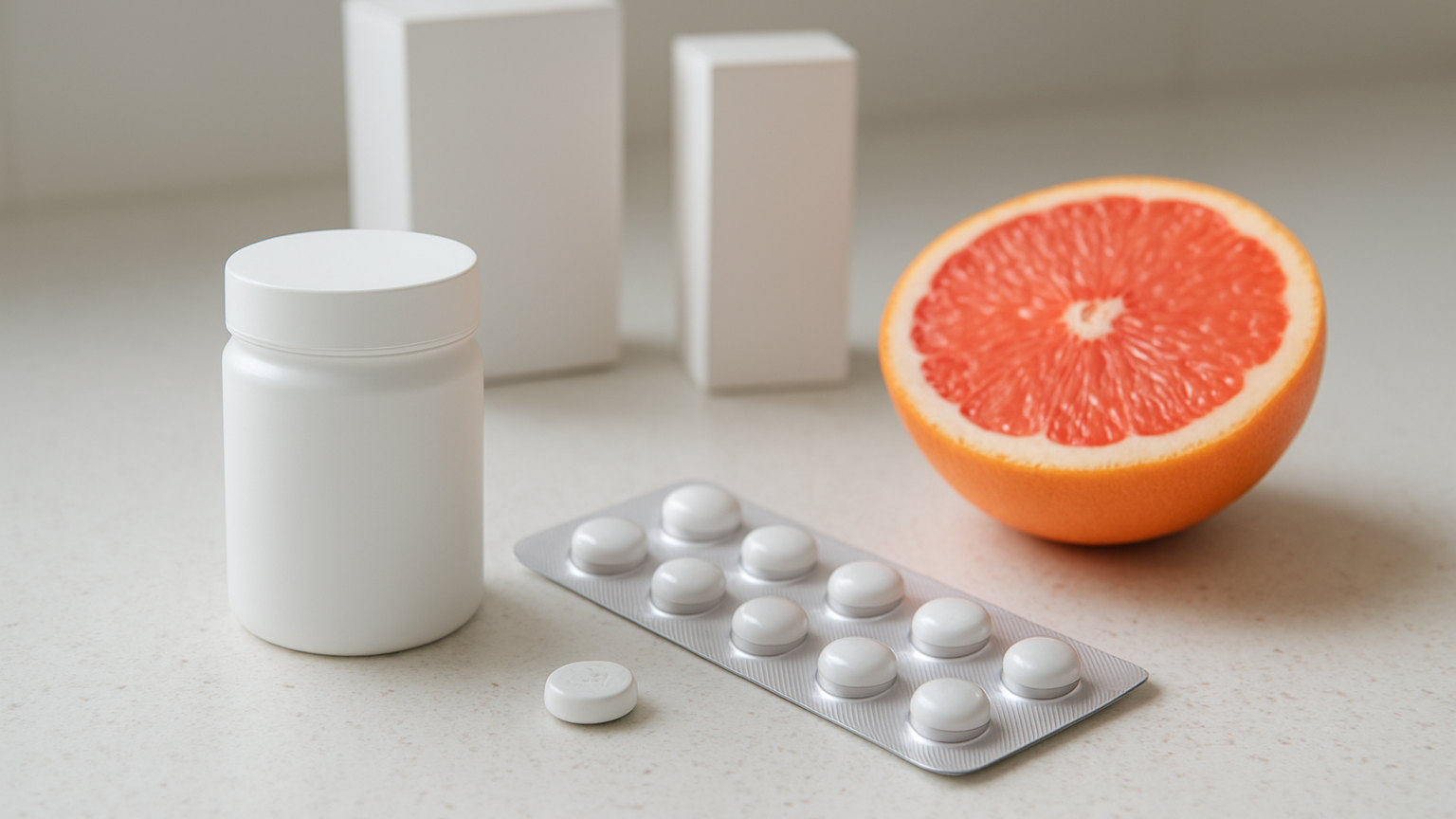
CBD inhibits several cytochrome P450 enzymes, which is the same mechanism behind grapefruit and clarithromycin.
Blocking those enzymes means other medicines are broken down more slowly, so their levels rise - potentially into toxicity.
The effect appears within days of starting, because it is a direct blockade rather than something the body has to build.
Medicines where this matters most are those with a narrow margin between an effective and a harmful level.
See how medicines interact through the liver.
The medicines most affected
Warfarin - CBD has been reported to raise the INR, with bleeding. An extra INR check after starting any CBD product is sensible. See warfarin.
Clobazam - a well-documented and substantial interaction, which is why the licensed CBD medicine for epilepsy requires dose adjustment when used alongside it.
Anti-epileptics generally, where levels matter and seizures are the consequence of getting it wrong.
Immunosuppressants after transplant.
Some statins, where raised levels increase the risk of muscle damage.
Sedatives, opioids and alcohol - here the interaction is additive rather than enzymatic, producing more drowsiness and, in combination, more respiratory depression.
CBD can also raise liver enzymes, particularly alongside valproate, so liver function is monitored with the licensed product.
You may not be getting what the label says
This is the practical problem with over-the-counter CBD.
Analyses of commercially available products have repeatedly found CBD content differing substantially from the label - sometimes far less, occasionally more, and in a proportion of cases measurable THC.
UK rules set a strict limit on controlled substances in consumer CBD products, and products exceeding it are unlawful.
The practical consequences: you cannot be confident of the dose, the interaction risk varies between batches, and THC content may be relevant to workplace drug testing.
CBD products are regulated as foods rather than medicines, so they are not assessed for efficacy at all - and a seller making medical claims for one is making an unlawful claim.
Cannabis itself
Smoked or vaped cannabis interacts differently.
Smoking anything induces the enzyme that clears theophylline, clozapine and caffeine - so cannabis smoking raises the dose needed, and stopping raises the levels. It is the smoke rather than the cannabinoid.
Sedation and coordination are impaired, and this adds to anything else sedating. Driving impairment is real and the drug-driving law applies.
Heart rate rises, which matters alongside stimulants or in heart disease.
Mental health - cannabis can worsen psychosis and anxiety, and interacts with antipsychotic treatment both pharmacologically and clinically.
See clozapine and prescribed medicines and recreational drugs.
Prescribed cannabis-based medicines
A few are licensed in the UK for defined indications - a CBD preparation for specific severe childhood epilepsies, and a THC-CBD spray for spasticity in multiple sclerosis.
Unlicensed cannabis-based products can be prescribed by specialists on the GP register in defined circumstances, though NHS prescribing remains limited and most such prescriptions are private and expensive.
These are genuine medicines with genuine monitoring, and they are a quite different proposition from a bottle bought online.
See off-label and unlicensed prescribing.
Tell your prescriber
The single most useful thing, and the least likely to happen.
People omit cannabis because it is illegal and omit CBD because they do not think of it as a medicine. Both omissions remove information that changes prescribing.
Clinicians ask about this for safety, not to report anyone. Being accurate matters most if you take warfarin, an anti-epileptic, a transplant medicine or a sedative.
Mention it at reviews and before any operation - see medication reviews.
Travelling with it
Cannabis-based products, including CBD oil, are prohibited in a number of countries regardless of THC content, and penalties in some are severe.
Check with the embassy of every country you will enter, including transit stops.
See medicines that are illegal in other countries.
If you are using it for symptoms
People frequently turn to CBD because something else has not worked.
That is worth raising rather than substituting quietly - it usually signals inadequately treated pain, anxiety or sleep, all of which have options that can be monitored.
The Side Effects section covers more on side effects and safety - Herbal Medicines and Traditional Remedies is closely related to this one.