A transdermal patch releases its medicine slowly over days, which means that when you remove it a substantial amount of drug is still in it. For opioid patches that residue is enough to cause serious harm or death in a child or a pet, and there have been deaths from used patches found on a floor, in a bin or stuck to bedding. Disposal is therefore not housekeeping - it is part of using the medicine safely.
How to remove and dispose of one
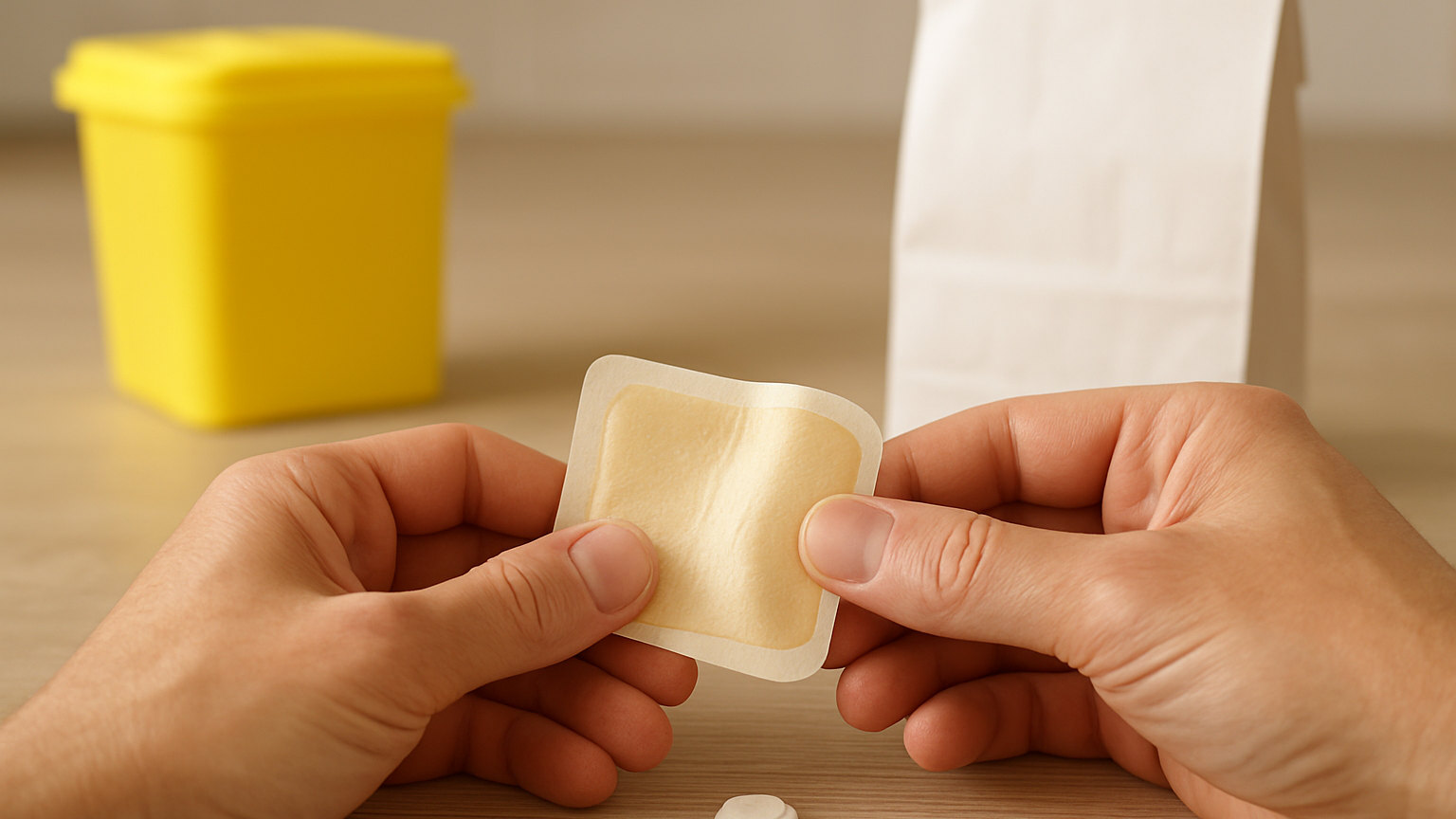
Fold the patch in half with the sticky sides pressed together so the medicated surface is sealed inside and cannot stick to anything or anyone.
Put it straight into a sealed container or bag - not loose into a bin, not down a toilet, and not into recycling.
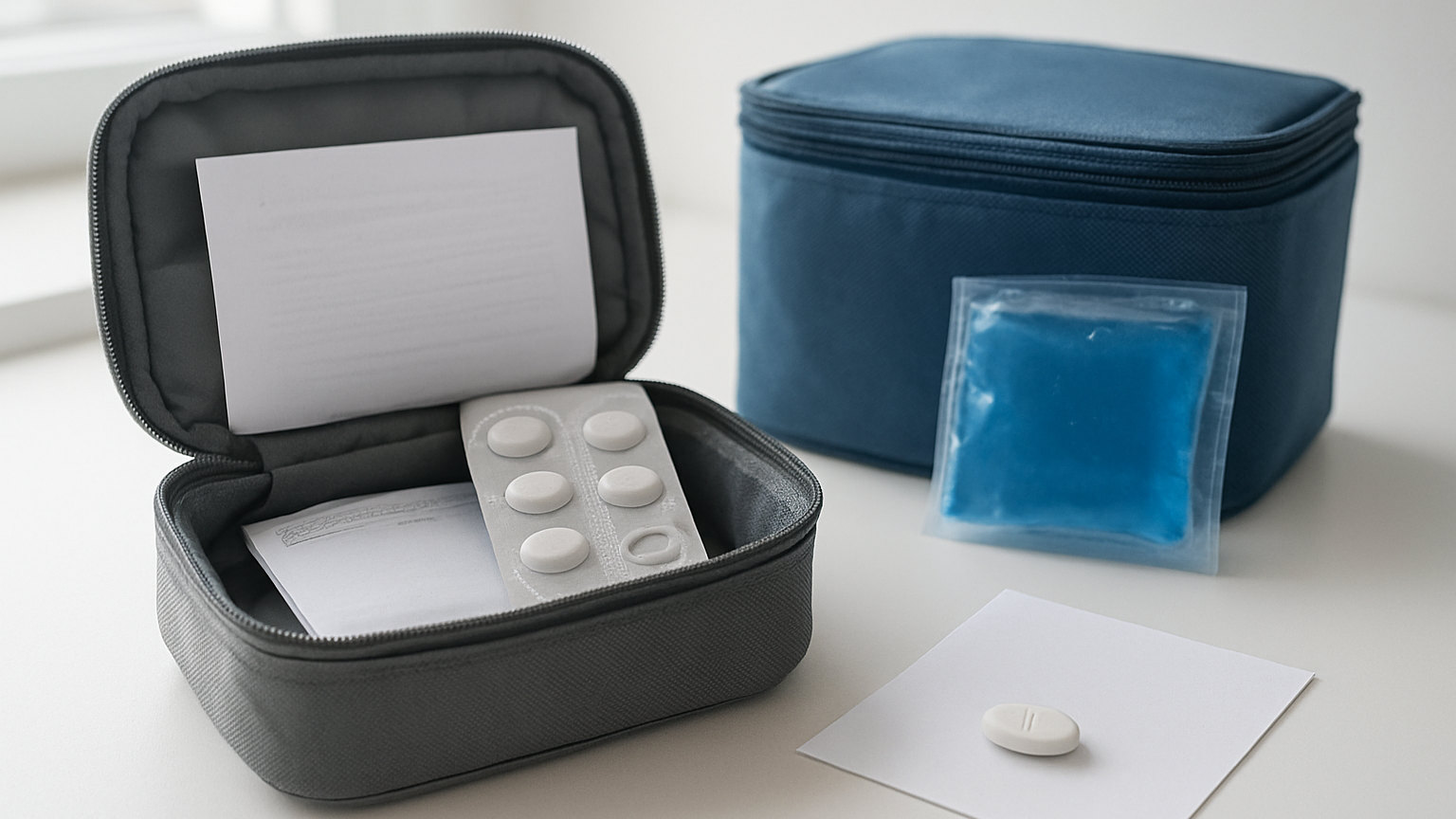
Return used patches to a pharmacy with your other medicine waste. Many opioid patch products supply a disposal pouch or sachet for exactly this, and pharmacies will take them.
Wash your hands afterwards, with water alone rather than soap and hot water, which increases absorption through the skin.
Never cut a patch. Cutting destroys the release mechanism in many products and can deliver the whole load at once.
See disposing of patches, creams and liquids.
Count them on and count them off
The single most useful habit with patches.
Write down when each patch goes on, where it was placed, and when it comes off. A simple chart or a note on the calendar is enough.
This catches the two dangerous errors: a patch left on when a new one is applied, which doubles the dose, and a patch that has come off without anyone noticing, which causes withdrawal and uncontrolled pain.
Rotating the site also matters, since applying to the same area repeatedly irritates the skin and changes absorption.
Check the old patch has actually been removed before applying a new one. Patches are easily missed on the back, and in someone confused or frail they accumulate.
See fentanyl patches.
If a patch goes missing
Treat it as urgent rather than as a nuisance.
Search the bedding, the clothing, the floor and the bathroom. Patches commonly transfer to a bedsheet, to a partner's skin during sleep, or to a towel.
If a child or pet may have found it, call 999 or go straight to A and E, even if they seem completely well. Do not wait for symptoms.
Opioid effects in a small child develop over hours and the first sign is frequently drowsiness rather than anything dramatic.
Call 999 for anyone who becomes drowsy, has slow or noisy breathing, is cold or blue-tinged, or cannot be roused. Put them in the recovery position and stay with them. Naloxone reverses opioid effects and is increasingly available to households where opioids are used.
See naloxone and unidentified medicines in the home.
Heat matters while it is on
Worth restating here because it is the other way patches cause harm.
Heat increases absorption substantially. A hot bath, an electric blanket, a heat pad, a sauna or a fever can push a stable dose into overdose.
Avoid direct heat over the patch, and seek advice if you develop a high fever while wearing one.
Other patches that need care
Buprenorphine patches - the same opioid precautions apply.
Nicotine patches, which are dangerous to a small child.
Hormone patches, where the residue can transfer.
Rivastigmine patches used in dementia, where the person wearing them may be least able to keep track. Doubling is a recognised and serious error here.
Glyceryl trinitrate patches, which are removed for part of each day to prevent tolerance - so there is a used patch every day.
See glyceryl trinitrate.
Other high-risk medicine waste
Patches are the clearest case but not the only one.
Liquid opioids - methadone and morphine solutions are the medicines most often involved in accidental poisoning of children in the home. A locked box is genuinely necessary, and unused supply should be returned rather than kept.
Cytotoxic and hormonal medicines, which have specific handling requirements and should be returned rather than binned.
Anything controlled, which should go back to a pharmacy promptly when treatment ends.
See methadone and keeping medicines away from children.
Returning controlled drugs
Pharmacies accept controlled drugs back from patients, and will record the return.
You do not need to explain or justify it, and there is no penalty for returning unused supply - the alternative is opioids sitting in a household, which is the outcome everyone wants to avoid.
After a death, medicines should be returned rather than kept, though it is worth waiting a short period in case a coroner needs to see them.
Sharps Disposal Away From Home covers a related point, and the Usage section has the rest of these guides.